Silky Alfredo sauce clings to every strand of fettuccine, and the chicken stays tender instead of turning dry and stringy. That balance is what makes a good Chicken Alfredo worth making at home. The sauce should taste rich and garlicky without feeling heavy, and it needs to coat the pasta in a glossy layer rather than pooling in the bottom of the bowl.
The difference comes from a few small choices that matter. The chicken is cooked first so the skillet picks up a little color, then the garlic goes into the butter just long enough to perfume it without burning. Parmesan melts into warm cream more smoothly when the heat is gentle, and a splash of reserved pasta water loosens the sauce just enough to help it cling. That’s how you get Alfredo that looks restaurant-worthy but still feels doable on a weeknight.
Below, I’ll walk through the part that trips people up most: keeping the sauce smooth instead of grainy. I’ve also included the swaps that still work if you need a lighter version or want to use a different pasta shape.
The sauce turned out so smooth and coated the pasta perfectly, and the chicken stayed juicy even after tossing everything together. My husband said it tasted like restaurant Alfredo, and it was on the table in just about 30 minutes.
Love how this Chicken Alfredo turns out extra silky? Save it to Pinterest for the nights when you want creamy pasta, golden chicken, and a dinner that feels special without extra fuss.
The Reason Alfredo Turns Grainy Before It Turns Glossy
Most broken Alfredo starts the same way: the heat is too high when the cheese goes in, or the sauce gets rushed after the cream warms up. Parmesan needs gentle heat and a little patience. If the skillet is boiling when you add it, the fat separates and the sauce turns sandy instead of smooth.
The other place people lose it is the pasta water. You don’t need a lot, but you do need some. The starch in that water helps the sauce emulsify and gives it enough body to coat the noodles instead of sliding off. If your Alfredo ever looked thick in the pan and watery on the plate, that usually means it never got thinned and adjusted properly at the end.
- Gentle heat — Keeps the cream from scalding and the Parmesan from clumping.
- Freshly grated Parmesan — Melts far better than the pre-shredded kind, which often contains anti-caking agents that can make the sauce gritty.
- Reserved pasta water — Adds starch and helps the sauce cling to the fettuccine.
- Chicken cooked separately — Gives the skillet a little flavor to build on and keeps the chicken from overcooking while the sauce finishes.
What Each Ingredient Is Doing in This Chicken Alfredo
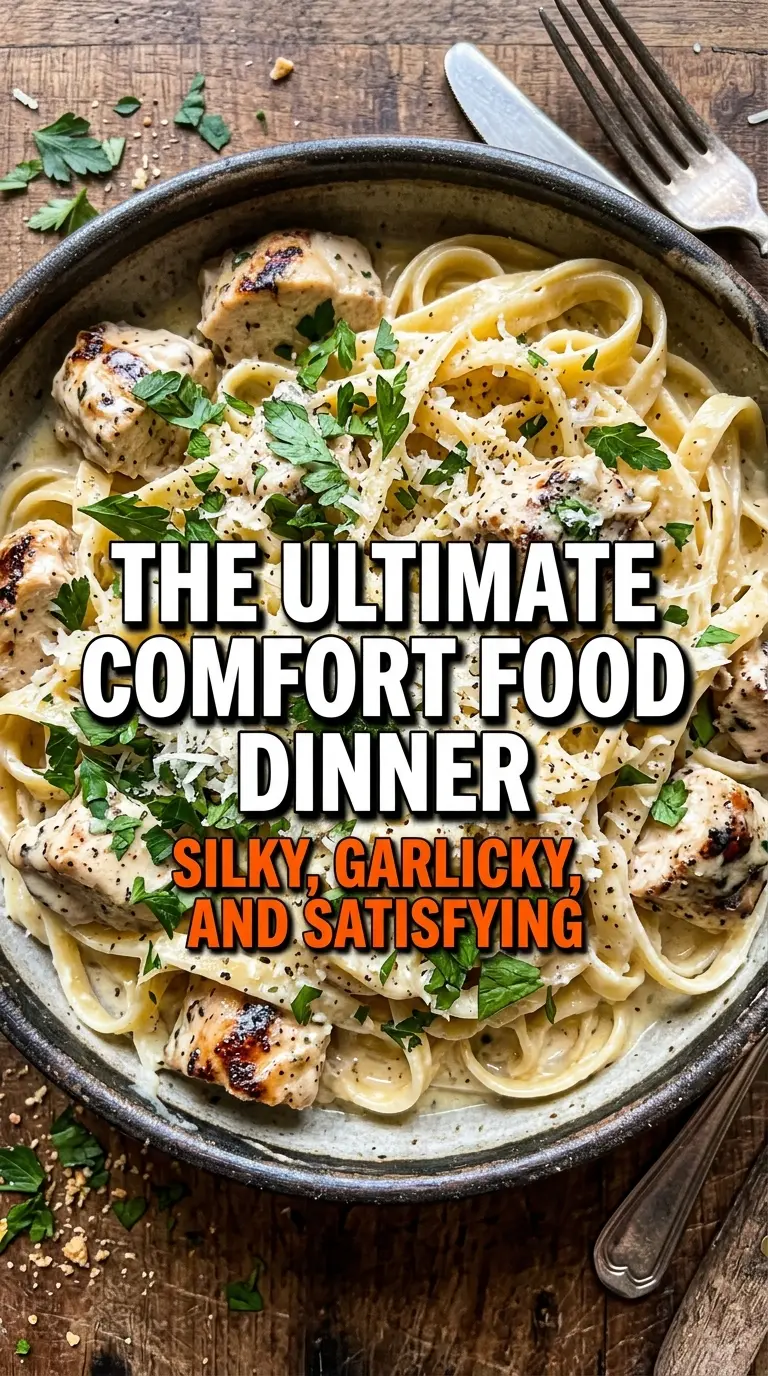
- Fettuccine — The wide strands give the sauce something to hold onto. Spaghetti works in a pinch, but it won’t catch as much of that creamy coating.
- Chicken breasts — Sliced thin, they cook fast and stay tender. If they’re cut too thick, the outside overcooks before the center is done.
- Olive oil and butter — The oil helps sear the chicken without burning, and the butter carries the garlic flavor into the sauce. You can’t swap both for one or the other and get the same result.
- Heavy cream — This is what gives the sauce its body. Half-and-half can work, but it makes a looser sauce that needs more careful simmering.
- Parmesan — Use finely grated Parmesan from a wedge if you can. It melts smoothly and gives the sauce its salty backbone.
- Garlic — Fresh garlic is worth it here because the sauce is simple enough that you taste every bit of it. Mince it finely so it softens fast and doesn’t leave raw sharpness behind.
The Part Where the Sauce Comes Together
Cooking the Pasta and Saving the Water
Boil the fettuccine in well-salted water until it’s just shy of fully tender. Pull out about half a cup of pasta water before draining, because you’ll need that starch later to bring the sauce back into balance. If you forget this step, the sauce can end up too thick and clingy without the looseness that makes Alfredo feel creamy.
Getting Color on the Chicken
Season the chicken with part of the salt and pepper, then cook it in hot olive oil until the surface is golden and the centers are no longer pink. The pan should sizzle when the chicken goes in; if it doesn’t, you won’t get much browning. Take it out as soon as it’s cooked through, because it will finish warming in the sauce and stay juicier that way.
Building the Garlic Cream Base
Melt the butter in the same skillet and stir in the garlic for about 30 seconds, just until it smells sweet and fragrant. If the garlic darkens, it will turn bitter and the sauce will taste flat. Pour in the cream and let it come to a gentle simmer, not a hard boil, before adding the Parmesan.
Finishing With Cheese and Pasta
Whisk the Parmesan in a handful at a time until the sauce turns glossy and smooth. If it looks grainy, the pan is too hot, so pull it off the burner for a moment and keep whisking. Add the chicken and pasta back in, toss until everything is coated, and use a little reserved pasta water only if the sauce needs loosening.
How to Adapt This When You Need a Different Version
Gluten-Free Alfredo That Still Feels Creamy
Use your favorite gluten-free fettuccine and cook it just to al dente, because some gluten-free pastas soften quickly once they hit the sauce. The Alfredo itself is naturally gluten-free as written, so the main job is keeping the pasta from breaking down when you toss everything together.
Lighter Sauce With Half-and-Half
Half-and-half can replace the cream if you want a lighter finish, but the sauce won’t be as thick or as luxurious. Keep the heat low and simmer it a little longer before adding the cheese so it has time to reduce without splitting.
Vegetarian Version With Mushrooms
Skip the chicken and cook sliced mushrooms in the olive oil until they’re deeply browned and their moisture is gone. They add a savory, meaty feel that works well with the Parmesan, and the sauce still tastes complete without any extra additions.
Storage and Reheating
- Refrigerator: Store leftovers in an airtight container for up to 3 days. The sauce thickens as it chills, so the pasta will look tighter the next day.
- Freezer: I don’t recommend freezing it. Cream sauces tend to separate and turn grainy after thawing.
- Reheating: Reheat slowly on the stove over low heat with a splash of milk or cream, stirring often. The mistake people make is blasting it in the microwave, which pushes the sauce too far and makes the Parmesan seize.
The Questions That Come Up Most With Chicken Alfredo
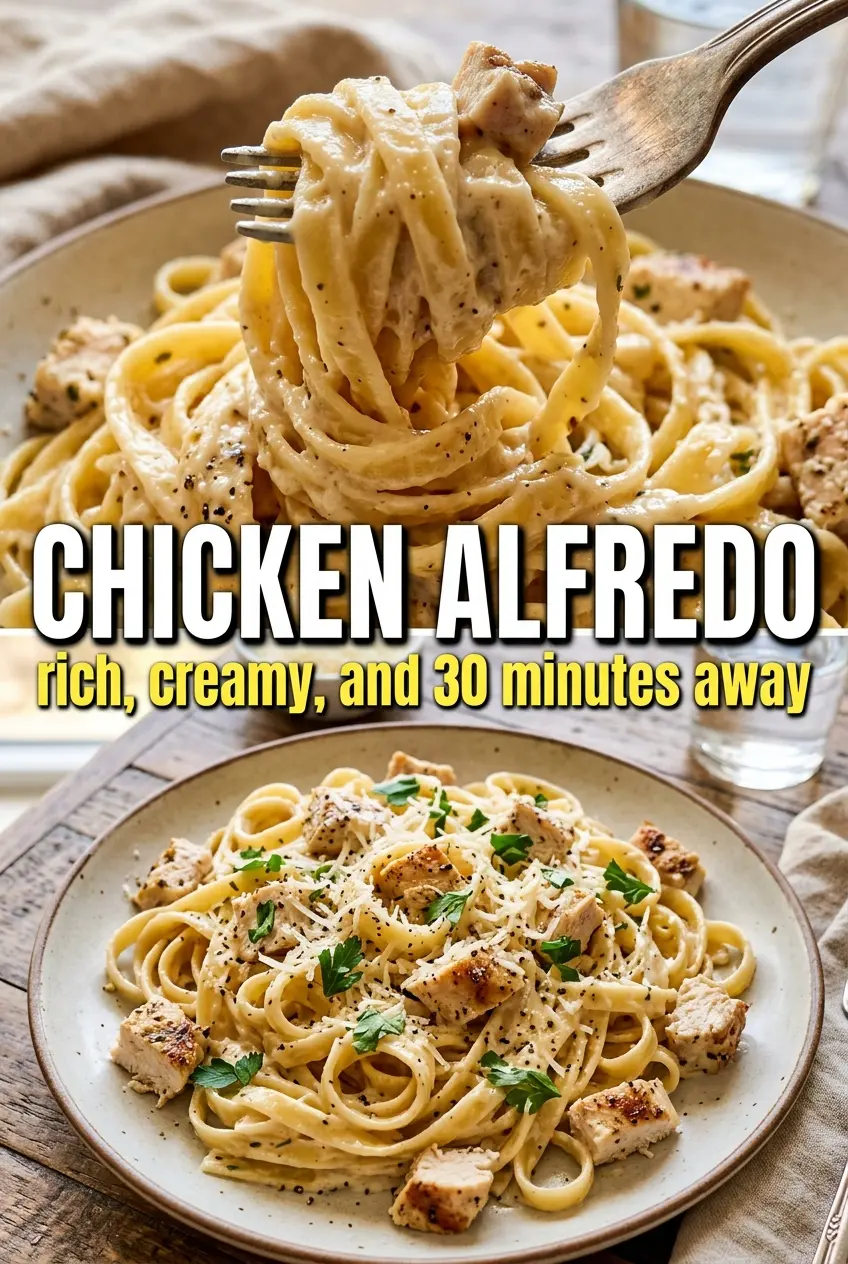
Chicken Alfredo
Ingredients
Equipment
Method
- Cook the fettuccine in salted boiling water according to package directions. Reserve ½ cup pasta water before draining.
- Season the chicken with half the salt and pepper. Heat the olive oil in a large skillet over medium-high heat and cook the chicken for 6–7 minutes until golden and cooked through, then remove and set aside.
- Melt the butter in the same skillet and sauté the garlic for 30 seconds until fragrant.
- Pour in the heavy cream and bring to a gentle simmer, then whisk in the Parmesan until smooth and glossy.
- Return the chicken and cooked pasta to the skillet and toss to coat, thinning with reserved pasta water if needed. Season with the remaining salt and pepper.
- Garnish with fresh parsley and extra Parmesan before serving.