Chicken feta spinach pasta lands in that sweet spot between light and satisfying, with enough creaminess from the feta to coat every piece of pasta without turning heavy. The spinach melts down into the sauce, the chicken gives it substance, and the lemon at the end keeps the whole dish sharp instead of flat. It’s the kind of dinner that feels put together, even when it’s mostly pantry-friendly and on the table fast.
The part that makes this work is timing. The garlic goes into warm oil just long enough to turn fragrant, not brown, and the feta gets stirred in off the heat so it softens into the pasta without clumping or going grainy. Reserved pasta water does the rest, giving you a glossy sauce that clings instead of sitting in the bottom of the bowl.
Below, I’ll show you why this pasta stays creamy without cream, how to keep the spinach from disappearing into nothing, and the small tweak that makes leftovers reheat better than most chicken pastas.
The feta melted into the pasta water and made the sauce silky without being heavy, and the lemon at the end kept the whole pan bright. My husband asked if I could put this on the regular dinner list.
Chicken feta spinach pasta keeps the sauce creamy, bright, and weeknight-fast — pin it for the night you want one pan, real flavor, and almost no cleanup.
The Mistake That Makes Feta Pasta Heavy Instead of Silky
Feta behaves differently from cream or Parmesan. If you dump it into a hot pan and keep cooking hard, it tightens up and can turn a little chalky instead of melting into the pasta water. The fix is simple: pull the skillet off the heat before you add it, then stir until the cheese softens and coats the noodles in a light, tangy sauce.
The other thing that matters is the pasta water. That starchy water is what turns olive oil, garlic, feta, and lemon juice into an actual sauce rather than separate ingredients sliding around the pan. Add it a splash at a time so the pan looks glossy, not soupy.
What Each Ingredient Is Actually Doing in This Dish

- Pasta — Penne and fusilli both hold the sauce well because their shapes catch little pockets of feta and olive oil. Long pasta works too, but you lose some of that clinging texture that makes this dish feel complete.
- Cooked chicken breast — Pre-cooked chicken keeps this meal fast and lets you focus on building the sauce. Rotisserie chicken works fine here, and it’s one of the best swaps if you want to cut down on prep without losing substance.
- Fresh spinach — Fresh spinach wilts into almost nothing, which is exactly what you want. Baby spinach is the easiest option, but you can use regular spinach if you strip out the tough stems and give it an extra minute.
- Feta cheese — This is the ingredient that gives the pasta its salty, tangy backbone. Buy a block and crumble it yourself if you can; pre-crumbled feta is drier and doesn’t melt as smoothly.
- Olive oil, garlic, and lemon juice — Olive oil carries the garlic and helps the sauce feel rich without cream, while lemon juice keeps the feta from tasting flat. If your lemon is especially sharp, start with half and add the rest at the end.
Building the Sauce in the Pan Without Breaking It
Warming the Garlic in Oil
Start with medium heat and give the garlic about a minute in the olive oil, just until it smells sweet and fills the pan. If it browns, it turns bitter fast and that flavor runs through the whole dish. This is a short stage, but it sets the tone for everything that follows.
Wilting the Spinach
Add the spinach directly to the garlicky oil and stir until it softens and collapses. It should lose its volume but stay green. If you let it cook until it turns dark and wet-looking, it starts tasting flat and the pasta never gets that fresh, bright finish.
Coating the Pasta and Chicken
Toss the drained pasta and sliced chicken into the skillet while the pan is still warm. The pasta should look lightly glossy before you add any cheese. If the skillet seems dry, use a splash of pasta water right away so the noodles don’t grab and clump together.
Finishing With Feta and Lemon
Take the pan off the heat before stirring in the feta and lemon juice. That cooler moment is what keeps the cheese creamy instead of grainy. Add pasta water a little at a time until the sauce loosens and clings in a thin coat rather than puddling at the bottom.
How to Adapt This for Different Kitchens and Different Nights
Make It Vegetarian
Skip the chicken and add cannellini beans or chickpeas for protein. Beans give you a softer, creamier bite; chickpeas hold their shape and make the dish feel heartier. Either one works well with the feta and lemon.
Make It Gluten-Free
Use your favorite gluten-free pasta, but stop cooking it while it still has a little bite. GF pasta can go soft fast once it hits the skillet, and the sauce will finish it the rest of the way. Keep some pasta water back anyway, since it still helps the feta emulsify.
Use Rotisserie Chicken
Rotisserie chicken is the easiest shortcut here and it brings a little extra savoriness. Pull it into bite-size pieces instead of shredding it too finely so it doesn’t disappear into the pasta. Add it at the end just long enough to warm through.
Storage and Reheating
- Refrigerator: Store in an airtight container for up to 4 days. The pasta will absorb some of the sauce, so it gets a little thicker in the fridge.
- Freezer: It freezes, but the spinach softens and the feta turns a bit crumbly after thawing. Freeze only if you don’t mind a softer texture.
- Reheating: Warm it gently in a skillet over low heat with a splash of water or broth. High heat can make the feta tighten up and the chicken dry out before the pasta loosens again.
The Things That Trip People Up With This Dish
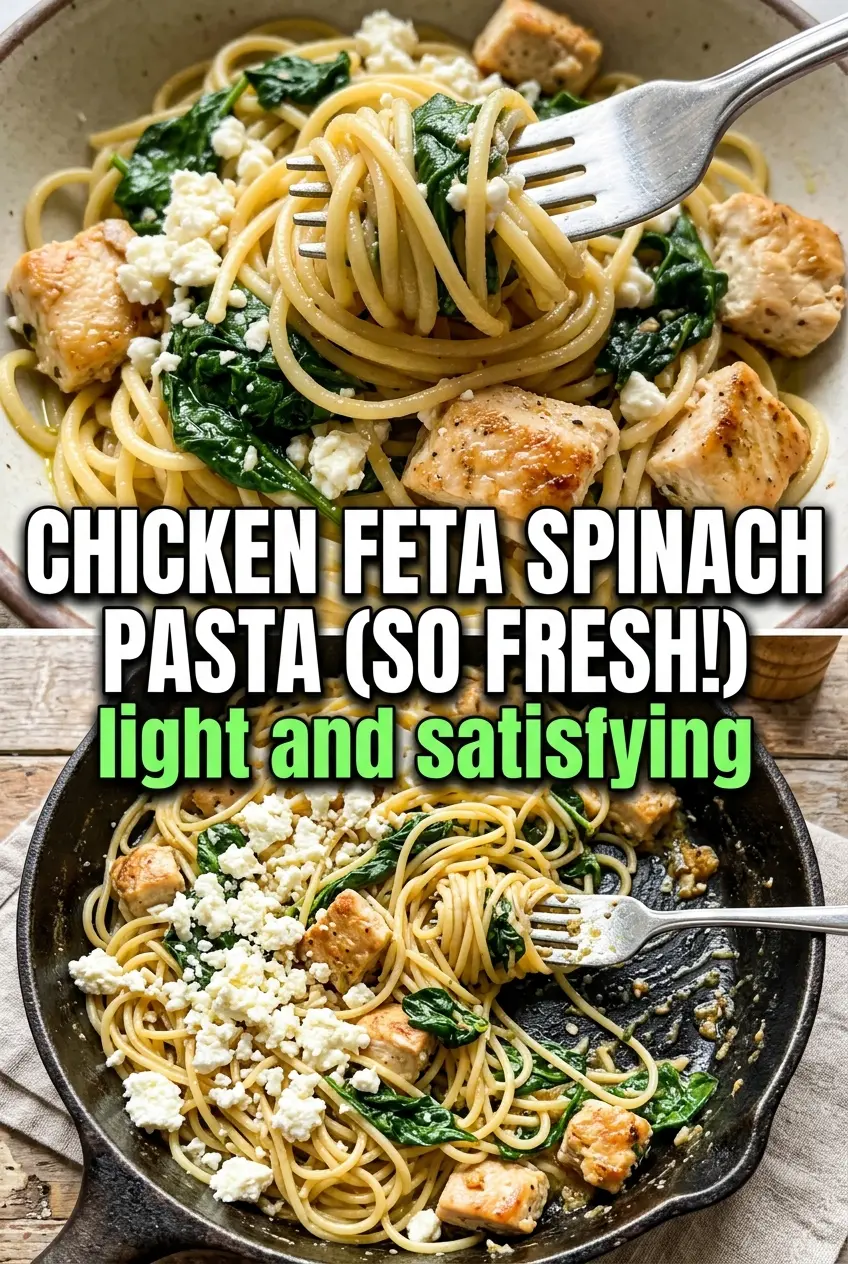
Chicken Feta Spinach Pasta
Ingredients
Equipment
Method
- Bring a large pot of salted water to a boil, then cook the pasta according to package directions. Before draining, reserve 1/2 cup of pasta water.
- Heat olive oil in a large skillet over medium heat until shimmering. Sauté minced garlic until fragrant, about 1 minute.
- Add fresh spinach to the skillet and cook until just wilted, about 2 minutes.
- Add the drained pasta and sliced chicken to the skillet, then toss to combine with the spinach and garlic.
- Add reserved pasta water a splash at a time, tossing between additions, until the sauce loosens and lightly clings to everything as needed.
- Remove the skillet from heat and stir in crumbled feta cheese and lemon juice until creamy and evenly distributed.
- Season with salt and pepper to taste, then serve warm.