Ground beef dinner skillet is the kind of one-pan meal that earns its keep on busy nights: savory beef, tender vegetables, and melted cheddar all in the same pan, with just enough tomato to pull everything together. It lands somewhere between a skillet supper and a pantry-cleanout meal, which is exactly why it gets made again and again. You get something hearty and filling without a long ingredient list or a pile of dishes.
What makes this version work is the order of the cooking. Browning the beef with the onion builds a strong base right away, and the garlic only goes in for a short burst so it stays fragrant instead of bitter. The zucchini and corn simmer in the tomatoes just long enough to soften and pick up the smoked paprika, but not so long that they collapse into mush. The cheddar goes on at the end, where it melts into the hot skillet instead of disappearing into the sauce.
Below, I’ll show you the little timing details that keep this skillet from turning watery, plus a few smart swaps if you’re working with different vegetables or want to stretch what you have on hand.
The zucchini kept its shape and the sauce thickened up instead of turning soupy. I added a little extra cheese on top and my husband went back for seconds before I even sat down.
Save this ground beef dinner skillet for nights when you need a fast one-pan meal with melted cheddar and simple vegetables.
The Reason This Skillet Stays Saucy Instead of Watery
The biggest mistake with a beef-and-vegetable skillet is rushing straight into the vegetables before the meat has browned and the pan has built up some color. That browned layer at the bottom is what gives the whole dish depth, and it also helps the tomatoes and seasonings taste like dinner instead of canned vegetables. If the beef is only gray when the zucchini goes in, you’ve skipped the part that carries the flavor.
The other trap is letting the vegetables stew too long before the cheese goes on. Zucchini gives off moisture fast, and once that water starts pooling, the skillet can go thin in a hurry. A steady simmer is enough to soften the vegetables and reduce the tomatoes into a light sauce. You want everything glossy and spoonable, not soupy.
- Ground beef — An 85/15 or 90/10 blend gives enough fat for flavor without turning the skillet greasy. If you use a fattier blend, drain off the excess after browning so the tomatoes don’t float in oil.
- Zucchini — This adds bulk and a fresh, mild sweetness, but it needs to be cut into even dice so it cooks through at the same rate as the corn. Yellow squash works the same way if that’s what you have.
- Diced tomatoes — The liquid in the can becomes the sauce. Crushed tomatoes will make the skillet saucier and a little softer; if you use them, let the mixture simmer a minute or two longer so it tightens up.
- Cheddar cheese — Shredding it yourself helps it melt smoothly. Pre-shredded cheese works in a pinch, but it can take a little longer to melt because of the anti-caking coating.
How to Build the Skillet in the Right Order
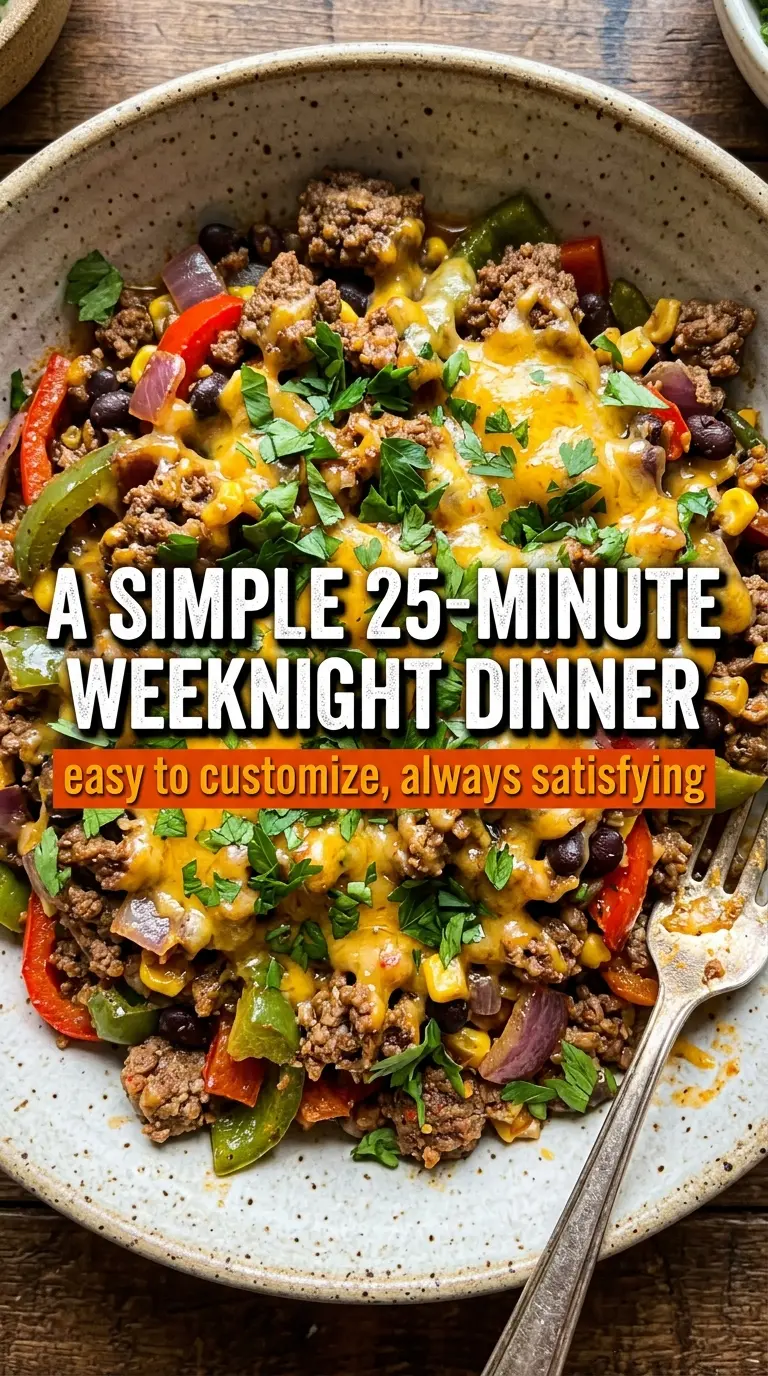
Browning the Beef and Onion
Cook the beef and onion together over medium-high heat until the meat loses its pink color and the onion turns translucent with a few browned edges. Break the beef into small pieces as it cooks, but don’t stir constantly or it never gets those darker bits that add flavor. If there’s a lot of grease in the pan, drain most of it before moving on so the finished skillet doesn’t taste heavy.
Waking Up the Garlic
Add the garlic after the beef is browned and cook it for just 30 seconds. You want it fragrant, not toasted. Garlic goes sharp and bitter fast in a hot skillet, especially after the pan has been busy browning meat, so this is a short, deliberate pause.
Softening the Vegetables and Reducing the Tomatoes
Stir in the zucchini, corn, tomatoes, paprika, garlic powder, salt, and pepper, then let the mixture simmer until the zucchini is tender but still intact. The tomatoes should lose their raw edge and turn into a light sauce that clings to the meat and vegetables. If the skillet looks too wet near the end, cook it uncovered for another minute or two so some of the liquid evaporates before the cheese goes on.
Melting the Cheese on Top
Scatter the cheddar evenly over the surface and cover the skillet just long enough for the heat to melt it. Two to three minutes is usually enough. Pull the pan off the heat once the cheese is glossy and soft, not bubbling hard, or it can separate and turn oily instead of creamy.
Three Ways to Make This Work With What’s in Your Kitchen
Make It Dairy-Free
Leave off the cheddar or use a good melting dairy-free shred if you have one you trust. The skillet still tastes complete because the beef, tomatoes, and smoked paprika carry the flavor, but it will finish a little lighter and less creamy on top.
Turn It Into a Lower-Carb Skillet
Swap the corn for diced bell pepper or extra zucchini. That keeps the skillet hearty without the starchier sweetness from corn, and the tomatoes still give you enough body that the dish doesn’t feel like you’re missing anything.
Use Ground Turkey Instead
Ground turkey works, but it needs a little help. Add a splash of olive oil with the onion and don’t skip draining the tomatoes too late if the skillet seems thin. Turkey is leaner, so the final dish tastes best when the cheese stays in the mix and you keep the seasoning bold.
Stretch It for a Bigger Crowd
Add an extra can of tomatoes and another cup of vegetables, then simmer a few minutes longer so the extra liquid cooks down. This keeps the texture balanced instead of turning the skillet into soup, which is the main risk any time you scale up a one-pan dinner.
Storage and Reheating
- Refrigerator: Store in an airtight container for up to 4 days. The zucchini softens a bit more as it sits, but the flavor holds up well.
- Freezer: It freezes, though the zucchini will lose some texture. Freeze cooled portions in airtight containers for up to 2 months for the best result.
- Reheating: Warm gently on the stovetop over medium-low heat or in the microwave in short bursts. Add a spoonful of water if the sauce has thickened too much, and heat just until hot so the cheese doesn’t turn greasy.
Answers to the Questions Worth Asking
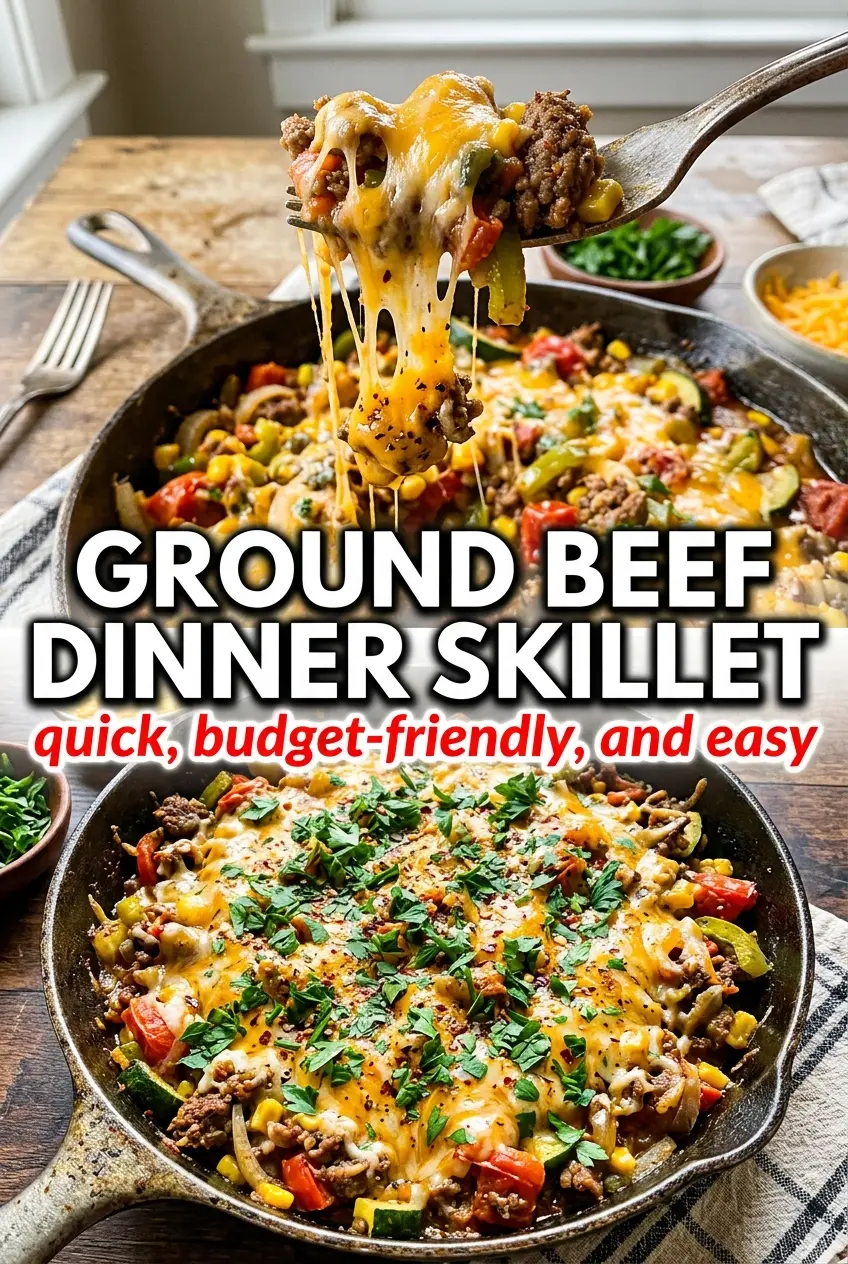
Ground Beef Dinner Skillet
Ingredients
Equipment
Method
- Heat a large skillet over medium-high heat and add the ground beef and diced yellow onion. Brown for 6–7 minutes, breaking the beef apart as it cooks, until no pink remains and the onion begins to soften (visual cue: browned beef and translucent onion).
- Add the minced garlic and cook for 30 seconds. Stir until fragrant (visual cue: aromatic smell and lightly sizzling garlic).
- Stir in the diced zucchini, corn kernels, diced tomatoes, smoked paprika, garlic powder, kosher salt, and black pepper. Mix well so the seasonings coat the meat and vegetables (visual cue: evenly speckled seasoning throughout).
- Simmer the mixture for 8–10 minutes, stirring once or twice. Cook until the vegetables are tender (visual cue: zucchini yields to a fork and tomatoes thicken slightly).
- Sprinkle shredded cheddar cheese over the top and cover the skillet. Cook for 2–3 minutes until melted (visual cue: cheese fully melted and slightly bubbling at the edges).
- Remove from heat and garnish with chopped fresh parsley. Serve immediately while the cheese is warm (visual cue: bright green parsley on top).