Deep, smoky tomato-pepper stew clinging to golden chicken is the kind of meal that disappears fast once it hits the table. Nigerian chicken stew has that bold red color and layered flavor that only happens when the pepper base is cooked down long enough for the raw edge to leave and the oil starts to separate on top. The chicken stays meaty and savory, and every spoonful over rice brings a little heat, a little sweetness, and a lot of depth.
The part that makes this version work is patience with the pepper sauce. Blending the tomatoes, red bell peppers, onion, and scotch bonnet gives you the right base, but it still tastes flat until it’s fried down properly in oil. That long simmer is what turns it from a blended sauce into the rich, concentrated stew you want. Frying or oven-baking the chicken first also matters because it builds better flavor and keeps the pieces from getting lost in the sauce.
Below, I’ll walk you through the point where the stew changes from raw and sharp to glossy and cooked, plus the small details that help you control the heat and keep the chicken from going soft.
The pepper sauce cooked down exactly like you said, and when the oil floated on top I knew it was ready. The chicken held its shape, and the stew tasted even better the next day over rice.
Save this Nigerian Chicken Stew for the days when you want a deeply cooked pepper sauce and golden chicken over steaming rice.
The Part Most People Rush: Cooking the Pepper Base Until It Stops Tasting Raw
Nigerian chicken stew depends on one thing that can’t be skipped: the blended tomato-pepper mixture has to cook long enough to lose its sharp, uncooked taste. If you stop too soon, it’ll still taste bright and watery, even if the seasoning is right. Once the sauce darkens and the oil rises to the top, the flavor turns rounder and the stew gets that deep, settled taste people expect.
The other mistake is crowding the pot with chicken before the sauce is ready. The chicken goes in after the pepper base has already reduced, so it can soak up flavor instead of cooling the sauce down and stretching it thin. That last simmer is there to marry the chicken and sauce, not to cook the chicken from scratch.
- Oil separation matters. When the stew is done cooking down, you should see the oil floating in patches on top. That’s your cue that the water has cooked off and the sauce has concentrated.
- Frequent stirring prevents scorching. The pepper mixture will spit and thicken as it cooks. Stir it often, especially around the bottom edges of the pot, where it wants to catch first.
- Darkening is a good sign here. The sauce should move from bright red to a deeper orange-red. That color change usually means the raw tomato edge has mellowed.
What the Chicken, Peppers, and Bouillon Are Doing in the Pot

- Chicken pieces with bone-in. Bone-in chicken gives the stew more body and a richer finish than boneless meat. If you use boneless chicken, add it later in the simmer so it doesn’t dry out.
- Plum tomatoes. These bring enough acidity and thickness to build the stew, but they still need the long cook time to lose their raw edge. Fresh tomatoes can work, but they usually need even longer reduction because they carry more water.
- Red bell peppers. They add sweetness, color, and volume without making the stew overly acidic. This is one place where fresh is worth it, because the flavor is part of the base rather than a background note.
- Scotch bonnet or habanero. This is the heat source, and it’s where the stew gets its real character. Start with one pepper if you’re unsure, since you can always add more heat later, but you can’t take it back.
- Bouillon cubes or stock powder. These help round out the stew quickly and reinforce the savory side of the chicken. If you use a very salty stock powder, cut back on the added salt until the end.
- Vegetable oil. The oil isn’t just for frying; it helps the sauce fry down properly and gives the finished stew its glossy, traditional look. Don’t cut it too far or the sauce can scorch before it reduces.
Building the Stew So the Sauce Turns Glossy, Not Watery
Seasoning the Chicken First
Rub the chicken with grated onion, thyme, curry powder, bouillon, salt, and pepper, then give it time to sit for at least 30 minutes. That short rest seasons the meat through the surface and pulls out a little moisture, which helps it brown better. If you skip the marinate, the chicken still works, but the final stew tastes flatter because the meat starts from the inside with less seasoning.
Frying or Baking Until Golden
Cook the chicken until it’s mostly done and the skin or surface has some color. You want golden edges, not pale steamed chicken, because that early browning adds another layer under the sauce. If you’re baking, don’t wait for the chicken to fully cook through in the oven; it finishes in the stew and can dry out if you push it too far.
Cooking Down the Pepper Blend
Blend the tomatoes, bell peppers, scotch bonnet, and the rest of the onion until smooth, then fry that mixture in hot oil. This is the longest part of the recipe, and it’s where the real transformation happens. Keep the heat at medium-high and stir often until the sauce thickens, darkens, and the oil starts rising to the surface in small pools.
Finishing the Stew With the Chicken
Add the fried chicken once the pepper base is cooked down and concentrated. Let it simmer long enough for the sauce to coat the chicken and for the flavors to settle together. If the stew looks too thick, loosen it with a small splash of water; if it looks thin, keep simmering uncovered until it tightens again.
How to Adjust the Heat, Richness, and Yield Without Losing the Character of the Dish
Milder Stew for Sensitive Eaters
Use one scotch bonnet instead of two, and remove the seeds if you want even less heat. You’ll still get the pepper flavor and aroma, but the stew will land warmer and less sharp.
Dairy-Free and Naturally Gluten-Free
This stew already fits both of these needs as written, as long as your bouillon is gluten-free. That makes it an easy main dish for mixed tables because you don’t have to change the texture or the technique to accommodate it.
Using Chicken Thighs or Drumsticks Only
A dark-meat-only batch gives you a richer stew and a little more forgiveness if you simmer longer. Drumsticks stay especially juicy, while thighs release enough flavor to deepen the sauce.
Making It Ahead for Better Flavor
This is one of those dishes that tastes even better after a night in the fridge. The pepper base settles, the chicken absorbs more of the sauce, and the stew reheats with a rounder, more unified flavor.
Storage and Reheating
- Refrigerator: Store in an airtight container for up to 4 days. The sauce thickens as it sits, and the flavor gets deeper.
- Freezer: It freezes well for up to 2 months. Cool completely before freezing, and leave a little space at the top of the container for expansion.
- Reheating: Reheat gently on the stove over medium-low with a splash of water if needed. High heat can make the sauce stick and can dry out the chicken before the center is hot.
Answers to the Questions Worth Asking
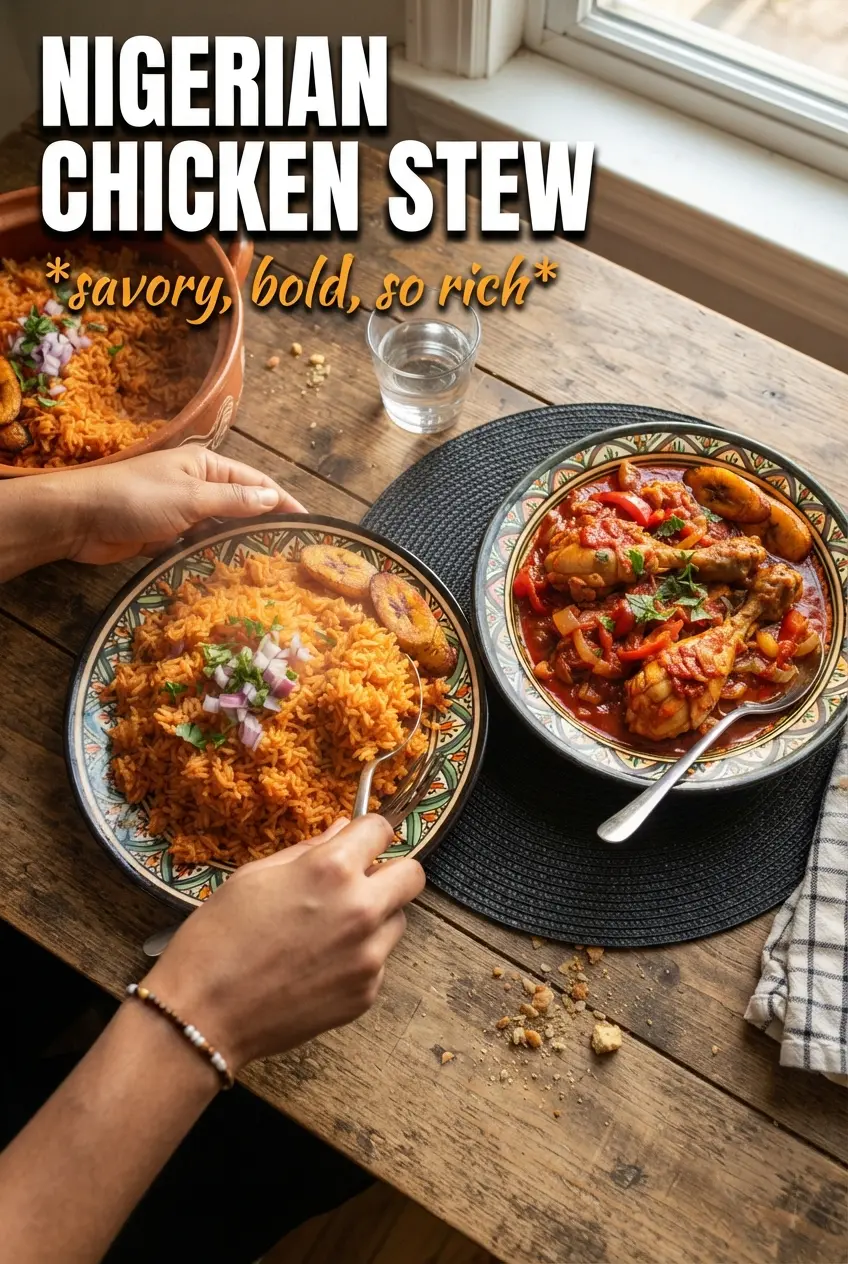
Nigerian Chicken Stew
Ingredients
Equipment
Method
- Season the chicken with half the onion (grated), thyme, curry powder, bouillon, salt, and pepper, then marinate for 30 minutes in the refrigerator.
- Fry or oven-bake the marinated chicken until golden and mostly cooked through, then set aside.
- Blend the plum tomatoes, red bell peppers, scotch bonnet or habanero peppers, and the remaining onion until smooth.
- Heat 1/2 cup vegetable oil in a large pot over medium-high heat and carefully fry the blended pepper sauce for 30-40 minutes, stirring frequently until oil floats on top and the sauce turns dark and deeply cooked.
- Add the fried chicken to the pot, coat it in the sauce, and simmer for 15-20 minutes until the chicken is fully cooked and the sauce clings to it.
- Taste and adjust with more salt and pepper if needed, then serve hot over steamed rice and top with fresh parsley.