Egg roll soup has the same savory, ginger-sesame flavor people love in a takeout egg roll, but in a bowl that feels lighter and a lot easier to pull off on a weeknight. The broth turns glossy and fragrant, the cabbage softens just enough to stay sweet, and the ground pork gives every spoonful enough richness to taste complete without needing a wrapper or a deep fryer.
What makes this version work is the layering. The pork browns first so you get those little caramelized bits at the bottom of the pot, then the garlic and ginger go in just long enough to bloom without burning. After that, the broth is seasoned directly with soy sauce, sesame oil, rice vinegar, and a little sriracha, which gives you that egg roll filling flavor before the cabbage and carrots ever hit the pot.
Below, I’ve included the small details that matter most: when to stop cooking the vegetables, how to keep the broth balanced, and the easiest swaps if you want to use chicken instead of pork or make it a little less spicy.
The cabbage stayed tender-crisp and the broth had that exact egg roll taste I was hoping for. I added the wonton strips at the table and they stayed crunchy the whole time.
Save this Egg Roll Soup for the nights when you want all the takeout flavor without the wrapper or the fryer.
The Difference Between Egg Roll Flavor and a Thin Broth
The trap with soup like this is treating it like a quick dump-and-simmer recipe. If you add everything at once, the broth tastes flat and the vegetables soften into the background. The better move is to build the flavor in layers: brown the meat first, wake up the garlic and ginger in the rendered fat, then season the broth before the cabbage goes in.
Cabbage is the ingredient that makes this feel like an egg roll instead of just a pork soup. It needs enough time to soften and sweeten, but not so much time that it collapses into mush. That’s why the vegetables go in after the broth is already seasoned. They absorb flavor as they cook instead of watering the whole pot down.
- Browned meat — Those browned bits are the backbone of the soup. If you skip the browning and just simmer the pork, the broth tastes lean and one-note.
- Ginger and garlic — Fresh is worth it here. Ground ginger won’t give you the same bright, sharp lift, and jarred garlic tends to taste blunt in a broth this simple.
- Sesame oil — This is not the cooking oil. Add it for aroma at the end of the seasoning step so it keeps its toasted, nutty edge.
- Rice vinegar — It keeps the soup from tasting heavy. If you substitute lemon juice, the soup will taste brighter but less like classic egg roll filling.
What Each Ingredient Is Actually Doing in This Bowl

- Ground pork or chicken — Pork gives you the closest egg roll filling flavor because it brings a little more fat and depth. Ground chicken works too, but it’s milder, so don’t skip the sesame oil and soy sauce.
- Cabbage — This is the heart of the soup. Green cabbage holds up best and gets sweet as it simmers; napa cabbage will cook faster and turn softer.
- Carrots — They add a little sweetness and color. Shredded or julienned carrots cook quickly and blend right into the texture of the soup without turning the bowl muddy.
- Chicken broth — Use a broth you’d actually sip. Because the ingredient list is short, a bland broth will stay bland.
- Soy sauce, sesame oil, rice vinegar, sriracha — This is the flavor core. Soy sauce gives salt and umami, sesame oil adds the toasted note, vinegar keeps it lively, and sriracha gives just enough heat to round everything out.
- Crispy wonton strips — Add these only at serving. If they sit in the soup, they lose their crunch and disappear into the broth.
Building the Bowl Without Overcooking the Vegetables
Brown the meat first
Heat the vegetable oil in a large pot and cook the pork or chicken over medium-high heat, breaking it up as it browns. You want some real color on the meat, not just pale crumbles, because that browned flavor carries through the whole soup. If the pot starts to collect a lot of fat, drain the excess before moving on so the broth doesn’t turn greasy.
Wake up the aromatics
Add the garlic and ginger and cook them for 1 to 2 minutes, stirring constantly. They should smell fragrant almost immediately. If the garlic starts to brown hard, the heat is too high and it will taste bitter, so pull the pot off the burner for a moment if needed.
Season the broth before the vegetables go in
Pour in the broth, soy sauce, sesame oil, rice vinegar, and sriracha, then bring everything to a boil. This is where the soup gets its identity. Taste the broth now; it should be savory and slightly sharp, because the cabbage will mellow it as it simmers.
Cook the cabbage just until tender
Add the cabbage and carrots and simmer for 8 to 10 minutes. You’re looking for cabbage that’s tender but still a little structured, not limp and gray. If you cook it too long, the soup loses the fresh, slurpy texture that makes it feel like egg roll filling in broth.
Finish and serve immediately
Stir in the green onions at the end and season with salt and pepper only after tasting. The broth often needs less salt than you think because the soy sauce is already doing a lot of work. Ladle it into bowls and top with wonton strips and sesame seeds right before serving so the crunch stays intact.
How to Adapt This for Different Diets and Busy Nights
Make it with ground chicken for a lighter bowl
Ground chicken works cleanly here and still picks up the ginger-soy seasoning well. You’ll lose a little richness, so keep the sesame oil in the recipe and don’t cut back on the aromatics. The bowl will taste a bit lighter and less savory than the pork version, but still very satisfying.
Make it gluten-free without losing the egg roll flavor
Use a gluten-free soy sauce or tamari and skip regular wonton strips. For crunch, top with toasted sesame seeds or crushed gluten-free crispy noodles instead. The flavor stays the same because the seasonings are doing the heavy lifting, not the wrapper.
Turn down the heat for kids or spice-sensitive eaters
Leave out the sriracha and add it at the table instead. That keeps the broth mellow and lets everyone adjust their own bowl. The soup still tastes complete because the ginger, sesame, and soy give it plenty of character on their own.
Storage and Reheating
- Refrigerator: Store in an airtight container for up to 4 days. The cabbage softens a bit more as it sits, but the flavor gets even better by day two.
- Freezer: It freezes well without the wonton strips. Cool completely, portion into freezer containers, and freeze for up to 3 months. The vegetables will be softer after thawing, but the broth stays good.
- Reheating: Reheat gently on the stove over medium-low heat until just hot. Boiling it hard can make the cabbage break apart and dull the fresh ginger flavor. Add fresh wonton strips after reheating, not before.
Questions I Get Asked About This Recipe
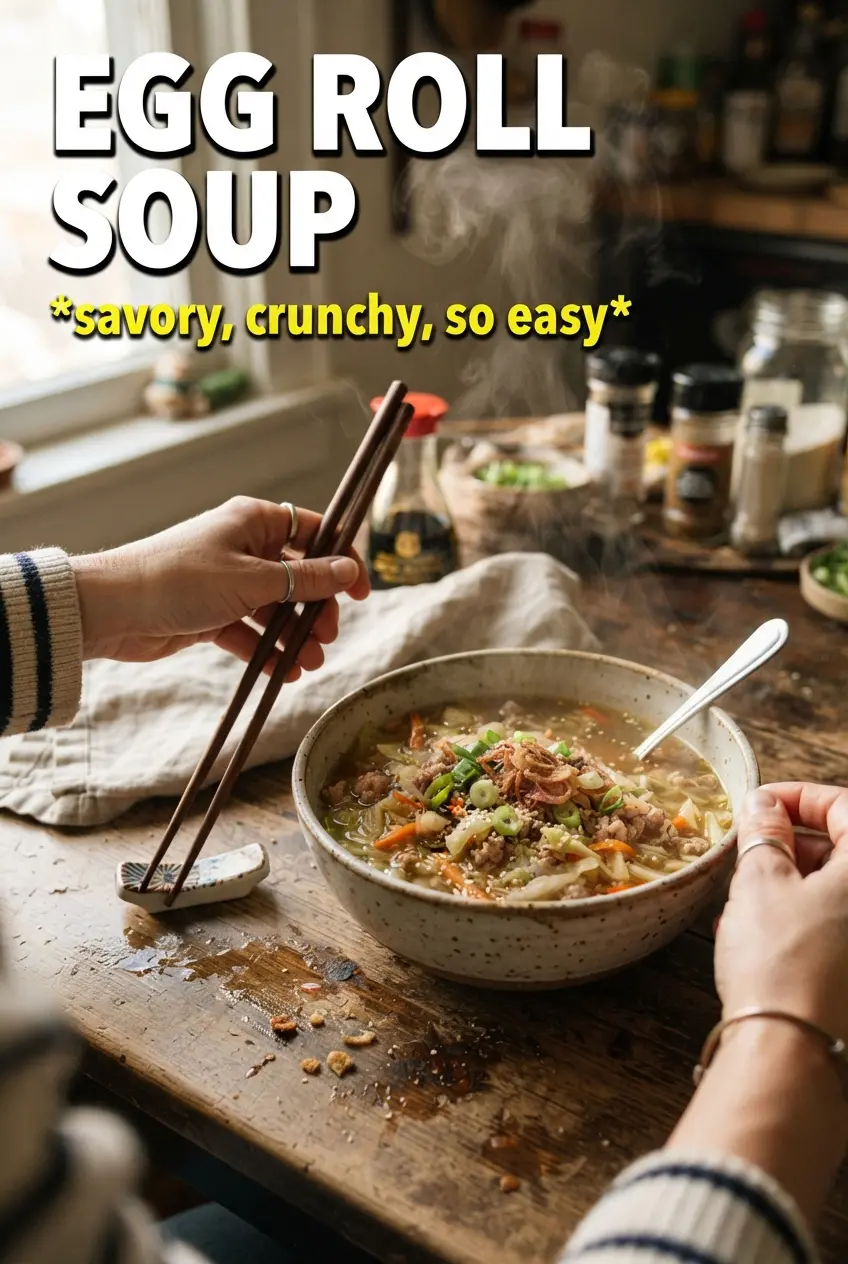
Egg Roll Soup
Ingredients
Equipment
Method
- Heat a large pot over medium-high heat and add vegetable oil. Brown the ground pork (or chicken), breaking it up, until no longer pink, then drain excess fat.
- Add the minced garlic and grated ginger to the pot and cook 1-2 minutes, stirring, until fragrant.
- Pour in the chicken broth, soy sauce, sesame oil, rice vinegar, and sriracha. Bring the mixture to a boil.
- Add the shredded cabbage and carrots, then return to a gentle simmer. Simmer 8-10 minutes until the vegetables are tender.
- Stir in the sliced green onions and season with salt and pepper to taste. Turn off the heat when the broth is well combined.
- Ladle the soup into bowls and top with crispy wonton strips. Sprinkle with sesame seeds and extra green onions for serving.