Slow cooker chicken stew comes out thick, savory, and deeply comforting when it’s built the right way. The potatoes soften just enough to hold their shape, the carrots and celery keep a little bite, and the chicken turns tender enough to shred with a spoon. What you get is a bowl with real body, not a thin soup pretending to be stew.
The trick is in the layering. The vegetables go in first so they sit in the broth and soften evenly, while the chicken thighs cook on top and baste in all that steam and flavor as they break down. The cream of chicken soup and tomato paste give the broth a richer, rounder base, and the cornstarch slurry goes in only at the end so the stew thickens cleanly instead of turning gummy.
Below, I’ll walk through the part that matters most: how to get the stew thick without dulling the flavor, plus a few smart swaps if you need to work with what’s already in the pantry.
The stew thickened up perfectly after the cornstarch slurry, and the chicken was so tender I barely had to shred it. My husband went back for seconds and said the broth tasted like it had been simmering all day.
Save this slow cooker chicken stew for a night when you want tender chicken, thick gravy, and almost no hands-on work.
The One Thing That Keeps This Stew Thick Instead of Watery
A good chicken stew needs time, but time alone won’t thicken the broth. If you dump everything into the slow cooker at once and walk away, the vegetables release moisture, the chicken adds more liquid, and you end up with a thin, muddy broth. This version avoids that by finishing with a cornstarch slurry after the chicken is already tender.
That last twenty minutes matters. Cornstarch needs heat to activate, but it also needs a clear shot at the liquid. Stirring it in at the end lets the stew turn glossy and coat a spoon without overcooking the vegetables. If it still looks loose after that, give it a few more minutes before adding anything else.
- Chicken thighs — Bone-in thighs stay juicy through a long cook and bring more flavor than boneless breast meat. If you use breasts, they’ll shred fine, but they dry out faster and the stew won’t taste as rich.
- Cream of chicken soup — This is the built-in body for the broth. It adds thickness and a little salt, so taste before adding extra seasoning at the end.
- Tomato paste — It doesn’t make the stew taste like tomato. It deepens the color and gives the broth a more rounded, savory base that reads as cooked-all-day flavor.
- Potatoes — Baby potatoes hold their shape better than russets. If you swap in russets, cut them larger or they’ll break down and cloud the stew.
What Each Ingredient Is Doing in the Pot

- Chicken thighs — These are the backbone of the dish. The connective tissue slowly melts, which is why the meat turns tender instead of stringy.
- Baby potatoes — They keep their shape and give the stew substance. Halving them helps them cook through without dissolving.
- Carrots, celery, and onion — This is the flavor base. Cut them into sturdy pieces so they don’t disappear during the long cook.
- Garlic, thyme, rosemary, and bay leaf — These season the broth from the inside out. Dried herbs work well here because the slow cooker gives them time to bloom.
- Cream of chicken soup and broth — Together, they create the stew liquid. The broth loosens the soup so it can circulate, while the soup gives the pot a creamy, velvety body.
- Cornstarch slurry — This is the final adjustment that turns the broth into stew. Mix it with cold water first so it disperses evenly instead of clumping.
Building the Stew So Nothing Turns Mushy
Start with the vegetables at the bottom
Layer the potatoes, carrots, celery, and onion on the bottom of the slow cooker before anything else. They need the most direct contact with the liquid and heat, and this keeps them from sitting dry under the chicken. If the vegetables are chopped too small, they’ll collapse before the chicken is done, so keep the pieces hearty.
Let the chicken cook on top
Set the thighs over the vegetables, then add the broth, soup, tomato paste, garlic, herbs, and bay leaf. The chicken doesn’t need to be submerged; the trapped steam and simmering liquid will cook it through just fine. Don’t stir hard once everything’s in place, or you’ll break up the vegetables and turn the broth cloudy too early.
Thicken only after the chicken is tender
When the chicken is falling-apart tender, remove it, discard the skin and bones, and shred the meat. Pull out the bay leaf, then stir in the cornstarch slurry and cook on High for about 20 minutes. The stew should go from loose and brothy to silky enough to coat the back of a spoon; if it’s still thin, give it a few more minutes before returning the chicken.
Finish with seasoning and parsley
Stir the shredded chicken back in and taste before adding salt and pepper. Slow cooker dishes often need that final seasoning step because the lid traps moisture and softens the saltiness of the broth. A handful of fresh parsley right at the end brightens the whole pot and keeps the stew from tasting heavy.
How to Adapt This for a Different Pantry or a Bigger Batch
Gluten-Free Version Without Losing the Body
Use a gluten-free cream of chicken soup or replace it with a gluten-free cream-style soup that behaves the same way in the slow cooker. The cornstarch finish already keeps this stew naturally gluten-free as long as your broth and soup are certified. The result stays just as thick and comforting.
Using Chicken Breasts Instead of Thighs
You can swap in boneless, skinless chicken breasts, but shorten the cook a little and check early for doneness. Breasts don’t bring the same richness and they dry out faster, so shred them as soon as they’re tender. The stew will still work, but the broth will taste lighter.
Making It Dairy-Free
Use a dairy-free cream-style soup or replace the canned soup with extra broth plus a dairy-free thickener like a cornstarch slurry and a little extra tomato paste. The stew won’t have quite the same creamy note from the can, but it will still come out thick and savory. Taste at the end, because dairy-free swaps often need a little more salt and herb lift.
Storage and Reheating
- Refrigerator: Keep in an airtight container for up to 4 days. The stew thickens as it chills, so it may look firmer the next day.
- Freezer: It freezes well for up to 3 months. Cool it completely first, then freeze in portions so the potatoes don’t get smashed during thawing.
- Reheating: Warm it gently on the stove or in the microwave, adding a splash of broth if it’s thicker than you want. Don’t blast it on high heat, or the potatoes can split and the chicken can go stringy.
Answers to the Questions Worth Asking
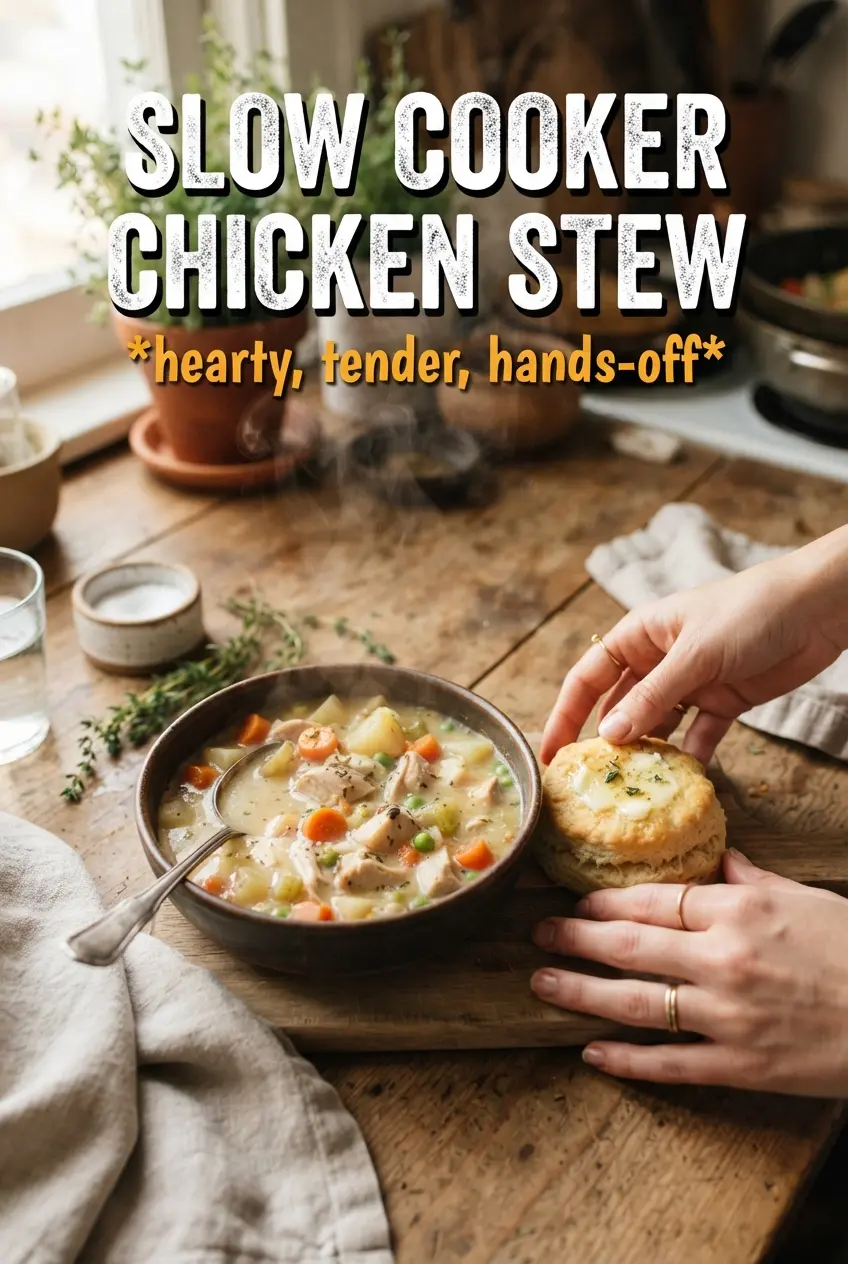
Slow Cooker Chicken Stew
Ingredients
Equipment
Method
- Add the baby potatoes, carrots, celery, and onion to the bottom of the slow cooker in an even layer.
- Nestle the bone-in chicken thighs on top, then scatter in the minced garlic and pour in the chicken broth and cream of chicken soup.
- Stir in the tomato paste, dried thyme, dried rosemary, and add the bay leaf so everything is partially submerged.
- Cover and cook on Low for 6-8 hours until the chicken is very tender.
- If needed, cook on High for 3-4 hours until the chicken is very tender.
- Remove the chicken thighs, discard the skin and bones, and shred the meat.
- Remove the bay leaf from the stew.
- Stir the cornstarch slurry into the stew, then cook on High for 20 minutes until the gravy thickens and looks glossy.
- Return the shredded chicken to the slow cooker and season with salt and pepper to taste.
- Garnish with fresh parsley and serve hot.