Cannellini beans, rosemary, and kale turn into a soup that tastes like it simmered all afternoon, even though the pot is on the stove for just over half an hour. The broth gets savory from pancetta and parmesan rind, then turns creamy when a few of the beans are mashed right in the pot. That one move gives you body without flour, cream, or any extra fuss.
The trick here is building flavor in layers. First you render the pancetta so the fat can season the onions, celery, and garlic. Then the tomatoes, broth, rosemary, and parmesan rind get time to mingle before the kale goes in at the end, which keeps it green and tender instead of dull and mushy. If you’ve ever had white bean soup that tasted thin or flat, this version fixes both problems.
Below, I’ve included the step that makes the broth thick enough to feel substantial, plus a few simple swaps if you want to skip the meat or use what you already have in the pantry.
The broth thickened up perfectly after I mashed some of the beans, and the rosemary with the parmesan rind gave it a depth I wasn’t expecting. We ate it with crusty bread and no one missed anything else.
Save this Tuscan White Bean Soup for nights when you want a brothy, hearty bowl with rosemary, kale, and creamy beans.
The Broth Needs One Creamy Move Before the Kale Goes In
White bean soup can taste perfectly seasoned and still fall flat if the broth stays too thin. The fix is simple: mash a portion of the beans after they’ve simmered long enough to soften and release starch. That gives the soup body without turning it into a puree, and it’s why this bowl feels hearty enough to count as dinner.
Don’t rush the pancetta or the aromatics. The rendered fat carries the onion, celery, and garlic, and those browned bits at the bottom of the pot are part of the flavor base. If you add the broth too early, you lose the chance to build that savory layer first.
What Each Ingredient Is Doing in the Pot
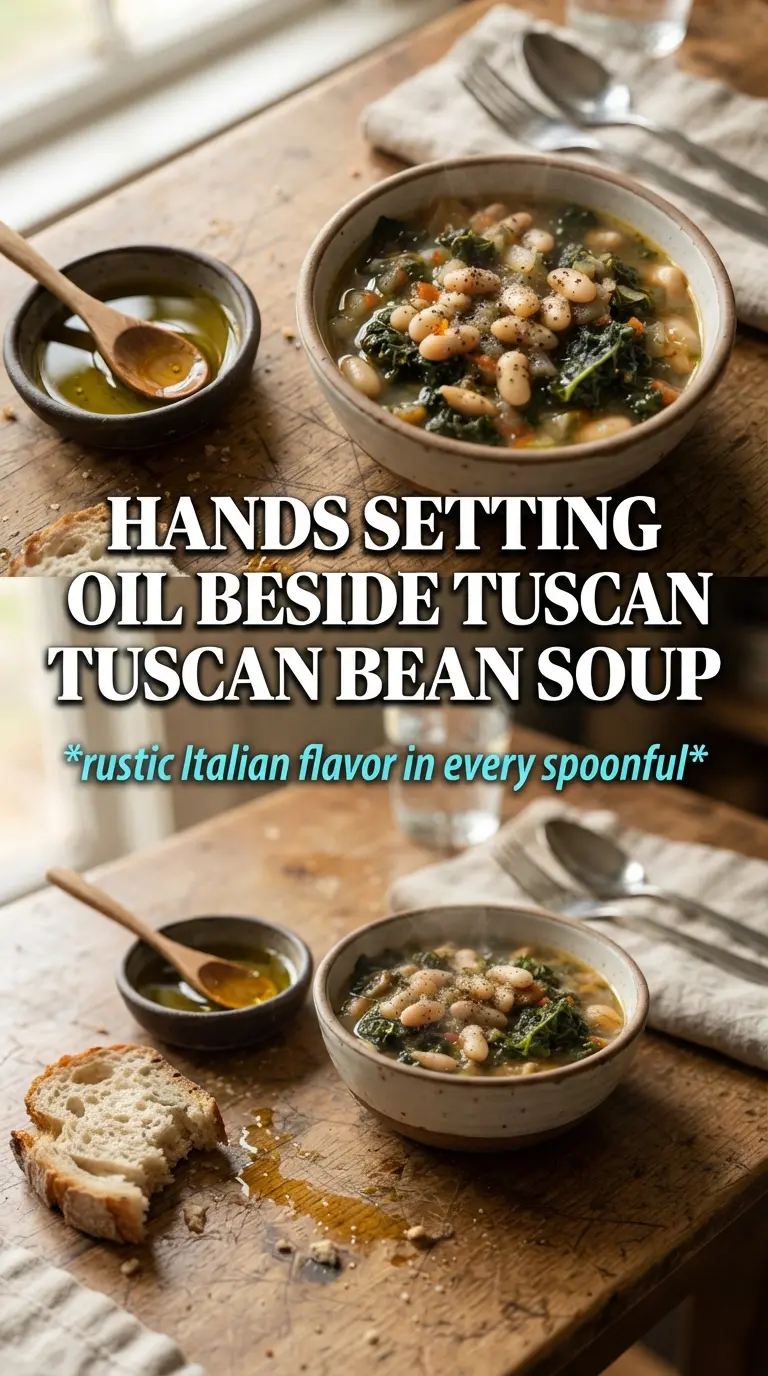
- Cannellini beans — These are the backbone of the soup. They get creamy when simmered and mashed, which is what thickens the broth naturally. Great Northern beans work in a pinch, but cannellini stay a little silkier and hold their shape better.
- Pancetta or bacon — This adds the first layer of salt and smoke. Pancetta gives a more classic Italian feel, while bacon is sharper and a little more pronounced. If you skip the meat, add an extra drizzle of olive oil and a pinch of salt at the end so the soup doesn’t taste lean.
- Parmesan rind — This is optional, but it pulls a surprising amount of savory depth into the broth. Drop it in early and let it simmer with the beans. If you don’t have one, a small handful of grated parmesan stirred in at the end helps, though it won’t give quite the same roundness.
- Kale — Add it at the end so it stays tender and bright. It only needs a few minutes in the hot broth. If you overcook it, it turns muddy and loses that pleasant bite.
- Rosemary — Fresh rosemary is worth using here because it perfumes the whole pot without needing much else. Dried rosemary can work, but use less and crush it between your fingers before adding so it doesn’t stay woody and sharp.
Building the Soup in the Right Order
Render the Pancetta Until the Fat Turns Gold
Start the pancetta in a large pot over medium heat and cook until the pieces are crisp at the edges and the fat has rendered into the pan. If you pull it too early, you miss the flavor that seasons everything else. Remove it with a slotted spoon and leave the fat behind.
Soften the Aromatics in the Pan Drippings
Add the onion, celery, and garlic to the hot fat and cook until the onion looks translucent and the celery has softened. The garlic should smell sweet and fragrant, not sharp. If the garlic starts to brown fast, lower the heat; burnt garlic will take over the whole pot.
Simmer the Beans Until the Broth Tastes Full
Stir in the tomatoes, broth, rosemary, parmesan rind, Italian seasoning, and beans, then bring everything up to a boil before lowering it to a steady simmer. This is where the broth picks up its deep, savory character. Give it the full 20 minutes so the beans soften enough to mash later without turning chalky.
Mash, Then Wilt the Kale at the End
Pull out the rosemary stems and parmesan rind, then mash about a third of the beans against the side of the pot. The soup should look thicker immediately, with a slightly rustic texture. Stir in the kale and simmer just until it turns tender and dark green, then finish with salt, pepper, olive oil, parmesan, and the reserved pancetta.
How to Adapt This for Meatless, Heartier, or Pantry-Only Nights
Vegetarian Version That Still Tastes Deep and Savory
Skip the pancetta and use vegetable broth, then add an extra tablespoon of olive oil at the end plus the parmesan rind if you eat dairy. The soup will be a little lighter, but the beans, rosemary, and parmesan still give it plenty of backbone. For a fully vegetarian finish, use grated parmesan on top or leave it out entirely and add a touch more salt.
No Kale? Use Another Green With a Short Cook Time
Spinach, escarole, or chard all work here. Spinach wilts fast and gives the softest texture, while escarole adds a more bitter, sturdy edge. Add any of them near the end so they stay fresh instead of fading into the broth.
Make It Meatier Without Changing the Method
Use bacon instead of pancetta and keep the reserved crisp bits for serving. You can also add a browned Italian sausage link, sliced, if you want a heavier bowl. The key is still the same: build the base first, then let the beans and greens finish the job.
Storage and Reheating
- Refrigerator: Store in an airtight container for up to 4 days. The soup thickens as it sits, so it may look a little denser the next day.
- Freezer: It freezes well for up to 3 months, though the kale softens a bit after thawing. Cool it completely before freezing in portions.
- Reheating: Warm gently on the stove over medium-low heat with a splash of broth or water if needed. Don’t boil it hard or the greens can turn dull and the beans can break down too much.
Answers to the Questions Worth Asking
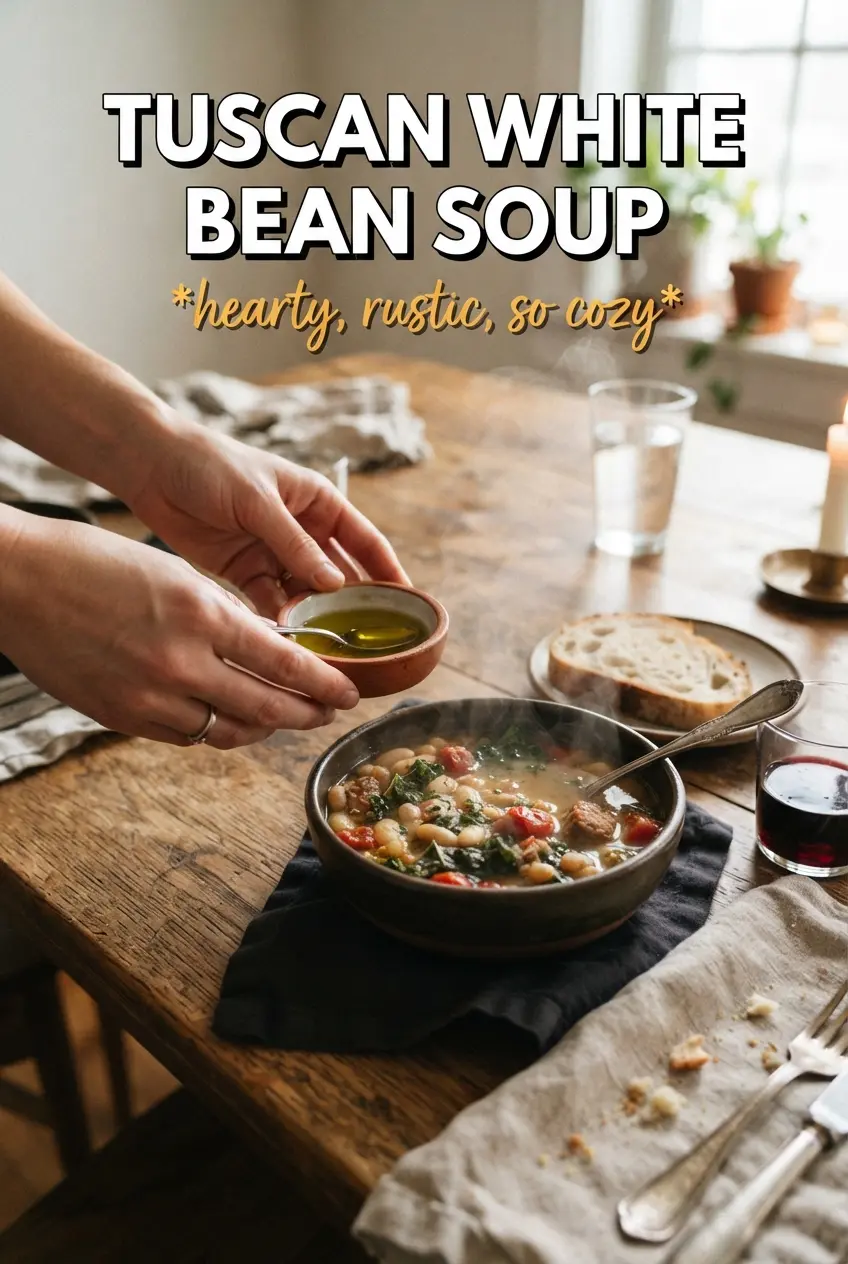
Tuscan White Bean Soup
Ingredients
Equipment
Method
- Cook the pancetta in a large pot until crispy, then remove and set aside so the fat stays in the pot.
- Sauté the onion, celery, and garlic in the pancetta fat for 5 minutes, stirring until softened and fragrant.
- Add the diced tomatoes, broth, rosemary sprigs, parmesan rind if using, and Italian seasoning, then bring to a boil.
- Add the cannellini beans and simmer for 20 minutes to heat through and develop body.
- Remove the rosemary and parmesan rind, then mash about a third of the beans in the pot to thicken the soup.
- Add the kale and simmer for 5-8 minutes until wilted and tender.
- Season with salt and pepper to taste, then drizzle with olive oil and top with parmesan shavings and the pancetta.