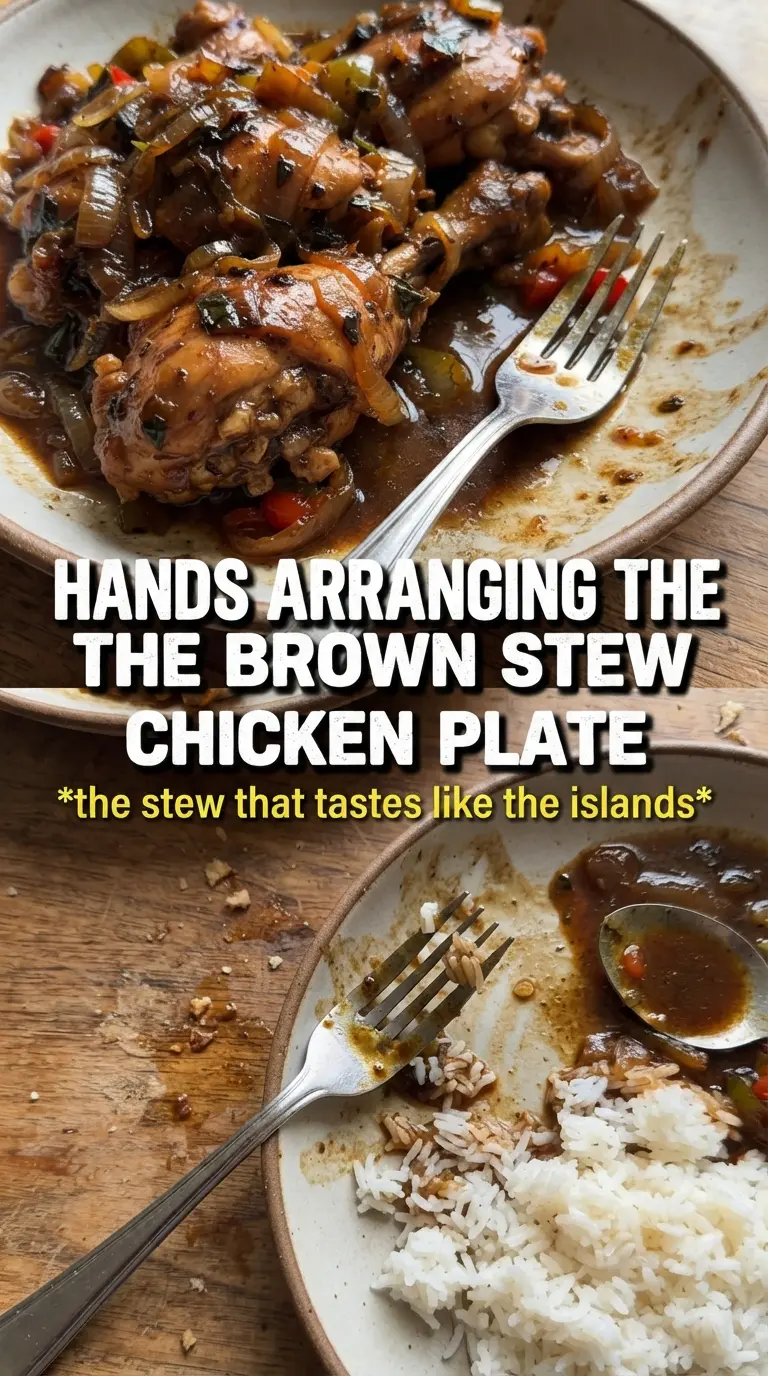
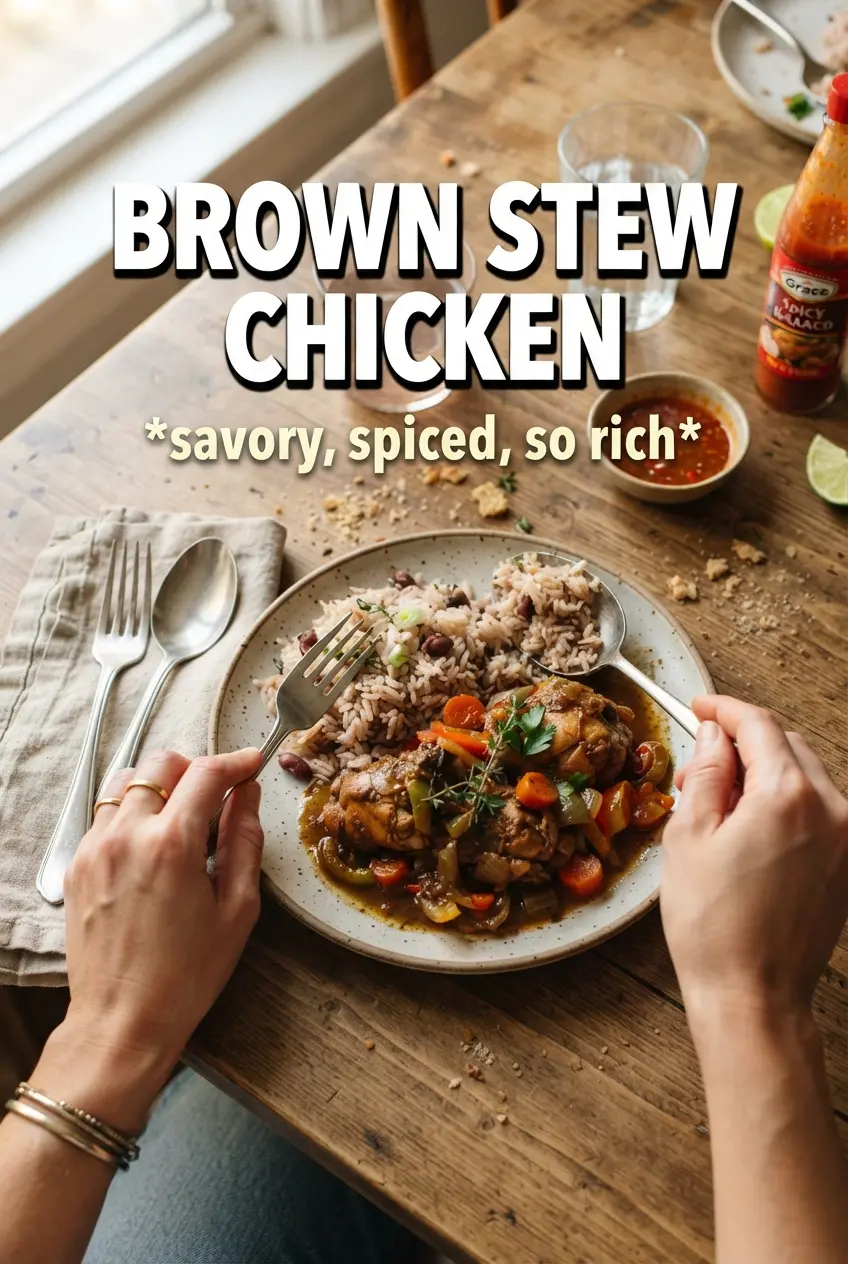
Brown stew chicken lands on the table with a deep mahogany gravy, tender meat that slides off the bone, and peppers that soften just enough to soak up all that savory spice. The best versions don’t taste like plain braised chicken with sauce poured over the top. They taste layered, with browned chicken, caramelized sugar, and a marinade that’s had time to sink in before the pan ever hits the stove.
What makes this version work is the sequence. The chicken gets seasoned ahead of time with browning sauce, thyme, garlic, and onion powder so the flavor is already inside the meat before cooking starts. Then the sugar is cooked until it turns amber, which gives the stew its color and a deep, slightly smoky edge. Don’t rush that part. If the sugar is pale, the gravy stays thin and flat; if it goes too dark, it turns bitter fast.
Below you’ll find the part that matters most: how to keep the chicken juicy while the gravy reduces, plus the small changes you can make if you want extra heat or need to work around what’s in your pantry.
The chicken browned up beautifully and the gravy thickened into that rich, dark sauce I was hoping for. I marinated it overnight, and the flavor went all the way through the meat.
Save this Brown Stew Chicken for the nights when you want deep Jamaican flavor, glossy gravy, and tender chicken over rice.
The Sugar Has to Turn Amber Before Anything Else
Brown stew chicken gets its signature color from two places: the browning sauce in the marinade and the caramelized sugar in the pan. The sugar step is the one people skip or undercook, and that’s where the dish loses depth. You want the oil and sugar to move from clear and pale to a rich amber, with tiny bubbles and a nutty smell. The second it smells sharp or looks nearly black, it’s gone too far.
That caramel does more than color the chicken. It gives the sauce that dark, glossy finish and a little bitterness to balance the sweetness of the peppers and onions. If you add the chicken before the sugar is ready, it won’t brown the same way. It will just sit there in oily steam and never build that classic stew base.
- Chicken thighs and drumsticks — Bone-in pieces hold up best in a long simmer and stay juicy. Boneless chicken cooks faster, but it won’t give you the same rich gravy or the same satisfying texture.
- Browning sauce — This adds color and a roasted, slightly bitter edge that plain soy sauce or extra seasoning can’t fully replace. If you can’t find it, a little extra caramelization helps, but the flavor won’t be identical.
- Scotch bonnet or habanero — Use it for heat, but keep it optional if you want a family-friendly pot. Leave it whole for less spice or mince it for a stronger kick.
- Thyme and green onions — These bring the Jamaican backbone of the dish. Dried thyme works in the marinade, but fresh thyme at the end gives the pot a brighter finish.
What Each Ingredient Is Actually Doing in This Recipe
- Primary ingredient (the star) — Quality matters most. Choose the best you can find.
- Cooking medium (oil, butter, or broth) — This carries flavors and prevents dryness.
- Seasonings (salt, pepper, spices, herbs) — Layer flavors so nothing overpowers. Build depth gradually.
- Aromatics (garlic, onion, herbs) — Cook with fat to bloom flavors. Become the foundation.
- Supporting ingredients — Complement the main ingredient without overpowering it.
- Sauce or liquid (if applicable) — Brings flavors together. Balance richness with acid.
- Acid (lemon, vinegar, wine, or other) — Brightens and prevents flat-tasting results.
- Final finish (garnish, glaze, or sauce) — Prevents one-dimensional taste and adds visual appeal.
Building the Pot So the Chicken Stays Tender
Marinating for Real Flavor
Mix the chicken with the browning sauce, all-purpose seasoning, garlic powder, onion powder, thyme, salt, and pepper, then let it sit for at least two hours. Overnight is even better. The seasoning doesn’t just sit on the surface here; it starts to change the meat so every bite tastes seasoned all the way through. If you rush this, the stew still works, but it tastes flatter and more one-note.
Caramelizing the Sugar
Heat the oil in a large skillet or Dutch oven, then add the sugar and let it melt without stirring constantly. It will clump at first, then loosen into a dark liquid that smells toasted. Pull it off the heat as soon as it reaches a rich amber color. If it darkens too fast, lower the heat right away; burnt sugar will make the whole pot bitter.
Getting the Simmer Right
Brown the marinated chicken in the caramel oil until the outside is deeply golden, then remove it before sautéing the onion, peppers, garlic, green onions, and scotch bonnet. Once the chicken goes back in and the broth is added, bring everything to a boil, then drop the heat to a gentle simmer. You want steady bubbling, not a hard boil. Too much heat will tighten the meat before the gravy has time to thicken.
Knowing When It’s Done
After 35 to 40 minutes, the chicken should be fall-apart tender and the gravy should coat a spoon instead of looking watery. If the sauce still seems thin, uncover the pot for the last few minutes and let it reduce. If the chicken starts shredding before the gravy is where you want it, lower the heat sooner. This dish is at its best when the sauce clings to the chicken instead of pooling around it.
How to Adapt This for Different Heat Levels and Dietary Needs
Milder Version Without Losing the Jamaican Flavor
Skip the scotch bonnet entirely or leave it whole and remove it before serving. The stew still tastes right because the thyme, browning sauce, garlic, and caramelized sugar do the heavy lifting. You lose heat, not character.
Gluten-Free Brown Stew Chicken
Use a gluten-free all-purpose seasoning and check your browning sauce and broth labels carefully. The rest of the recipe already fits naturally into a gluten-free meal, and the texture stays exactly the same.
Using Chicken Breast Instead of Dark Meat
You can use bone-in chicken breast, but shorten the simmer and watch it closely. Breast meat dries out faster and won’t give you the same plush texture, so pull it as soon as it’s cooked through and the gravy has reduced.
Storage and Reheating
- Refrigerator: Store covered for up to 4 days. The gravy thickens as it chills, and the seasoning gets even deeper by day two.
- Freezer: It freezes well for up to 2 months. Cool it completely first and freeze the chicken with enough gravy to keep it from drying out.
- Reheating: Warm it gently on the stove over low heat with a splash of broth or water. High heat can make the chicken stringy and turn the gravy greasy.
Answers to the Questions Worth Asking
Brown Stew Chicken
Ingredients
Equipment
Method
- Combine the browning sauce, all-purpose seasoning, garlic powder, onion powder, dried thyme, salt, and pepper, then coat the bone-in chicken thighs and drumsticks well.
- Cover and refrigerate to marinate for at least 2 hours or overnight for the best flavor.
- Heat the vegetable oil in a large skillet or Dutch oven over medium heat, then add the sugar and let it caramelize until golden brown.
- Brown the marinated chicken pieces in the caramel oil until deeply golden on all sides, then remove to a plate.
- Sauté the onion, green bell pepper, red bell pepper, garlic, green onions, and scotch bonnet 4 minutes, stirring until fragrant.
- Return the chicken to the pot, add the chicken broth, and bring the mixture to a boil.
- Reduce heat to low, cover, and simmer 35-40 minutes until the chicken is fall-apart tender and the gravy is thick.
- Serve the brown stew chicken with rice and finish with fresh thyme for garnish.