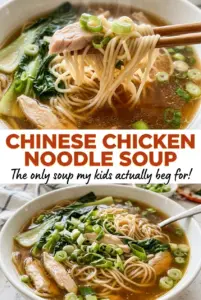
Clear broth, tender chicken, and slippery noodles make Chinese chicken noodle soup one of those meals that lands hard when you want something light but still satisfying. The broth tastes clean and savory, not muddy or heavy, and the bok choy and shiitakes give it enough body that it eats like a full dinner instead of a bowl of plain soup. The finish of white pepper and sesame oil is what gives it that takeout-adjacent comfort without flattening the flavor.
What makes this version work is timing. The garlic and ginger go into the simmering broth first so they perfume the soup without getting raw or harsh, then the chicken cooks gently in the broth instead of boiling hard and turning dry. Cooking the noodles separately keeps the soup clear and keeps leftovers from turning starchy and swollen. Bok choy goes in at the very end so it stays bright and just tender.
Below, I’ll walk through the part that matters most: how to keep the broth clean-tasting, how to season it without overdoing the soy sauce, and how to serve it so every bowl has the right balance of noodles, greens, and chicken.
The broth came out clear and flavorful, and cooking the noodles separately kept them from getting mushy. My husband kept going back for more because the ginger and sesame oil were balanced perfectly.
Save this Chinese chicken noodle soup for the night you want a clear, savory broth and noodles that stay perfectly springy.
The Secret to Keeping the Broth Clear Instead of Cloudy
Cloudy chicken noodle soup usually comes from boiling too hard, cooking the noodles in the pot, or letting the broth reduce aggressively while everything else is still in it. This recipe avoids all three. The broth stays at a gentle simmer, the noodles are cooked on their own, and the chicken gets just enough time to cook through without shredding into tiny bits that haze the soup.
The other thing that matters here is seasoning in layers. Soy sauce brings salt and depth, sesame oil brings roundness, and rice vinegar keeps the broth from tasting flat. White pepper belongs at the end because it stays sharper that way; if you cook it too long, it loses the clean bite that makes Chinese-style soup taste like itself.
What Each Ingredient Is Actually Doing in This Bowl
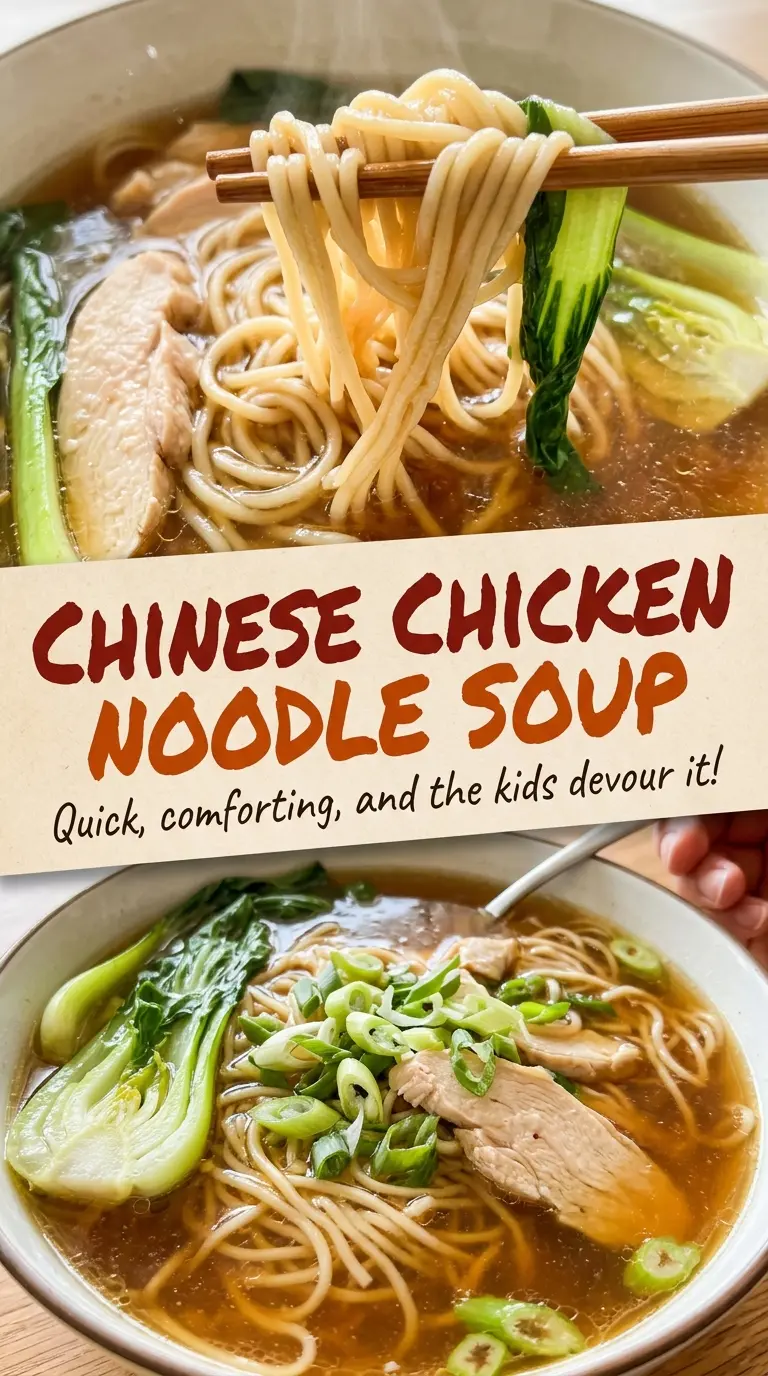
- Chicken breast — Thin slicing is what keeps it tender in a short simmer. If you cut it thick, it can turn firm before the broth gets good flavor into it. Thighs work too if you want a richer soup, but they change the texture and make the broth a little more opaque.
- Chicken broth — This is the backbone of the dish, so use one that tastes good on its own. If yours is bland, the soup will be bland no matter how much ginger and soy sauce you add. Low-sodium broth is the safer choice because it gives you room to adjust at the end.
- Fresh ginger and garlic — These are not background aromatics here; they define the whole soup. Grating the ginger helps it release flavor quickly, and minced garlic lets the broth pick up body without any raw bite. Don’t rush this part by cranking up the heat.
- Shiitake mushrooms — They add the earthy depth that makes the broth taste fuller. Fresh shiitakes are best, but cremini will work in a pinch. Dried shiitakes bring even more intensity if you rehydrate them first and use a little of their soaking liquid in place of some broth.
- Bok choy — Add it late so the stems stay crisp-tender and the leaves wilt without turning slimy. Napa cabbage can stand in if that’s what you have, though it will soften more and taste a little sweeter.
- Thin Chinese wheat noodles or rice noodles — These cook fast and keep the bowl light. Thin wheat noodles give you a chewier, more classic takeout feel, while rice noodles keep it gluten-free. Cook them separately so the soup stays clean and the noodles don’t soak up all the broth.
- Sesame oil, soy sauce, rice vinegar, and white pepper — This is the finishing layer that makes the bowl taste complete. Sesame oil should be added in a modest amount because it can take over fast. White pepper is the signature note, and a tiny amount is enough to give the soup its warm, peppery finish.
The Gentle Simmer That Keeps the Chicken Tender
Building the Broth Base
Bring the broth to a simmer first, then add the garlic and ginger and let them steep for about 5 minutes. You want little bubbles, not a rolling boil. If the heat is too high, the garlic can turn sharp and the broth starts to look dull instead of clean. This stage is about perfume and depth, not reduction.
Seasoning Before the Chicken Goes In
Stir in the soy sauce, sesame oil, and rice vinegar before the chicken. That gives the broth a balanced base so the chicken seasons as it cooks. Taste it now; it should be savory and bright, not salty enough to make your mouth pucker. If it tastes flat, the answer is usually a touch more soy sauce or vinegar, not more salt.
Cooking the Chicken and Mushrooms Gently
Add the sliced chicken and mushrooms and simmer until the chicken is just cooked through, about 10 to 12 minutes. Thin slices cook fast, so don’t walk away and let the soup boil hard. Hard boiling tightens the chicken and clouds the broth. The chicken is done when it’s opaque all the way through and still tender when you bite it.
Finishing the Noodles and Greens
Cook the noodles separately according to the package, drain them, and divide them into bowls. Add the bok choy to the soup and cook it just until the stems turn bright and the leaves wilt, about 3 minutes. Ladle the broth and toppings over the noodles right away, then finish with white pepper, green onions, cilantro, and chili oil. That last drizzle gives the bowl heat and aroma without overpowering the broth.
Three Ways to Adjust the Bowl Without Losing What Makes It Work
Gluten-Free Version
Use rice noodles and check that your soy sauce is gluten-free, or swap in tamari. The broth stays just as savory, and the bowl keeps its light texture. This is the easiest swap in the recipe because the rest of the ingredients already fit naturally.
Swap the Chicken for Tofu
Use firm tofu cut into cubes and add it near the end so it warms through without breaking apart. You’ll lose a little of the broth’s meaty depth, so keep the shiitakes and ginger in place; they do more of the heavy lifting in a vegetarian bowl. A splash of mushroom broth can help replace the savory backbone.
Make It Heartier
Add extra mushrooms, more bok choy, or a handful of shredded napa cabbage if you want the soup to eat more like a full meal. You can also use a few more noodles, but don’t crowd the bowl so much that the broth gets lost. The best version still leaves room for the broth to stay front and center.
Storage and Reheating
- Refrigerator: Store the broth, chicken, and vegetables for up to 4 days. Keep the noodles separate if you can; otherwise they’ll absorb broth and soften.
- Freezer: The broth, chicken, and mushrooms freeze well for up to 3 months, but freeze the noodles separately or make them fresh. Bok choy softens after freezing, so add fresh greens when reheating if you want the best texture.
- Reheating: Reheat the broth gently on the stove until steaming, not boiling. Add noodles to the bowl first, then ladle the hot soup over them. Microwaving everything together tends to overcook the chicken and leaves the noodles gummy.
Answers to the Questions Worth Asking
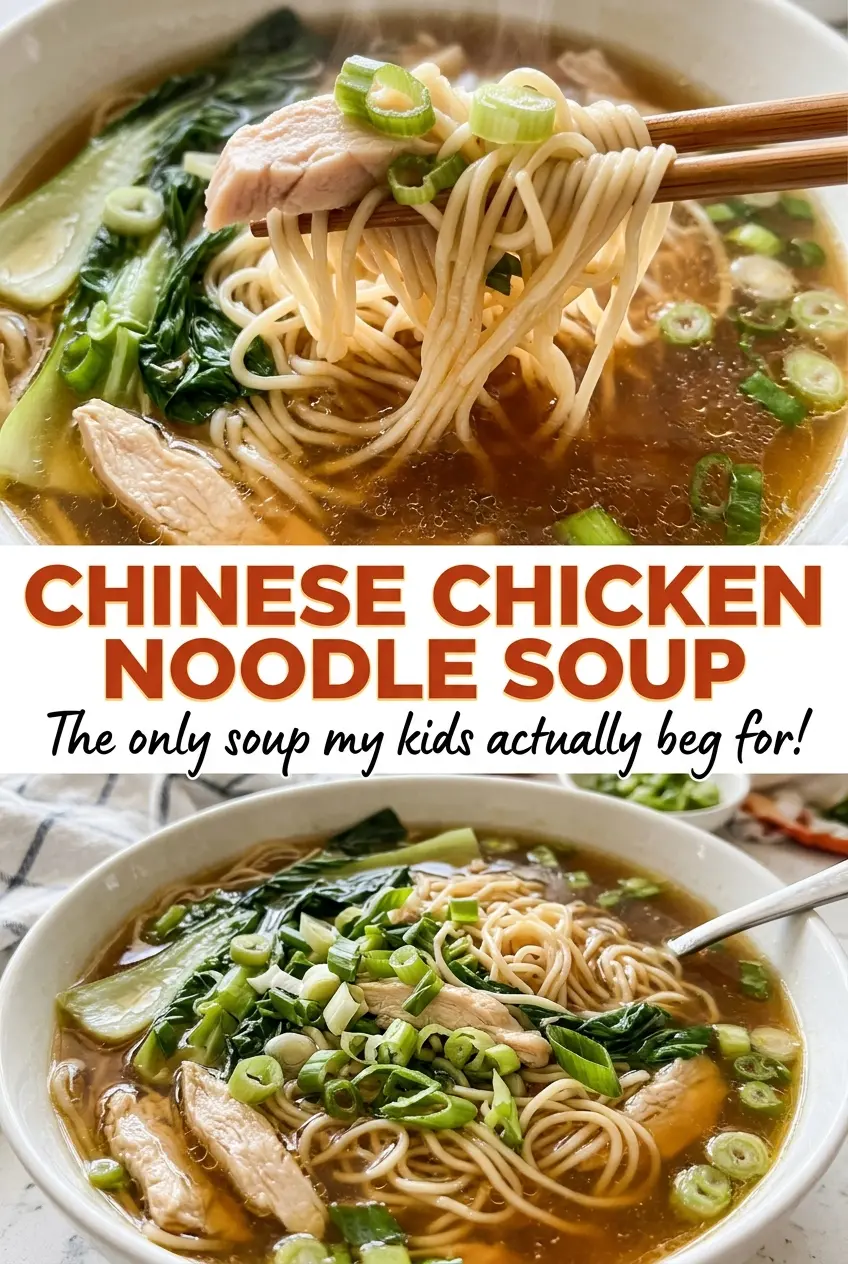
Chinese Chicken Noodle Soup
Ingredients
Equipment
Method
- Bring the chicken broth to a simmer in a large pot, then add the minced garlic and grated ginger and cook for 5 minutes.
- Stir in the soy sauce, sesame oil, and rice vinegar, then adjust seasoning to taste.
- Add the thinly sliced chicken and sliced shiitake mushrooms to the broth and simmer for 10-12 minutes, until the chicken is cooked.
- Cook the thin Chinese wheat noodles or rice noodles separately according to package directions, then drain and divide into bowls.
- Add the chopped bok choy to the broth and cook for 3 minutes, until wilted.
- Ladle the soup over the noodles, then season with white pepper and salt to taste.
- Garnish each bowl with sliced green onions, cilantro, and a drizzle of chili oil.