Silky coconut broth, tender chicken, and slippery rice noodles give Thai chicken noodle soup the kind of bowl that disappears fast. The broth lands somewhere between bright and rich: red curry for warmth, lime for lift, and coconut milk for body without feeling heavy. Every spoonful gets a little crunch from bean sprouts and a fresh hit of basil at the end.
What makes this version work is the order. The curry paste gets cooked in the pot first so it blooms instead of tasting raw, and the coconut milk goes in with the broth so the soup turns creamy without needing any flour or roux. Rice noodles are soaked separately and added near the end, which keeps them from turning gummy and soaking up all the broth before the soup hits the table.
Below, you’ll find the small details that matter most here: how long to simmer the aromatics, when to add the chicken so it stays tender, and how to keep the noodles springy if you’re serving this for a crowd.
The curry broth came together fast and the noodles stayed springy instead of mushy. I loved that the lime and basil at the end made it taste fresh, not just rich.
Save this Thai Chicken Noodle Soup for the nights when you want a creamy curry broth, tender chicken, and springy rice noodles in one bowl.
The Reason the Curry Base Needs to Bloom Before Anything Else
Red curry paste is the backbone of the soup, but it only tastes full and round if you give it a minute in the oil first. If you dump it straight into broth, it can taste flat and a little raw. Cooking it in oil pulls out the chile, garlic, and spice notes so the whole pot tastes deeper from the first sip.
The other common mistake is rushing the chicken. Thin slices cook quickly in hot liquid, but the soup still needs a gentle simmer. Hard boiling can make the coconut milk look grainy and tighten the chicken instead of keeping it tender.
What Each Ingredient Is Actually Doing in This Soup

- Chicken breast or thighs — Thighs stay juicier and are a little more forgiving, but breast works well if you slice it thin so it cooks fast. Cut against the grain for the softest bite.
- Coconut milk — This gives the broth its body and smooth texture. Use full-fat coconut milk if you want the soup to feel rich and balanced; lite coconut milk makes the broth thinner and less silky.
- Red curry paste — This is where most of the flavor lives. Brands vary a lot, so taste the broth before serving and adjust with a little more lime or fish sauce if yours is mild.
- Rice noodles — Soaking them first keeps them from breaking apart in the pot. They only need a short finish in the hot broth, or they’ll go soft and lose their chew.
- Lemongrass and galangal — These give the soup its Thai-style perfume. If you can’t find galangal, fresh ginger works, but the flavor is warmer and less citrusy.
- Fish sauce, lime juice, and brown sugar — These three are the balance check. Fish sauce brings salt and depth, lime sharpens the broth, and sugar rounds off the edges so the curry doesn’t taste harsh.
Building the Broth Without Breaking the Coconut Milk
Blooming the Curry Paste
Heat the oil first, then cook the red curry paste until it darkens slightly and smells fragrant, about a minute or two. You’re looking for the moment it stops smelling sharp and starts smelling toasted and round. If the pan is too hot, the paste can scorch at the edges before the flavor has time to open up, so keep the heat at medium and stir constantly.
Adding the Aromatics
Stir in the garlic, bruised lemongrass, and galangal and cook just until the garlic loses its raw smell. The pot should smell bright and layered, not browned. If the garlic starts to color, lower the heat right away; burnt garlic will carry through the whole soup and cover up the curry.
Simmering the Soup Base
Pour in the coconut milk and broth, then add the fish sauce, lime juice, and brown sugar. Let the soup simmer gently for about 10 minutes so the aromatics infuse the liquid. A hard boil can split the coconut milk and make the broth look oily instead of smooth.
Cooking the Chicken and Finishing the Noodles
Add the sliced chicken and simmer until it’s cooked through and just opaque in the center. Pull out the lemongrass and galangal before adding the drained noodles, then give them only a brief finish in the hot broth. If the noodles sit too long, they keep drinking liquid and the soup turns into a thick stew instead of a broth-forward bowl.
How to Adapt This for Different Kitchens and Dietary Needs
Use chicken thighs for a richer, more forgiving bowl
Thighs hold up a little better if the soup simmers a few minutes too long, and they bring more flavor to the broth. Breast is leaner and works fine, but it goes from tender to dry faster, so keep the simmer gentle and watch it closely.
Make it dairy-free without changing a thing
This soup is already dairy-free as written, so the main job is choosing a full-fat coconut milk that gives the broth a smooth, creamy body. Just avoid coconut milk beverages from the carton; they’re too thin and the soup won’t have the same finish.
Swap the noodles for a lower-carb bowl
If you want the flavor without the rice noodles, serve the soup over shredded cabbage, zucchini ribbons, or cauliflower rice. The broth stays the same, but the bowl will be lighter and less starchy, which also means it won’t thicken as much as it sits.
How to handle leftovers without soggy noodles
If you know you’ll have leftovers, keep the noodles separate from the broth and add them to each bowl as you reheat. That keeps the noodles from swelling and turning soft in the fridge. The broth itself reheats well and often tastes even better the next day after the curry has had time to settle.
Storage and Reheating
- Refrigerator: Store the broth and chicken for up to 4 days. The noodles will soften over time, so keep them separate if possible.
- Freezer: The broth freezes well for up to 2 months, but freeze it without the noodles. Coconut milk can separate slightly when thawed, so whisk it over low heat when reheating.
- Reheating: Warm the soup gently on the stove over medium-low heat until steaming, then add the noodles at the end just until hot. A full boil can make the chicken tougher and the coconut broth look broken.
Answers to the Questions Worth Asking
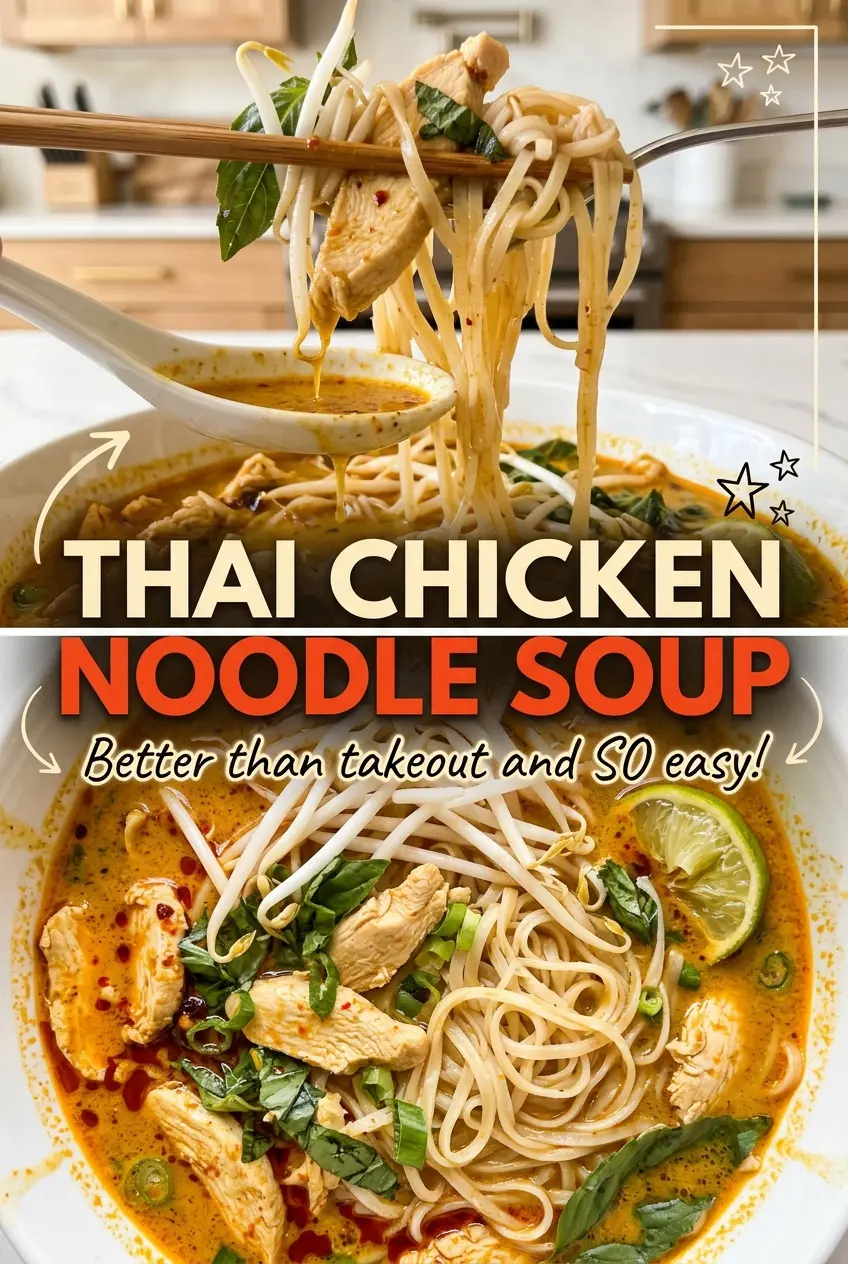
Thai Chicken Noodle Soup
Ingredients
Equipment
Method
- Soak the rice noodles in warm water for 15 minutes, then drain and set aside.
- Heat 1 tablespoon oil in a large pot, then cook the red curry paste for 1-2 minutes until fragrant.
- Add the garlic, lemongrass, and galangal, then cook for 1 minute until aromatic and glossy.
- Pour in the coconut milk and chicken broth, then add the fish sauce, lime juice, and brown sugar; stir to combine.
- Simmer the broth for 10 minutes, then add the sliced chicken and cook for 8-10 minutes until cooked through and no longer pink.
- Remove the lemongrass and galangal, then add the drained rice noodles and heat through for 2-3 minutes until tender.
- Serve immediately with bean sprouts, green onions, Thai basil, cilantro, lime wedges, and sliced red chili as a vibrant topping.