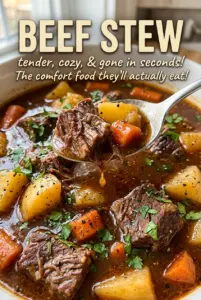
Beef stew earns its place in the rotation when the broth turns deep and glossy, the beef goes spoon-tender, and the potatoes hold their shape without turning chalky. The best bowls have that slow-cooked depth you can taste before you even take a bite: browned beef, sweet carrots, a little tomato richness, and enough body in the broth to coat the back of a spoon.
This version gets there by building flavor in layers. Tossing the beef in flour before searing helps it brown properly and gives the stew a little natural thickness later on. Red wine deglazes the pot and lifts all those browned bits off the bottom, while tomato paste gets cooked long enough to lose its raw edge and blend into the broth instead of sitting on top of it. The peas go in at the end so they stay bright instead of tired and gray.
Below, I’ll walk you through the part that matters most: how to brown the beef without crowding the pan, when to add the potatoes so they keep their texture, and how to adjust the stew if you want it a little thicker or a little more wine-forward.
The beef turned out fall-apart tender and the broth thickened up beautifully after the flour and long simmer. I loved that the carrots and potatoes kept their shape, and the peas at the end made it taste fresh instead of heavy.
Keep this classic beef stew handy for nights when you want deep broth, tender beef, and a one-pot dinner that tastes even better the next day.
The Browning Stage Is Where the Stew Gets Its Real Flavor
If the beef goes into the pot pale and crowded, the stew tastes flat no matter how long it simmers. Browning is not about cooking the meat through. It’s about creating a dark crust on the outside and leaving those browned bits stuck to the pan, because that’s what gives the broth its deep, savory base.
The flour on the beef does two jobs here. It helps the meat take on color, and it later helps thicken the broth without turning it pasty. The key is heat and space: if the pan is too full, the meat steams, the flour turns gummy, and you lose the crust you were after. Work in batches and let each side sit until it releases on its own.
What Each Ingredient Is Doing in This Stew
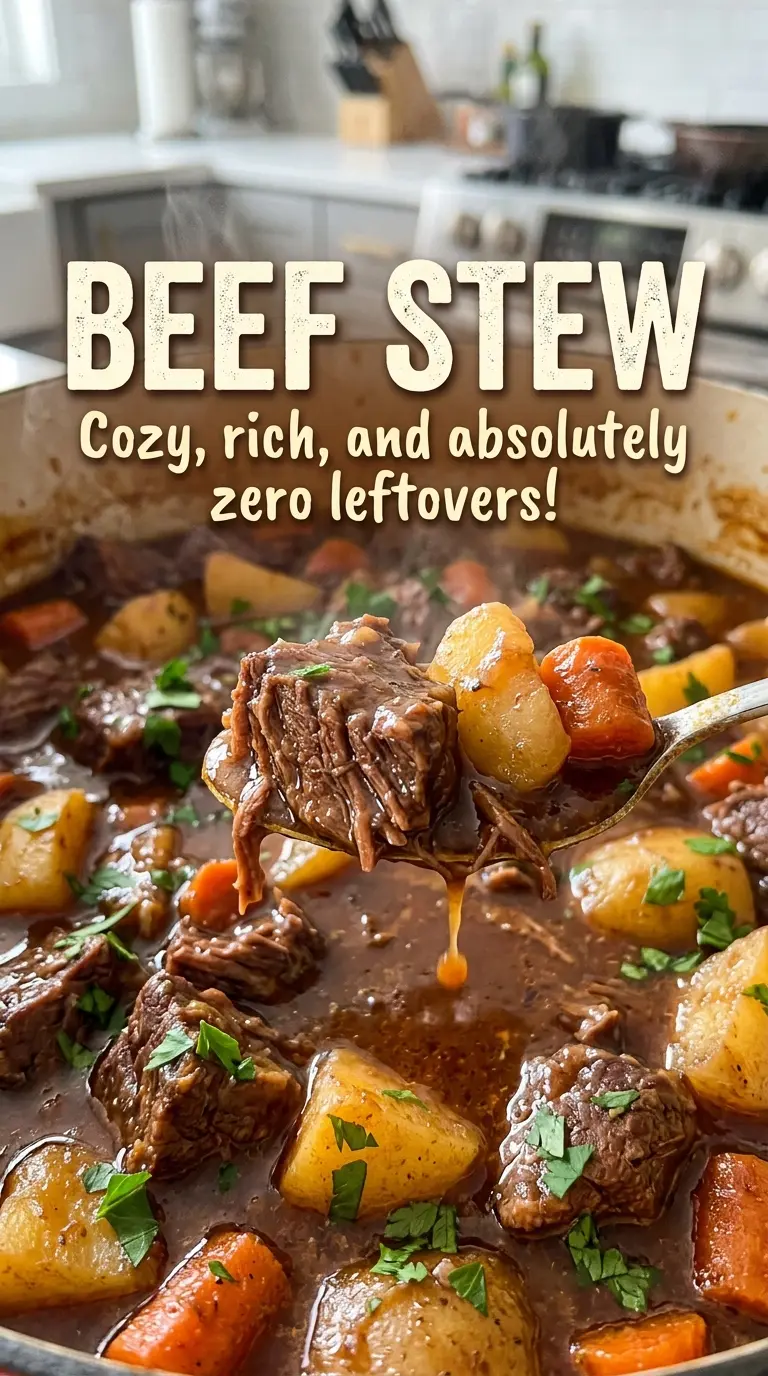
- Beef chuck — This is the cut you want for stew. It has enough connective tissue to turn tender during the long simmer, which is why it tastes rich instead of dry and stringy. Cut it into even chunks so it cooks at the same pace.
- Yukon gold potatoes — They hold their shape better than russets and give the stew a creamy, waxy texture without dissolving into the broth. Add them later in the cooking time so they stay intact.
- Red wine — This deglazes the pot and adds a dark, round backbone to the broth. Use a wine you’d drink, not one that’s only meant for cooking, because the flavor stays in the finished stew.
- Tomato paste and diced tomatoes — The paste brings concentrated depth, and the diced tomatoes add acidity that keeps the stew from tasting heavy. Cooking the paste briefly in the pot before adding liquid takes away the raw tomato edge.
- Frozen peas — They go in at the very end for a pop of sweetness and color. If you add them too early, they lose their bright flavor and turn dull.
- Flour — This is the easiest built-in thickener for the broth. If you need a gluten-free version, use a cornstarch slurry at the end instead, but the texture will be a little glossier and less rustic.
How to Build the Stew in the Right Order
Browning the Beef
Toss the beef with the flour, salt, and pepper, then sear it in olive oil over high heat until each side is deeply browned. Don’t expect it to cook through at this stage; you’re building color and flavor, not tenderness yet. If the meat sticks at first, leave it alone until it releases cleanly. Crowding the pan is the main reason this step fails, because steam keeps the meat from browning.
Softening the Vegetables and Cooking Out the Paste
Once the beef is out, cook the onion, carrots, and celery until the onion turns translucent and the carrots start to lose their raw edge. Add the garlic and tomato paste and stir them around for about 2 minutes, just until the paste darkens slightly and smells sweeter. If the garlic goes in too early or the heat is too high, it can burn and make the whole pot taste harsh. This is the moment where the stew starts to smell like dinner.
Simmering Until the Beef Yields
Pour in the wine to loosen the browned bits, then add the broth, tomatoes, Worcestershire, thyme, bay leaves, and browned beef. Bring it up to a boil, then drop it to a gentle simmer and cover the pot. You want small bubbles breaking around the edges, not a hard boil, because aggressive heat tightens the beef instead of relaxing it. After 60 to 75 minutes, the meat should give easily when pressed with a spoon.
Finishing With Potatoes and Peas
Add the potatoes once the beef is already tender, then simmer until they’re cooked through but still hold their edges. If you add them too soon, they break apart and turn the broth cloudy. Stir in the peas at the very end and cook just long enough to warm them through. Pull out the bay leaves, taste for salt and pepper, and serve while the broth is still glossy and hot.
How to Adapt This Stew for Your Kitchen
Gluten-Free Beef Stew
Skip the flour on the beef and brown it plain, then thicken the stew with a cornstarch slurry near the end. The broth will still be rich, but the body will be a little smoother and less rustic than the original version.
No Wine Version
Use an extra cup of beef broth plus a teaspoon of red wine vinegar or a splash of balsamic at the end. You’ll lose some of the depth wine brings, but the vinegar restores enough brightness to keep the stew from tasting heavy.
Make It Ahead for Better Flavor
This stew tastes even better after a night in the fridge because the broth settles and the seasoning evens out. Cook it a day ahead, cool it quickly, and reheat it gently so the beef stays tender and the potatoes don’t break apart.
Storage and Reheating
- Refrigerator: Store in an airtight container for up to 4 days. The broth thickens as it chills, which is normal.
- Freezer: It freezes well for up to 3 months. Cool it completely first, then freeze in portions; the potatoes will soften a little after thawing, but the flavor stays strong.
- Reheating: Warm it slowly on the stove over low heat, stirring occasionally and adding a splash of broth if needed. A hard boil can toughen the beef and make the potatoes fall apart.
Answers to the Questions Worth Asking
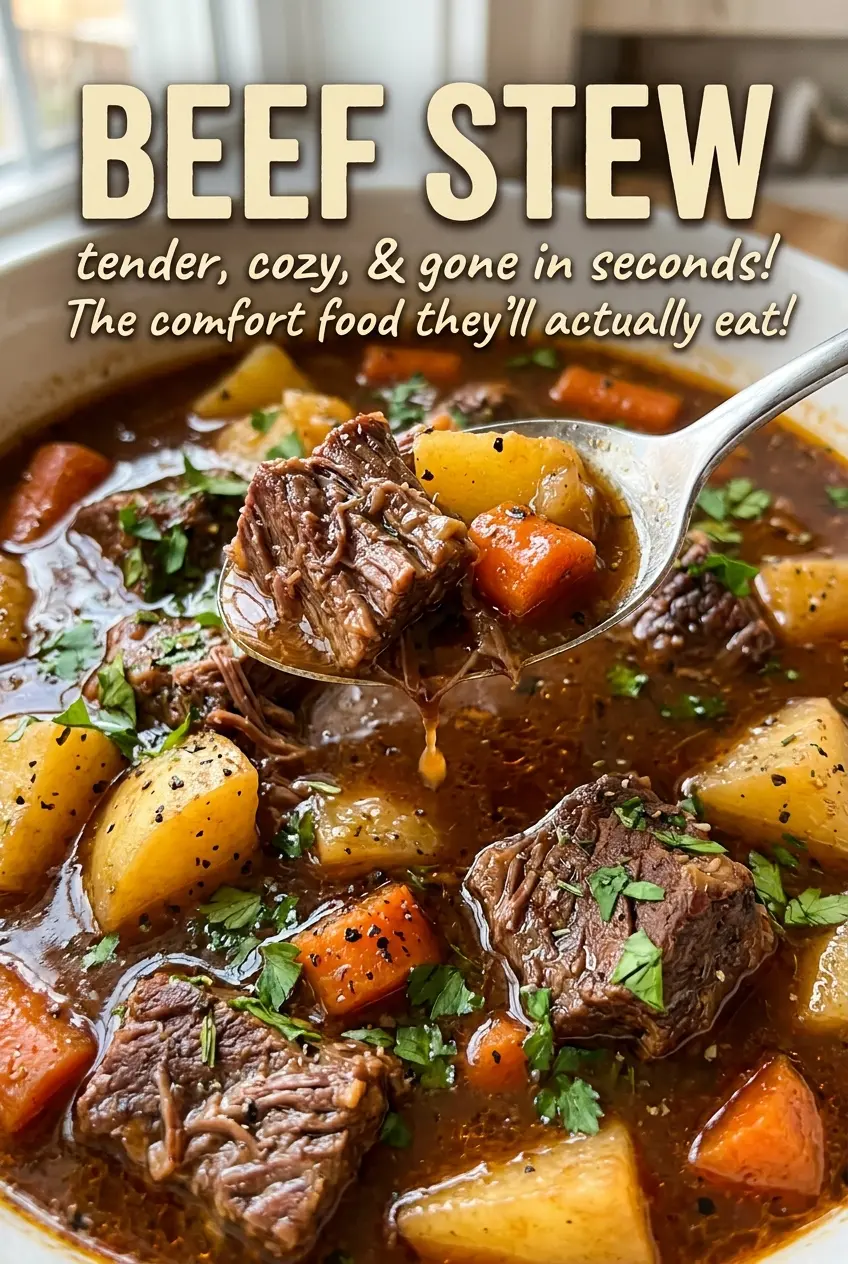
Beef Stew
Ingredients
Equipment
Method
- Toss the beef chuck with the flour until evenly coated, then set aside. Heat the olive oil in a Dutch oven over high heat until shimmering.
- Sear the beef in batches so it browns deeply, about 3-5 minutes per batch. Remove the beef to a plate and repeat with remaining meat.
- Add the onion, carrots, and celery to the Dutch oven and sauté for 5 minutes. Stir in the garlic and tomato paste and cook for 2 minutes.
- Pour in the red wine and deglaze, scraping up browned bits from the bottom of the pot. Add the beef broth, diced tomatoes, Worcestershire, dried thyme, bay leaves, and browned beef.
- Bring the mixture to a boil over high heat, then reduce to a steady simmer. Cover and simmer for 60-75 minutes, stirring occasionally, until the beef is very tender.
- Add the cubed Yukon gold potatoes and cook for 20 more minutes. The broth should be gently bubbling around the potatoes as they soften.
- Stir in the frozen peas and cook for 3 minutes until bright green and hot throughout. Remove the bay leaves, then season with salt and pepper to taste.