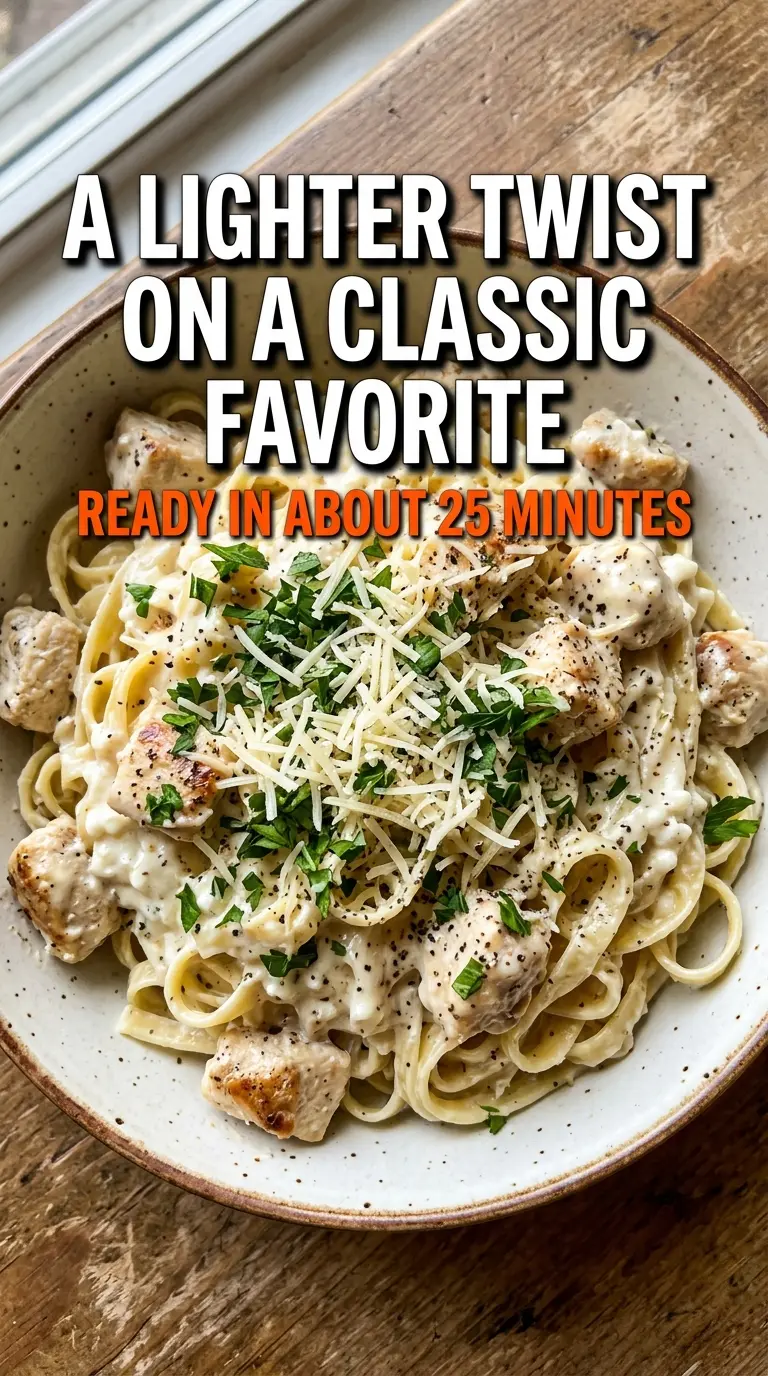
Creamy chicken Alfredo gets a smarter build here: the sauce stays lush and spoon-coating, but it comes with a much bigger protein payoff than the usual cream-and-butter version. Blending cottage cheese until it disappears into the sauce is the trick. You get that familiar comfort-food texture, but the finished pan tastes lighter, cleaner, and still rich enough to cling to every ribbon of pasta.
The part that matters most is the blender. Full-fat cottage cheese turns silky when it’s processed with milk, Parmesan, garlic, and seasoning, and once it hits the warm skillet it thickens into a sauce that feels far more indulgent than the ingredient list suggests. The other detail worth paying attention to is the pasta water. It loosens the sauce without watering it down, which is what keeps everything glossy instead of pasty.
Below you’ll find the small timing choices that keep this Alfredo smooth, plus a few smart swaps if you want to adjust the chicken, pasta, or dairy without losing the creamy finish.
The sauce was completely smooth after blending, and it coated the pasta like a classic Alfredo. My husband had no idea it was cottage cheese until I told him.
Save this high-protein Cottage Cheese Chicken Alfredo for the nights when you want creamy pasta, fast cleanup, and a sauce that still tastes like the real thing.
The Reason the Sauce Stays Creamy Instead of Grainy
Cottage cheese can turn into a smooth Alfredo, but only if it’s fully blended before it ever touches the pan. If you dump it in as curds, those little bits don’t melt into the sauce the way cream does. They stay separate and the whole skillet ends up looking broken, even if the flavor is good.
The other thing that keeps this sauce stable is gentle heat. Parmesan likes warmth, not a hard simmer, and cottage cheese behaves the same way. Warm the sauce long enough to thicken and lose the raw dairy taste, but don’t let it boil hard or you’ll push it toward a curdled texture instead of that glossy finish you want.
- Full-fat cottage cheese — This is the backbone of the sauce. Low-fat versions work in a pinch, but they’re thinner and less plush. Full-fat blends into a richer sauce and gives you the best chance of a silky finish.
- Parmesan — Use freshly grated Parmesan if you can. Pre-shredded cheese often has anti-caking agents that can make the sauce a little sandy. It still melts, but the texture won’t be as clean.
- Milk — This helps the blender do its job and keeps the sauce pourable before it thickens in the skillet. Whole milk gives the best body, though 2% works if that’s what you have.
- Cooked chicken breast — This recipe moves fast because the chicken is already cooked. Rotisserie chicken works well here, and it’s a solid shortcut when you want dinner on the table quickly.
- Fettuccine — The wide noodles hold onto this sauce better than thin pasta. If you swap in linguine or penne, you’ll still get a good result, but the cling won’t be quite the same.
The 10 Minutes That Turn Blended Cottage Cheese Into Alfredo
Building the Blended Base
Add the cottage cheese, milk, Parmesan, garlic, Italian seasoning, salt, and pepper to a blender and run it until the mixture looks completely smooth. Stop and scrape down the sides if you see any curds clinging near the blade. This step decides the whole texture of the dish; if the sauce looks even a little grainy here, it’ll stay that way in the pan.
Warming the Sauce Gently
Melt the butter in a large skillet over medium heat, then pour in the blended sauce. Stir often as it warms so the dairy heats evenly and doesn’t catch on the bottom. You’re looking for a slight thickening and a steam that rises steadily from the pan, not a hard bubble across the surface.
Finishing With Pasta and Chicken
Add the cooked fettuccine and diced chicken directly into the skillet and toss until every strand is coated. If the sauce tightens up too much, add a splash of the reserved pasta water and keep tossing until it loosens into a glossy coating. The pasta water matters here because it helps the sauce cling instead of turning thin and slippery.
Serving It at the Right Consistency
Pull the pan from the heat once the pasta looks lacquered and the sauce sits between thick and fluid. It will continue to thicken for a minute as it rests. Finish with extra Parmesan and parsley right before serving so the top stays fresh and the cheese doesn’t disappear into the sauce.
Three Smart Ways to Adjust This Alfredo Without Losing the Creamy Finish
Make It Gluten-Free With the Right Pasta
Use your favorite gluten-free fettuccine or a sturdy shape like penne. The sauce itself is naturally gluten-free, but some gluten-free pastas shed more starch and can get soft quickly, so cook them just until tender and toss them into the sauce right away.
Use Rotisserie Chicken for a Faster Dinner
Shredded or diced rotisserie chicken drops into the pan just as well as home-cooked chicken breast. It adds a little extra seasoning, which works in your favor here. Keep the pieces bite-sized so the sauce coats them instead of pooling around larger chunks.
Make It Lighter With 2% Milk
2% milk works if that’s what’s in the fridge, but the sauce will be a touch less rich. If it looks thin after warming, let it cook for another minute before adding the pasta. Don’t jump straight to extra cheese; a little more time in the pan usually fixes the texture without making it heavy.
Turn It Into a Vegetable-Forward Bowl
Fold in steamed broccoli, peas, or sautéed spinach at the end. These vegetables work best once the sauce is already finished, because they bring moisture of their own and you don’t want to dilute the Alfredo while it’s still building texture.
Storage and Reheating
- Refrigerator: Store leftovers in an airtight container for up to 3 days. The sauce will thicken as it chills, which is normal for a dairy-based pasta.
- Freezer: Freezing isn’t ideal. Cottage cheese sauces can separate after thawing, and the pasta softens too much. If you must freeze it, expect a looser texture after reheating.
- Reheating: Warm gently in a skillet over low heat with a splash of milk or water, stirring until the sauce loosens again. The biggest mistake is blasting it in the microwave until the dairy tightens and turns grainy.
Answers to the Questions Worth Asking

High-Protein Cottage Cheese Chicken Alfredo
Ingredients
Equipment
Method
- Bring a large pot of salted water to a boil, then cook the fettuccine according to package directions until al dente. Before draining, reserve 1/2 cup pasta water.
- Add the cottage cheese, milk, Parmesan, garlic, Italian seasoning, kosher salt, and black pepper to a blender. Blend until completely smooth and creamy.
- Melt the butter in a large skillet over medium heat, then pour in the blended sauce. Simmer the sauce for 3–4 minutes, stirring often, until warmed through and slightly thickened.
- Add the cooked pasta and diced chicken to the skillet, tossing to coat evenly with the sauce. Thin with the reserved pasta water if needed.
- Turn off the heat and garnish with extra Parmesan and fresh parsley before serving.