Dumpling ramen bowl turns a fast weeknight dinner into something that eats like takeout in the best way: steamy broth, springy noodles, tender dumplings, and a jammy egg sitting on top like it belongs there. The broth stays savory and full-bodied without becoming heavy, and the toppings give you enough texture in each spoonful that every bite feels complete.
What makes this bowl work is that the broth gets built first, then the dumplings simmer right in it so they help flavor the base instead of being treated like a separate add-in. White miso brings depth without turning the broth cloudy or overly salty, while mirin softens the edges and sesame oil finishes everything with that nutty, toasted note that makes ramen taste finished.
Below, I’ve laid out the timing that keeps the dumplings tender, the noodles springy, and the eggs worth the extra few minutes. There’s also a few swap ideas and storage notes for the days when you want the same bowl again without starting from scratch.
The broth had that deep savory taste I usually only get from restaurant ramen, and the dumplings stayed tender instead of getting gummy. I also loved that the soft-boiled eggs held their shape and the yolk mixed into the broth perfectly.
Love the glossy miso broth, tender dumplings, and jammy eggs? Save this dumpling ramen bowl for the nights when you want a fast bowl that tastes layered and special.
The Broth Needs to Stay Quiet, Not Boiling
The biggest mistake in a dumpling ramen bowl is rushing the broth. If it boils hard after the miso goes in, the flavor gets flatter and the sesame oil loses some of its roundness. A gentle simmer keeps the broth glossy and lets the dumplings cook through without tearing apart.
The other thing that matters here is balance. Miso, soy sauce, and mirin all do different jobs, so none of them should be swapped in equal amounts of something else. If the broth tastes thin, it usually needs another minute of simmering rather than another splash of soy sauce, which only pushes it toward saltiness.
- White miso paste — This gives the broth its depth and body. White miso is milder and sweeter than red miso, which makes it the best choice here because it won’t overpower the dumplings.
- Frozen dumplings — Frozen works better than thawed because the wrappers hold their shape during the simmer. Pork or chicken both work; just choose a dumpling that you’d actually want to eat on its own.
- Fresh ramen noodles — Fresh noodles stay springy and absorb broth without turning mushy. Dried ramen can work in a pinch, but it softens faster, so watch the clock.
- Soft-boiled eggs — The runny yolk is part of the broth. If the eggs are overcooked, you lose that creamy finish, so 7 minutes is the sweet spot for a set white and jammy center.
Building the Bowl in the Right Order
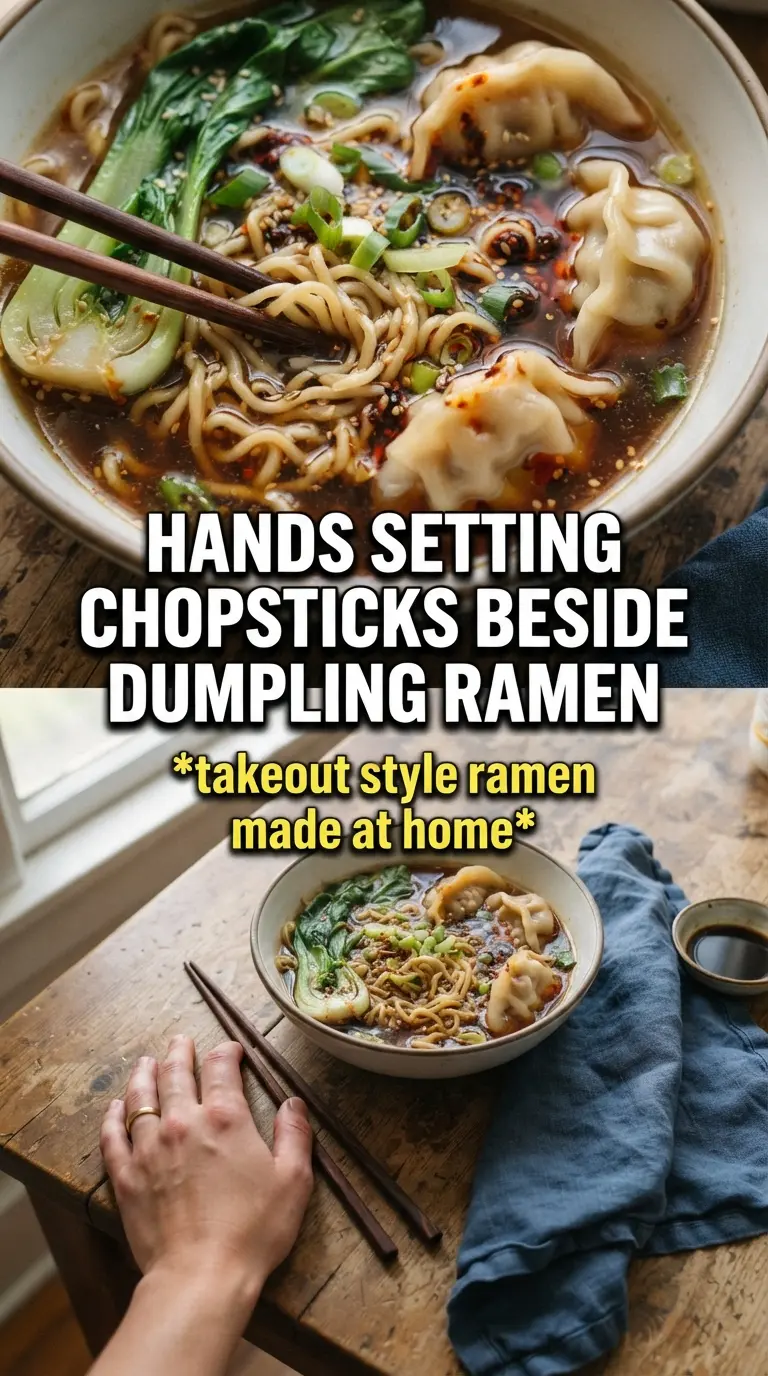
Start with the Broth Base
Bring the chicken broth to a gentle simmer, then whisk in the miso until it dissolves completely. Stir in the soy sauce, mirin, and sesame oil after that so the broth tastes layered instead of one-note. If the miso goes in while the liquid is boiling hard, it can taste muddy and a little harsh.
Cook the Dumplings in the Simmering Broth
Add the frozen dumplings straight to the broth and let them cook until they’re hot all the way through and the wrappers look slightly translucent around the edges. They should bob gently, not burst apart. If your pot is crowded, the dumplings can stick together, so give them a stir once or twice while they cook.
Wilt the Bok Choy at the End
Drop in the halved bok choy during the last few minutes so it softens but still keeps some crunch at the ribs. Overcooked bok choy turns dull and grassy, which pulls the bowl down. You want bright green leaves and stems that yield with a little bite.
Keep the Noodles Separate Until Serving
Cook the ramen noodles in a separate pot, drain them, and divide them into bowls before ladling the broth on top. That keeps them from soaking too long and turning soft while you finish the toppings. If the noodles sit in the broth too early, they’ll steal liquid and go limp fast.
What to Change When You Want a Different Bowl
Make It Dairy-Free and Gluten-Free
This bowl is naturally dairy-free, so the only thing to watch is the noodles and the dumplings. Use gluten-free ramen noodles and dumplings labeled gluten-free if you need the whole bowl to fit that diet. The broth itself stays just as savory and satisfying.
Swap in Vegetarian Dumplings
Vegetable dumplings work well here and still give you that comforting dumpling-and-noodle combination. If you use them, choose a mushroom or cabbage filling so the bowl still has some depth against the miso broth. You can also swap the chicken broth for a strong vegetable broth, though the final bowl will taste a little lighter.
Add More Vegetables Without Diluting the Broth
Snap peas, mushrooms, spinach, or baby corn all work, but add them in small amounts so they don’t flood the bowl with extra water. Heartier vegetables should go in with the dumplings; tender greens should wait until the last minute. That keeps the broth clear and the toppings distinct.
Storage and Reheating
- Refrigerator: Store the broth, dumplings, and vegetables together for up to 3 days. The noodles soften as they sit, so keep them separate if you can.
- Freezer: The broth and dumplings freeze well for up to 2 months. Freeze the noodles separately only if they’re very sturdy; otherwise cook them fresh.
- Reheating: Reheat the broth and dumplings gently on the stove until steaming, then add fresh or separately stored noodles. Don’t boil hard, or the dumplings can split and the broth will taste dull.
Answers to the Questions Worth Asking
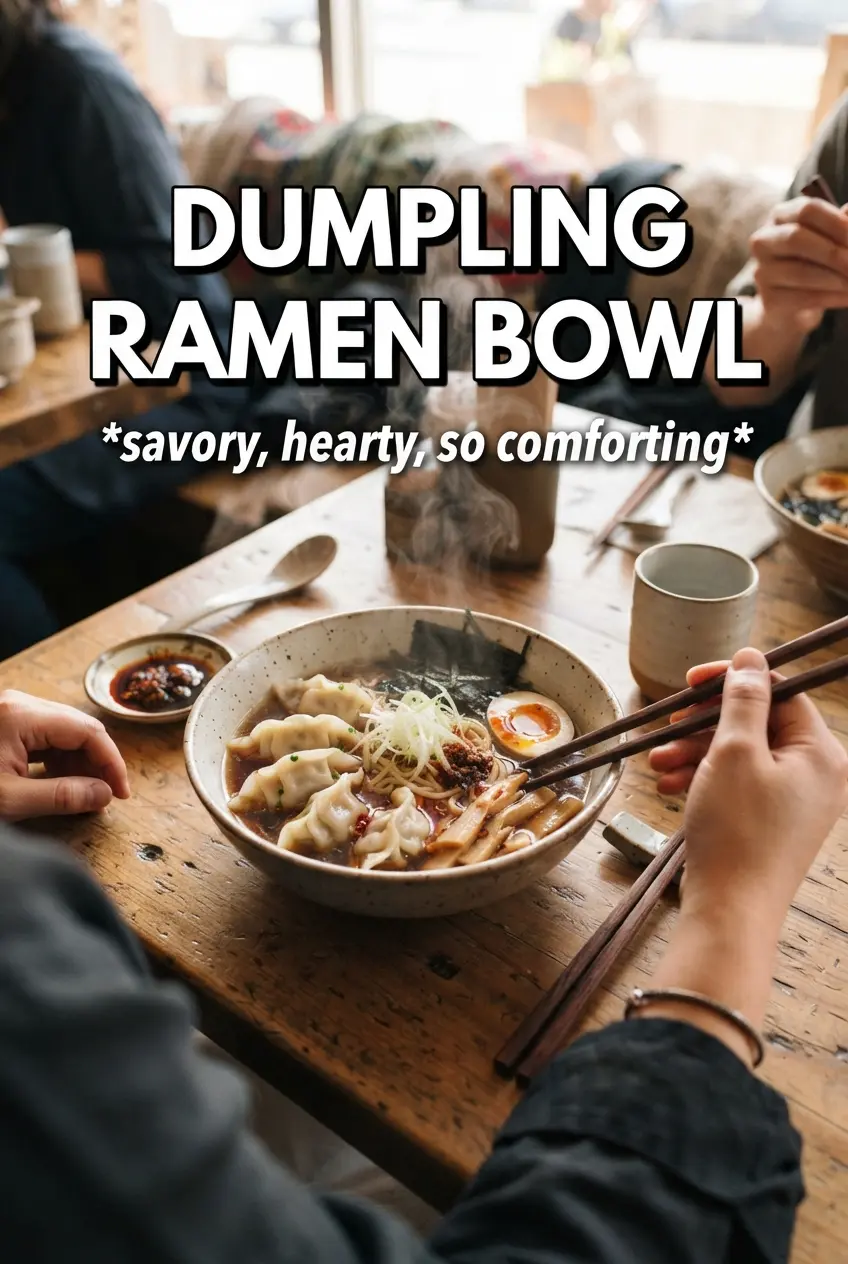
Dumpling Ramen Bowl
Ingredients
Equipment
Method
- In a Dutch oven, bring the chicken broth to a simmer over medium-high heat, then keep it at a steady simmer. Whisk in the white miso paste, soy sauce, mirin, and sesame oil until smooth and combined.
- Taste the broth and add salt as needed. Keep the broth gently simmering so it stays hot for dumpling cooking.
- Add the frozen dumplings to the simmering broth and cook for 5-7 minutes until cooked through, stirring once halfway if needed. You should see them fully heated with tender wrappers.
- Add the halved bok choy and cook for 2-3 minutes until wilted, bright green, and tender-crisp. Stir gently so the leaves cook evenly.
- Cook the fresh ramen noodles separately according to package instructions, then drain well. Keep them hot so they don’t clump while you build bowls.
- Divide the noodles between bowls and ladle the hot broth with dumplings and bok choy over the noodles. Make sure each bowl gets dumplings and a few bok choy leaves.
- Top each bowl with the halved soft-boiled eggs, corn, sliced green onions, nori, sesame seeds, and chili oil. Add chili oil last so you can control the heat.