Crispy-skinned salmon with roasted red pepper sauce is one of those dinners that feels polished without asking much from you at the stove. The salmon gets that deep, crackly sear on the first side, then the smoky, creamy sauce comes together in the same skillet so every bit of flavor stays in the pan. It lands on the plate looking restaurant-worthy, but it still fits into a regular weeknight.
What makes this version work is the contrast. The salmon stays simple and well-seasoned so the sauce can do the heavy lifting, and the roasted red peppers bring sweetness, smoke, and body without needing a long simmer. A little cream smooths everything out, and lemon keeps the sauce from tasting flat. The key is drying the salmon well before it hits the pan; that’s what gives you skin that actually crisps instead of steaming.
Below, I’ve included the small details that matter most: how to keep the salmon skin from sticking, why the sauce should be warmed gently after blending, and what to change if you need a dairy-free version. Once you’ve made it once, it’s the kind of dinner you’ll remember because it feels easier than it looks.
The salmon skin came out shatteringly crisp, and the roasted red pepper sauce was silky with just enough lemon to keep it bright. I warmed the sauce in the same pan and it picked up all the good flavor from the fish.
Crispy salmon with roasted red pepper sauce is the kind of dinner worth pinning for the nights when you want something elegant, fast, and packed with smoky creaminess.
The Crisp Skin Secret Is Getting the Pan Hot Enough Before the Fish Goes In
Salmon skin only turns crisp when it meets dry heat immediately. If the fillets are damp, or if the pan is only lukewarm, the skin sticks and the fish gives off moisture before it has a chance to sear. That’s why this recipe starts with patting the salmon dry and heating the oil until it shimmers.
The other detail that matters is leaving the fish alone once it hits the pan. If you move it too soon, the skin tears and loses contact with the skillet, which is where the crisping happens. When the edges look opaque and the skin releases without force, it’s ready to flip. That clean release is the sign you’re doing it right.
What Each Ingredient Is Actually Doing in This Dish
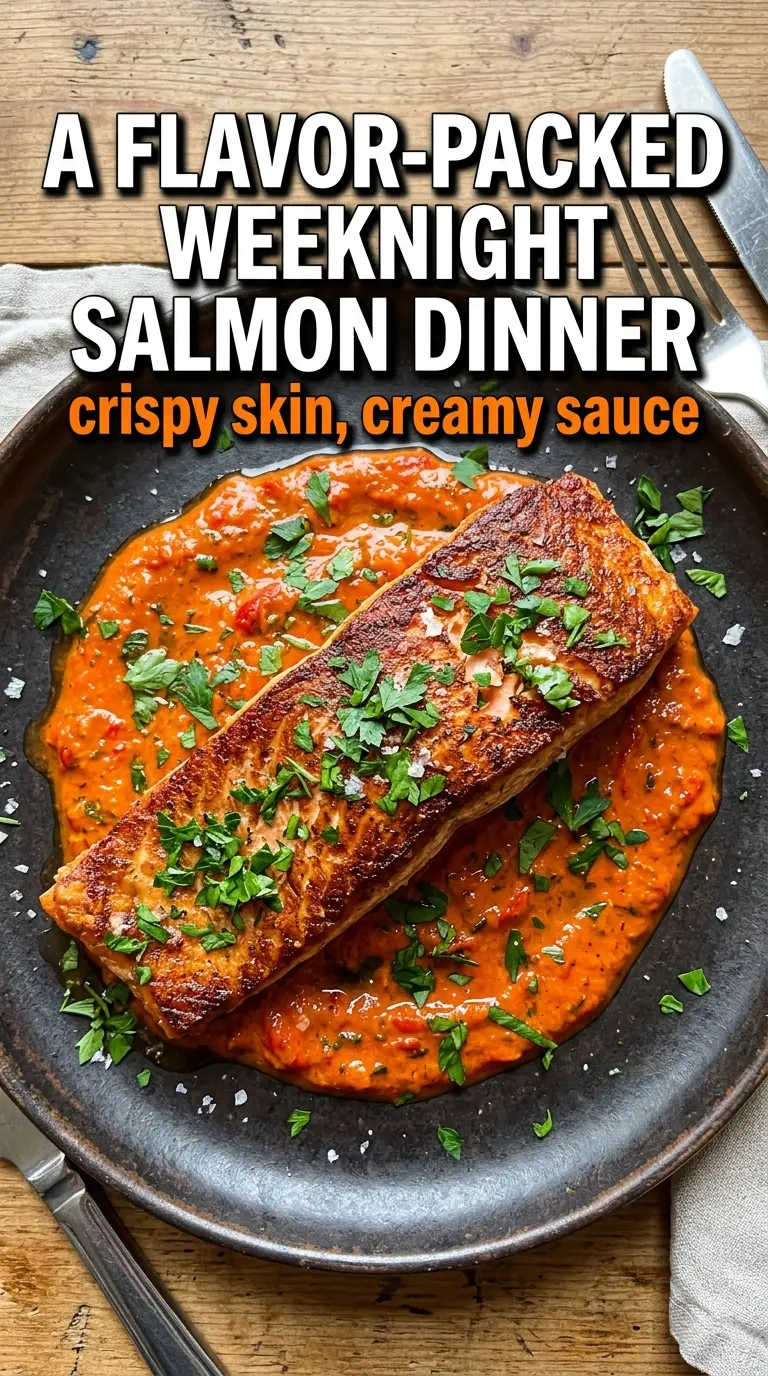
- Salmon fillets — Skin-on fillets give you the best contrast here: crisp skin on the outside, tender fish underneath. If your fillets are uneven in thickness, tuck the thinner end under slightly so the whole piece cooks more evenly.
- Roasted red peppers — Jarred peppers are perfect here because they’re already soft, sweet, and smoky enough to blend into a smooth sauce. Drain them well so the sauce doesn’t turn watery.
- Heavy cream — Just a few tablespoons turn the peppers into a silky sauce that coats the fish instead of running off the plate. Half-and-half can work in a pinch, but the sauce will be thinner and a little less plush.
- Garlic — Raw garlic blends into the sauce and gives it a sharp edge that mellows once it warms in the skillet. If you want a gentler flavor, use one small clove instead of two.
- Lemon juice — This keeps the sauce bright and stops the richness from feeling heavy. Fresh lemon matters more than bottled here because the sauce is simple and every note shows.
- Olive oil — You need enough to coat the pan and encourage even browning. Use a neutral-tasting olive oil if you don’t want a strong peppery note competing with the sauce.
Building the Salmon and Sauce in the Right Order
Blend the Sauce First
Start by blending the roasted red peppers, cream, garlic, lemon juice, salt, and pepper until completely smooth. A few tiny flecks are fine, but you want a sauce that pours easily and looks velvety. If it seems too thick, add a teaspoon of water to loosen it before it ever hits the skillet.
Sear the Salmon Skin-Side Down
Lay the salmon into the hot oil skin-side down and let it sit untouched for 4 to 5 minutes. You should hear a steady, confident sizzle, not a harsh popping sound. If the pan is crowded, the temperature drops and the skin steams, so give the fillets enough room for the fat to render and the skin to turn crisp.
Warm the Sauce in the Same Pan
Once the salmon is cooked and set aside, pour the sauce into the same skillet and warm it for 2 to 3 minutes. Pull the heat back if it starts to bubble hard; cream sauces can tighten up or scorch when they boil. The sauce should thicken just enough to coat a spoon and pick up the browned bits left behind from the fish.
Plate While the Skin Still Cracks
Spoon the sauce onto the plates first, then set the salmon on top so the skin stays as crisp as possible. Add the parsley at the end for a fresh finish. If you let the fish sit in the sauce too long before serving, the skin softens fast.
Three Ways to Make This Recipe Fit Your Kitchen
Dairy-Free Version
Swap the heavy cream for full-fat coconut milk or an unsweetened oat cream. Coconut milk gives the sauce a faint sweetness that works with the peppers, while oat cream keeps the flavor closer to the original. Either way, warm the sauce gently so it stays smooth.
No Skin on the Salmon
Skinless fillets still work, but you’ll lose the crisp contrast that makes this dish stand out. Sear them for a minute or two less on the first side and use a thin spatula so they don’t break when you flip them.
Make It Spicier
Add a pinch of red pepper flakes or a small piece of fresh chili to the blender. It won’t overwhelm the sauce, but it does cut through the creaminess and gives the dish a little heat at the back end.
How to Store Leftovers
- Refrigerator: Store the salmon and sauce separately if you can for up to 2 days. The fish stays better that way, and the skin won’t soften as quickly.
- Freezer: The salmon freezes okay, but the cream sauce is best made fresh. If you need to freeze leftovers, expect the sauce to separate a bit when thawed.
- Reheating: Warm the salmon gently in a low oven or covered skillet just until heated through. Reheat the sauce over low heat and whisk it as it warms; high heat is the fastest way to make the cream look broken.
Questions I Get Asked About This Recipe
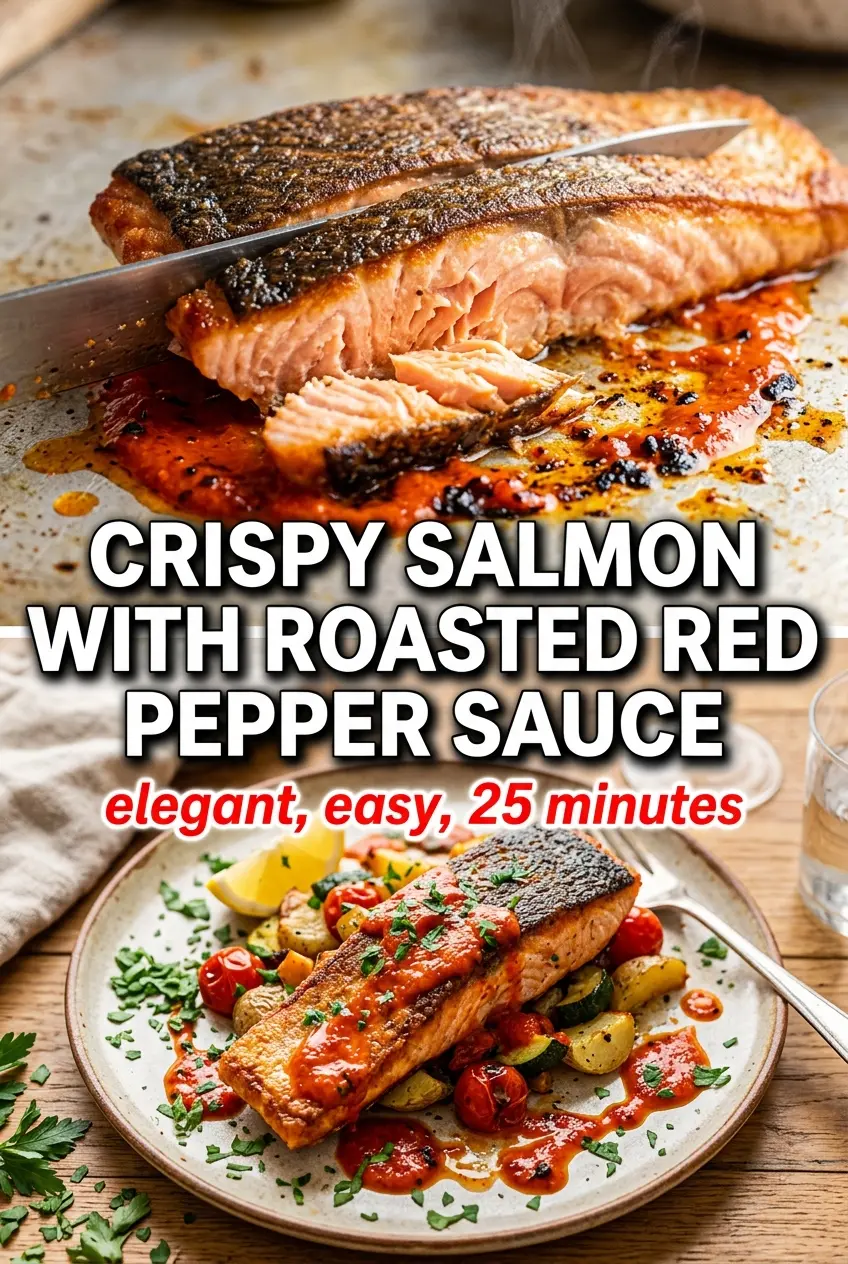
Crispy Salmon with Roasted Red Pepper Sauce
Ingredients
Equipment
Method
- Pat the salmon dry, then season with half the kosher salt and half the black pepper.
- Let the seasoned salmon sit while you blend the sauce, so the seasoning adheres and the surface stays dry.
- Blend the roasted red peppers, heavy cream, garlic, lemon juice, and the remaining kosher salt and black pepper until smooth, 30–60 seconds.
- Heat the olive oil in a large skillet over medium-high heat until shimmering.
- Place the salmon in the skillet skin-side down and sear for 4–5 minutes, until the skin is crispy.
- Flip the salmon and cook for 2–3 minutes more, until the fish is opaque and flakes easily.
- Remove the salmon to a plate, then pour the red pepper sauce into the same skillet and warm through for 2–3 minutes, stirring occasionally.
- Spoon the sauce onto plates and top with the crispy salmon.
- Garnish with fresh parsley and serve immediately.