Vegetarian taco soup lands in that sweet spot between weeknight easy and bowl-emptying good. The broth turns rich and savory fast, the beans stay hearty, and the fire-roasted tomatoes give it a deeper, almost smoky edge that keeps it from tasting flat. It eats like a full meal, not a thin soup with a few vegetables floating around in it.
The trick is building the flavor before the liquid goes in. Sautéing the onion and bell pepper first gives the broth a base, and blooming the taco seasoning, cumin, chili powder, and smoked paprika in the hot pot wakes up the spices so they don’t just sit there tasting dusty. Once the beans, tomatoes, corn, and broth simmer together, everything melds into one big Tex-Mex-style pot that tastes like it cooked much longer than it did.
Below, I’ll walk through the one step that matters most if you want a soup with real depth, plus the swaps that still keep the texture and flavor on track. The toppings matter here, too, because a little avocado, lime, and crunchy tortilla chip on top changes the whole bowl.
The broth got thick and flavorful after just a short simmer, and the mix of black beans, pinto beans, and fire-roasted tomatoes made it taste like it had been cooking all afternoon. I topped mine with lime and avocado, and my husband went back for a second bowl before I even sat down.
Save this vegetarian taco soup for a fast one-pot dinner with smoky broth, hearty beans, and the best lime-and-avocado finish.
The Step That Gives This Soup Its Real Taco Flavor
The difference between a soup that tastes seasoned and a soup that tastes like taco night lives in the first few minutes of cooking. Onions and bell peppers need enough time in the pot to soften and lose that raw edge, and the spices need heat before the broth goes in. If you dump everything together cold, the seasoning can taste one-note and the vegetables stay sharp instead of blending into the base.
Bloominng the taco seasoning with the cumin, chili powder, and smoked paprika in the pot is what gives the broth depth. It also lets the spices coat the vegetables, which means every spoonful starts with flavor instead of relying on the toppings to carry the bowl. The fire-roasted tomatoes help here too; they add a little charred backbone that regular diced tomatoes don’t bring on their own.
- Onion and bell pepper — These build the base. Cook them until the onion turns translucent and the pepper softens around the edges, not until they’re browned.
- Taco seasoning — This is the shortcut that gives you a seasoned broth quickly. Use a packet if that’s what you have, or your favorite homemade blend if you want more control over the salt.
- Fire-roasted tomatoes — These matter more than you’d think. They deepen the flavor and add a little smoky richness without extra work.
- Vegetable broth — Use one with good savory flavor, since it carries the whole pot. If yours is low-sodium, you’ll have more control at the end.
What Each Bean and Tomato Is Doing in the Pot

Black beans bring a creamy, almost meaty bite. Pinto beans soften the texture and help the soup feel fuller, while kidney beans hold their shape and give the bowl a little more contrast. Using all three keeps the soup from feeling repetitive, and that mix is part of why it tastes like it’s been simmering all day even though it comes together fast.
The tomatoes do different jobs too. Rotel gives you acidity plus a little heat, diced tomatoes keep the soup brothy, and fire-roasted tomatoes add depth. Corn adds sweetness and a little pop, which keeps the soup from leaning too heavily into just chili-spice and beans.
- Black beans — Creamy and sturdy. Rinse and drain them well so the broth stays clean and doesn’t turn muddy.
- Pinto beans — They break down a touch more than black beans, which helps thicken the soup naturally.
- Kidney beans — These stay more defined, so the soup doesn’t all blur into one texture.
- Corn — Canned corn is fine here. If you have frozen corn, use it straight from the bag and add a minute or two to the simmer.
Building the Soup So the Broth Tastes Like It Simmered Longer Than It Did
Softening the vegetables first
Heat the olive oil in a large pot, then cook the onion and bell pepper until the onion looks glossy and the pepper starts to soften. That usually takes about 4 to 5 minutes. If you rush this part, the soup keeps a raw, sharp edge. You want the vegetables to lose their crunch before anything else goes in.
Waking up the spices
Add the garlic for just a minute, then stir in the taco seasoning, cumin, chili powder, and smoked paprika. The pot will smell noticeably deeper and warmer when the spices hit the oil. That brief contact with heat is what pulls the flavor out of the spices instead of leaving them flat in the broth. If the garlic starts to brown, the heat is too high and the flavor turns bitter.
Letting the simmer do the work
Pour in the beans, corn, tomatoes, and broth, bring everything to a boil, then lower it to a steady simmer. You’re not trying to reduce it hard; you’re giving the flavors time to meld and the broth time to thicken a little. After 15 to 20 minutes, the soup should look unified, with the vegetables softened and the broth slightly richer in color. Taste at the end and adjust salt and pepper after the simmer, not before, because the canned ingredients and broth can change how salty the pot ends up.
How to Adapt This for Different Eaters and Different Nights
Make it vegan without losing the creamy finish
The soup itself is already vegan, so the only change is the topping. Use vegan sour cream or skip it and add extra avocado for creaminess. That keeps the bowl rich without changing the base flavor.
Use what you have if you’re missing one bean
You can leave out one can of beans and add another can of black beans, pinto beans, or kidney beans in its place. The texture will be a little less varied, but the soup still works because the broth and tomatoes do the heavy lifting.
Make it heartier with corn chips, rice, or quinoa
If you want a more filling bowl, stir in cooked rice or quinoa at the end, or serve the soup over crushed tortilla chips. That turns it into a thicker meal, but the broth will soak into the grains or chips fast, so add them right before serving.
Storage and Reheating
- Refrigerator: Store for up to 4 days. The broth gets a little thicker as it sits, which is normal and often makes the flavor better.
- Freezer: It freezes well for up to 3 months. Cool it completely first, then freeze in airtight containers with a little headspace for expansion.
- Reheating: Warm it gently on the stove over medium-low heat or in the microwave in short bursts, stirring between rounds. Add a splash of broth or water if it looks too thick, because the beans and tomatoes will absorb liquid as it rests.
Questions I Get Asked About This Recipe
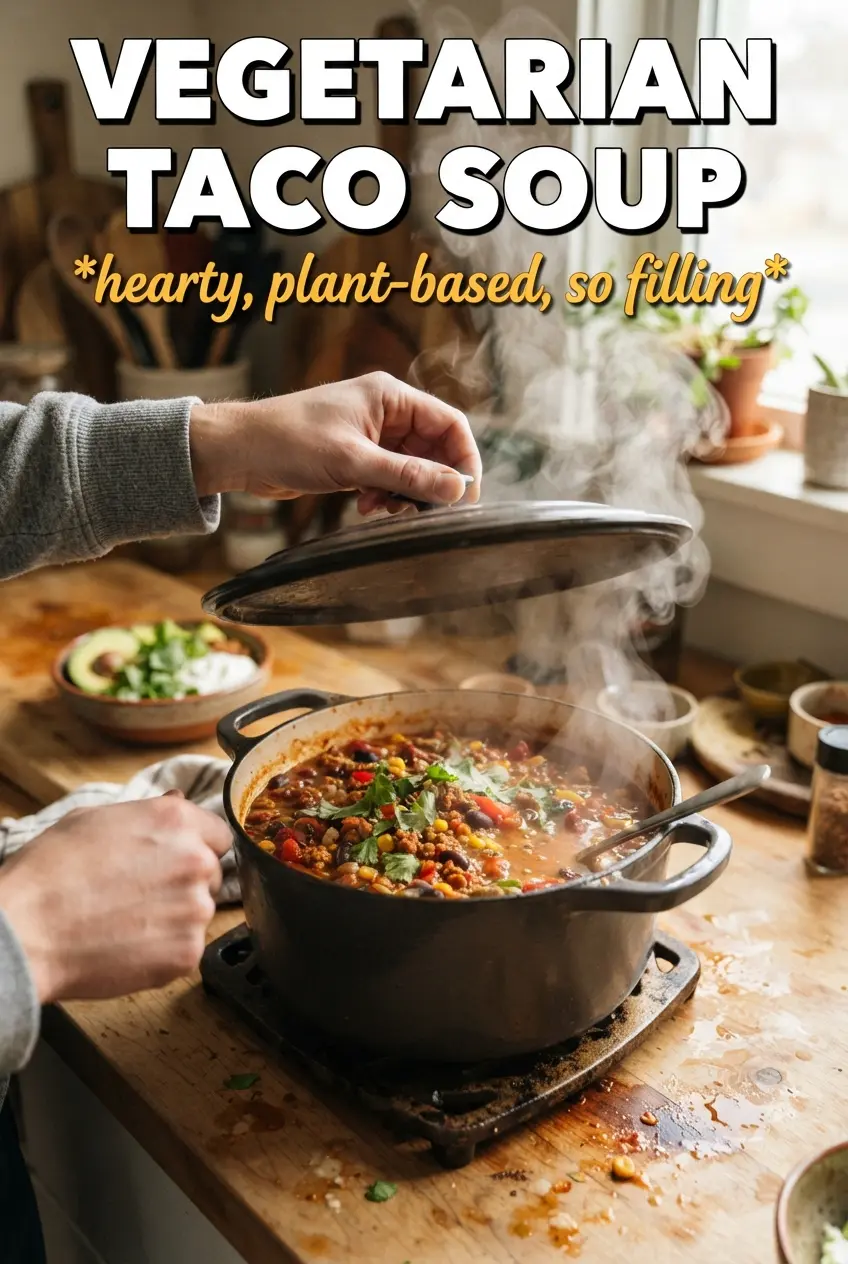
Vegetarian Taco Soup
Ingredients
Equipment
Method
- Heat 1 tablespoon olive oil in a large pot over medium heat, then sauté onion and bell pepper for 4-5 minutes, stirring occasionally until softened and fragrant.
- Add the minced garlic and cook for 1 minute, stirring constantly, then sprinkle in taco seasoning, cumin, chili powder, and smoked paprika.
- Stir the spices into the onion mixture for 30 seconds to coat everything evenly and lightly toast the spices.
- Add all canned ingredients and the vegetable broth to the pot, scraping up any browned bits from the bottom.
- Bring the mixture to a boil, then reduce to a simmer.
- Simmer for 15-20 minutes to meld flavors, stirring once or twice, and season with salt and pepper to taste.
- Ladle the soup into bowls and top each serving with avocado, cilantro, lime wedges, sour cream (or vegan sour cream), and tortilla chips.