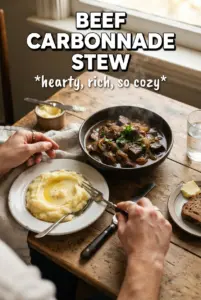
Deeply browned beef, jammy onions, and a mahogany broth give beef carbonnade stew the kind of slow-built comfort that feels even better than it smells. The beer cooks down into something rich and malty, the vinegar keeps the sauce from turning heavy, and the bread on the side is there for a reason: you’ll want something to catch every last spoonful.
What makes this version work is the order. The beef gets a hard sear first, which gives the stew its backbone, and the onions cook long enough to turn soft and sweet before anything liquid goes in. That extra time matters. If you rush the onions, the broth tastes flatter and the finished stew never gets that deep Belgian character.
Below, you’ll find the small details that keep the sauce balanced and the beef tender instead of stringy. I also included a few useful swaps and the one reheating method that keeps the stew tasting even better the next day.
The onions cooked down into this sweet, silky base and the beer never tasted bitter. I left it on the stove a little longer than planned and the beef was still fork-tender, plus the broth got even better after sitting overnight.
Love this rich Belgian beer-braised beef? Save it to Pinterest for a cozy dinner with caramelized onions, tender chuck, and crusty bread.
The Beef You Brown First Is the Beef You End Up Keeping Tender
Carbonnade looks like a long-simmer stew, but the real work happens before the lid goes on. If the beef goes into the pot pale, the broth stays thin and the meat can taste boiled instead of braised. A proper sear gives you the browned bits that the beer loosens later, and that is where the stew gets its deep, savory base.
The other trap is crowding the pot. If the cubes sit too close together, they steam and gray out instead of forming a crust. Brown them in batches and wait until each piece releases cleanly before turning it. That patience pays off in both flavor and texture.
What the Onions, Beer, and Vinegar Are Each Doing Here
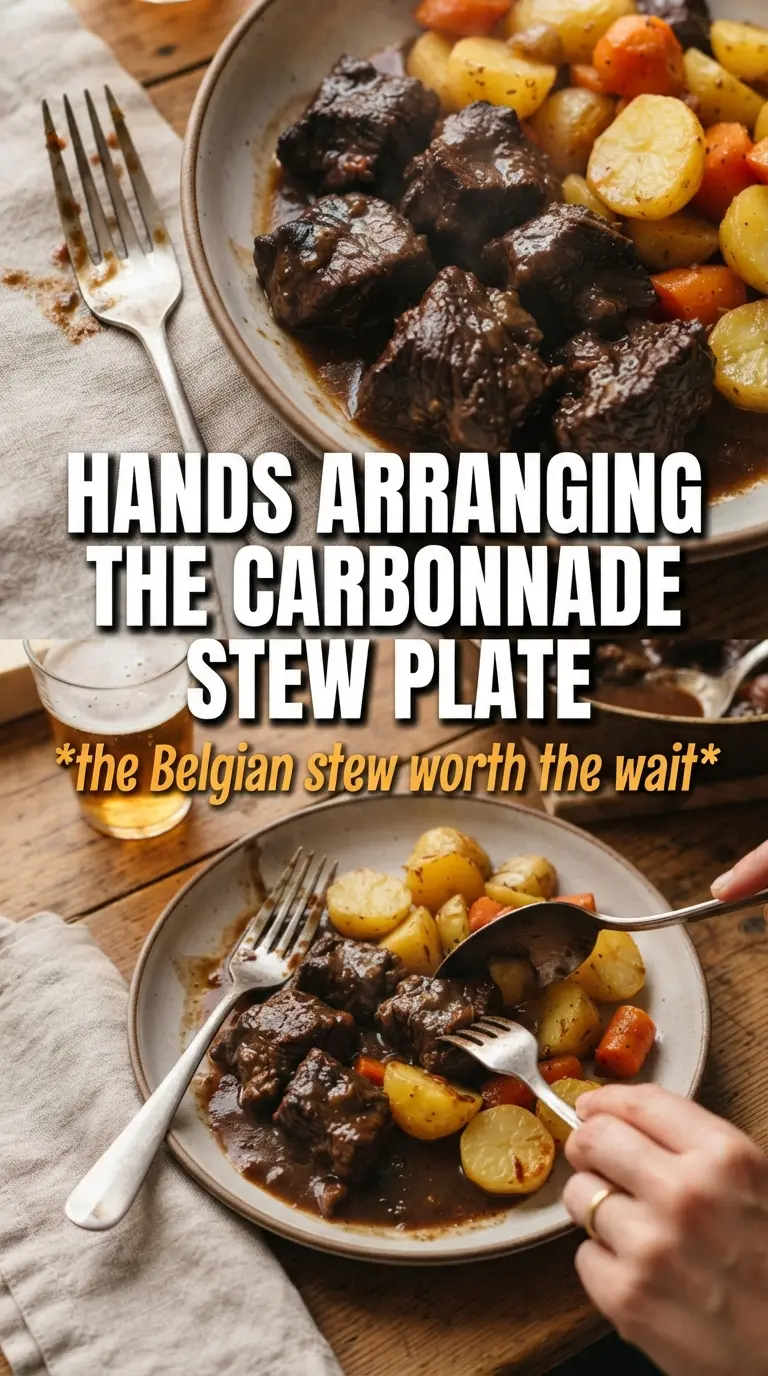
- Beef chuck — Chuck has enough connective tissue to turn silky during the braise. Leaner cuts dry out before the sauce has time to develop, so this is the cut that gives you spoon-tender meat instead of chunks that fall apart in a stringy way.
- Dark Belgian ale or stout — This is the backbone of the dish. Use a beer you would actually drink; harsh bitterness gets concentrated as it cooks, while a malty ale gives the broth depth and a dark, rounded finish.
- Onions — They are not just a vegetable in the pot. Cooked low and slow until golden, they thicken the broth and bring sweetness that balances the vinegar and mustard.
- Dijon mustard and red wine vinegar — These keep the stew from tasting heavy. Dijon gives sharpness and body, while the vinegar cuts through the richness so the final sauce tastes layered instead of muddy.
- Flour — The flour cooks with the aromatics before the liquid goes in, which keeps the sauce from tasting raw. It gives the stew enough body to cling to the beef and bread without turning pasty.
Building the Stew in the Right Order
Hard Sear, No Shortcuts
Season the beef well, then sear it in a hot Dutch oven in batches until each side has a dark brown crust. You want to hear a strong sizzle the whole time; if the pan sounds weak, the heat has dropped and the meat will steam. Pull the beef out as soon as it browns, because it will finish cooking later in the braise.
Slow-Cooked Onions
Cook the sliced onions over medium heat until they collapse, turn golden, and start to look almost glossy. This takes a good 20 to 25 minutes, and the pot should smell sweet before you move on. If the onions start catching before they soften, lower the heat and give them more time, since burnt edges will make the stew taste sharp.
Flour, Beer, and the Braise
Stir in the garlic and flour and cook for a minute, just enough to lose the raw flour taste. Then pour in the beer and scrape the bottom of the pot hard so every browned bit disappears into the liquid. Add the broth, tomato paste, vinegar, sugar, mustard, herbs, and beef, bring it up to a boil, then drop the heat low enough that the surface barely trembles under the lid.
The Long Finish
After about 2 hours, the beef should break apart with gentle pressure and the sauce should look dark and cohesive. If the liquid seems thin near the end, uncover the pot for the last 10 to 15 minutes so it can tighten up a little. Pull out the bay leaves and thyme before serving, then spoon the stew over bread or serve the bread alongside for dipping.
How to Adapt This for Different Pans, Palates, and Diets
Gluten-Free Carbonnade
Swap the all-purpose flour for a gluten-free flour blend or use 1 to 1 1/2 tablespoons cornstarch mixed with cold water near the end of cooking. The stew will still thicken, but cornstarch gives a glossier finish and should go in only after the meat is tender.
Stout Instead of Belgian Ale
A stout makes the stew darker and a little roastier, which works well if you want a deeper, more pub-style flavor. Keep the vinegar and Dijon in place so the finished sauce doesn’t turn flat or bitter.
No Alcohol Version
Use extra beef broth plus 1 tablespoon Worcestershire sauce and 1 to 2 teaspoons molasses for some of the beer’s depth. It won’t taste exactly the same, but it will still have that sweet-savory backbone that makes carbonnade worth making.
Make It Ahead
This stew gets better after a night in the fridge because the onions, beer, and beef settle into each other. Cool it completely before refrigerating, and if the sauce looks thicker the next day, loosen it with a splash of broth while reheating.
Storage and Reheating
- Refrigerator: Store in an airtight container for up to 4 days. The sauce thickens and the flavor deepens after a day.
- Freezer: It freezes well for up to 3 months. Cool completely, portion it into freezer-safe containers, and leave a little space at the top.
- Reheating: Reheat gently on the stove over low heat with a splash of broth. A hard boil can tighten the beef and dull the sauce, so warm it slowly until it is hot through.
Answers to the Questions Worth Asking
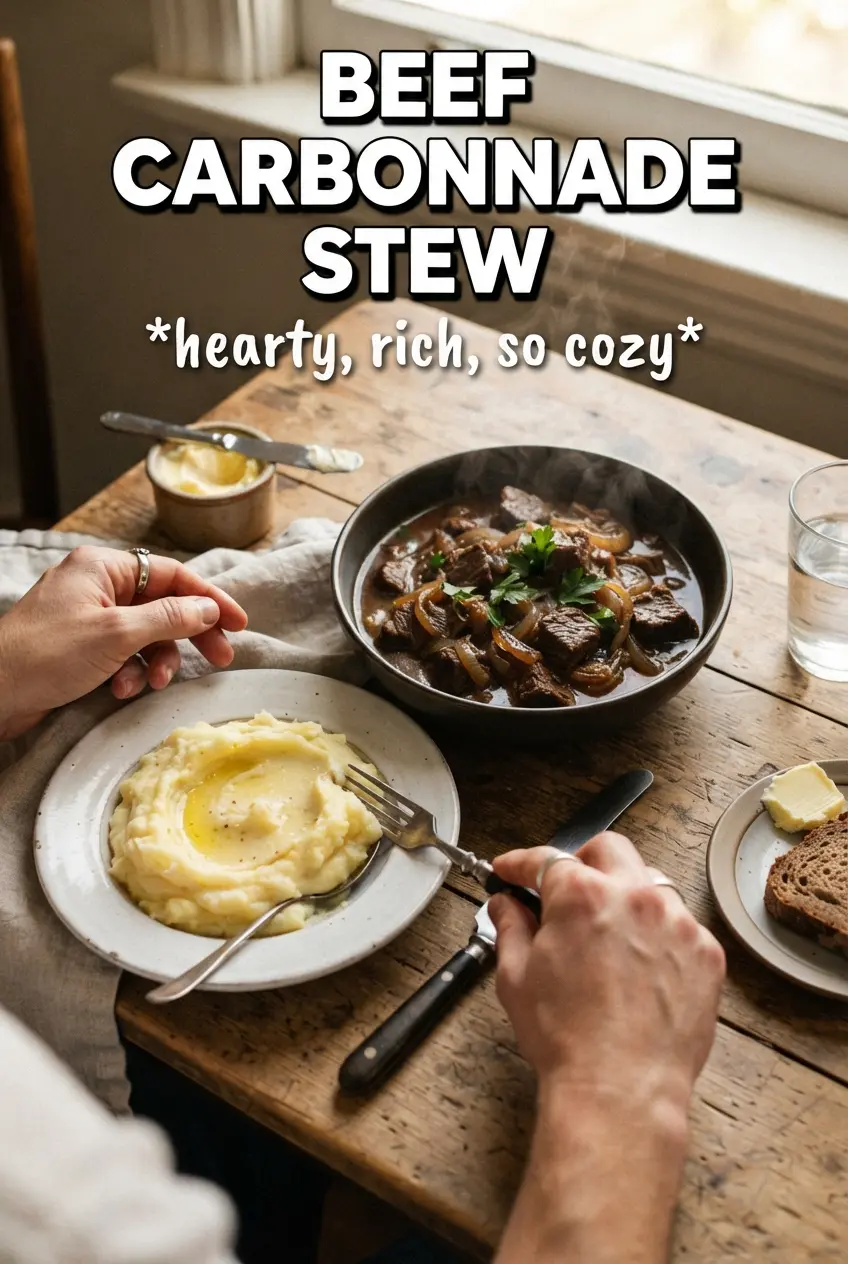
Beef Carbonnade Stew
Ingredients
Equipment
Method
- Season the beef chuck cubes with salt and pepper, then heat vegetable oil in a Dutch oven over high heat until shimmering. Sear the beef until deeply browned, turning as needed, then remove to a plate.
- Add the sliced onions to the Dutch oven and cook over medium heat for 20-25 minutes, stirring occasionally, until very soft and golden. Add the minced garlic and cook for 1 minute, stirring, until fragrant.
- Sprinkle in the all-purpose flour, whisk it in, and cook for 1 minute to remove the raw flour taste. Pour in the dark Belgian ale and deglaze, scraping up all browned bits from the bottom.
- Whisk in the beef broth, tomato paste, red wine vinegar, brown sugar, Dijon mustard, thyme, and bay leaves, then add the browned beef back to the pot. Bring to a boil over high heat, then reduce heat, cover, and braise for 2 hours until the beef is very tender.
- Remove the bay leaves and thyme, taste, and season with additional salt and pepper if needed. Serve hot with crusty bread alongside.