One Pot Lasagna Soup gives you everything people love about lasagna without the layering, baking, or waiting. The broth turns rich and tomato-forward, the noodles soften into the pot just enough to feel substantial, and the sausage keeps every bite hearty. The best part is the cheese topping melting into the hot soup, creating those creamy, stretchy pockets that make the bowl taste finished.
This version works because the sausage is browned first and left in the pot with the onions, garlic, and tomato paste, so all that flavor stays put instead of being washed away in broth. The tomato paste gets a full minute or two to cook down before the liquids go in, which deepens the base and keeps the soup from tasting flat. Broken lasagna noodles cook right in the broth, so they pick up flavor instead of sitting apart like an afterthought.
Below, I’ll show you the small timing details that keep the noodles from sticking and the cheese topping from disappearing into the soup. Those two things are what separate a decent bowl from one you’ll want to put on repeat.
The noodles held their shape and the broth got thick and savory instead of watery. I stirred in the cheese topping at the table, and it tasted like lasagna in soup form without being heavy.
Save this one pot lasagna soup for the nights when you want all the lasagna comfort with just one pot to wash.
The Noodles Are the Part Most People Overcook
The biggest mistake with lasagna soup is treating the noodles like they need a long simmer. They don’t. Once the broth is boiling, the broken noodles only need about 10 to 12 minutes, and they keep cooking in the hot soup even after the burner goes off. If you leave them in too long, the broth thickens up but the noodles turn soft and bloated, which is how a good soup starts to eat like casserole leftovers.
Stir every few minutes while they cook. That keeps the noodles from clumping together at the bottom of the pot and helps them cook evenly. The soup should still look brothy when the noodles are tender; if it seems a little looser than you want at first, that’s fine, because the starch from the pasta will settle in as it rests.
What Each Ingredient Is Actually Doing in This Dish
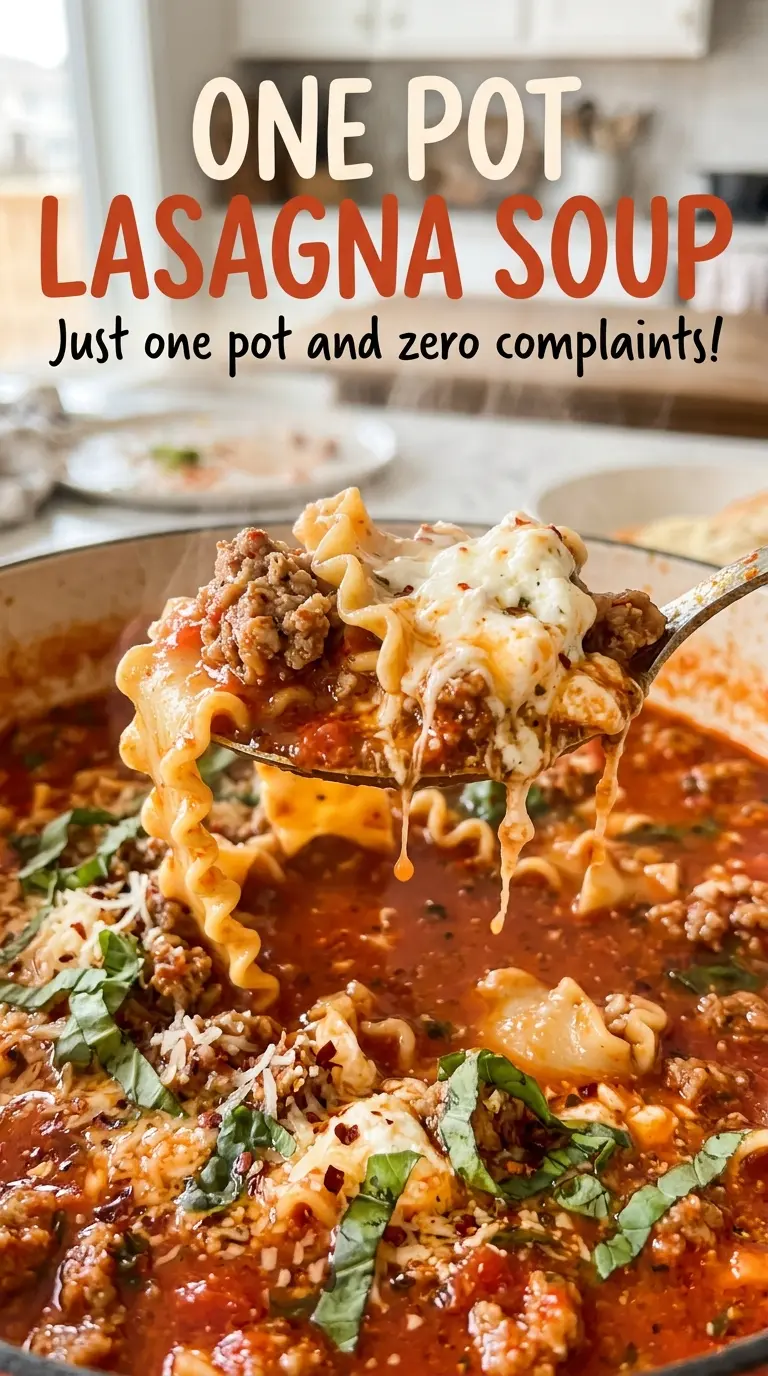
The sausage is the backbone here. It seasons the pot from the start and gives the soup enough body to stand up to all that tomato and pasta. If you swap in ground beef, the soup will still work, but you’ll lose some of the built-in spice and richness, so add a little extra Italian seasoning if the sausage isn’t there.
- Crushed tomatoes and diced tomatoes — The crushed tomatoes make the broth silky and dense, while the diced tomatoes give you small pieces that feel like bits of lasagna sauce. Using both gives the soup more texture than one can alone.
- Tomato paste — This is what deepens the color and keeps the broth from tasting thin. Let it cook with the onions and garlic before adding liquid so it loses that raw, sharp edge.
- Lasagna noodles — Break them into rough 2-inch pieces, not perfect squares. Irregular edges catch the broth better and give each spoonful that classic lasagna feel.
- Ricotta, mozzarella, and parmesan — This is the part that makes the bowl taste like lasagna instead of tomato pasta soup. Whole-milk ricotta gives the creamiest topping, but part-skim works if that’s what you have. The mozzarella brings the stretch, and the parmesan adds the salty finish.
- Basil — Fresh basil on top is worth it if you have it. It cuts through the richness and makes the bowl taste brighter right away.
Building the Soup Base in the Right Order
Brown the Sausage First
Start with the sausage in a large wide pot and let it brown before you touch anything else. You want real color on the meat, not just gray crumbles, because those browned bits become the base of the soup. If there’s a lot of fat in the pot after browning, drain off the excess, but leave enough behind to cook the onions. That little bit of fat carries the flavor into the vegetables.
Cook Down the Tomato Paste
Add the onion and cook it until it softens and turns translucent, then stir in the garlic and tomato paste. The paste needs a short cook in the hot pot so it darkens slightly and tastes rounded instead of sharp. If you dump in the broth too soon, the tomato paste stays raw and the soup tastes flatter than it should.
Simmer the Broth and Add the Noodles
Once the tomatoes and broth go in, bring everything to a boil before adding the broken noodles. That initial boil gives the pasta a clean start and keeps it from sitting in lukewarm liquid and turning gummy. After the noodles go in, lower the heat to a steady simmer and stir every 2 to 3 minutes so nothing sticks to the bottom. The soup is ready when the noodles are tender but still have a little chew in the center.
Finish With the Cheese Topping
Mix the ricotta, mozzarella, parmesan, and basil in a bowl while the soup finishes. Spoon a generous dollop into each bowl right before serving so it softens without melting away completely. If you stir all the cheese into the pot, the texture disappears and you lose the contrast that makes this feel like lasagna. A hot bowl with cool, creamy cheese on top is the whole point.
Three Ways to Make This Soup Fit Your Table
Make It Gluten-Free
Use a gluten-free lasagna noodle or another sturdy gluten-free pasta that can hold up in broth. Cook it only until just tender, since many gluten-free pastas soften fast once they sit in the soup. The flavor stays the same, but the texture is best when you serve it right away.
Make It Lighter Without Losing the Shape
Use turkey Italian sausage instead of pork sausage and keep the tomato paste in the pot so the broth still tastes full. The soup will be a little leaner, but the herbs and cheese topping keep it satisfying. If the turkey version seems thin, simmer it for an extra minute or two before adding the noodles.
Make It Vegetarian
Swap the sausage for plant-based Italian crumbles and use vegetable broth instead of chicken broth. Since vegetarian crumbles vary a lot, brown them well so they pick up some texture before the liquid goes in. The soup will still taste rich if you keep the tomato paste and cheese topping in place.
Storage and Reheating
- Refrigerator: Store in an airtight container for up to 4 days. The noodles will keep absorbing broth, so expect the soup to thicken.
- Freezer: It freezes, but the noodles soften after thawing. For the best texture, freeze the soup without the noodles and cook fresh pasta into the reheated base.
- Reheating: Warm it gently on the stove over medium-low heat with a splash of broth or water. High heat can make the noodles mushy and can tighten the tomato base too much.
Answers to the Questions Worth Asking

One Pot Lasagna Soup
Ingredients
Equipment
Method
- Brown Italian sausage directly in a large wide pot over medium-high heat, breaking it up as it cooks, until browned. Drain fat.
- Add the diced onion to the pot and cook for 3 minutes, stirring until softened. Add the minced garlic and tomato paste and cook for 2 minutes.
- Pour in the crushed tomatoes, diced tomatoes, and chicken broth, then stir in Italian seasoning, dried basil, and red pepper flakes. Keep stirring to evenly distribute the seasonings.
- Bring the soup to a boil over high heat. Add the broken lasagna noodles and stir so they submerge.
- Simmer for 10-12 minutes over medium heat, stirring every 2-3 minutes to prevent sticking. Cook until the noodles are tender and the soup is thickened.
- Season with salt and pepper to taste, stirring once more so the flavor is even. Everything should be ready in one pot.
- Mix ricotta, shredded mozzarella, and parmesan with basil for the cheese topping. Serve a generous spoonful in each bowl while the soup is hot.