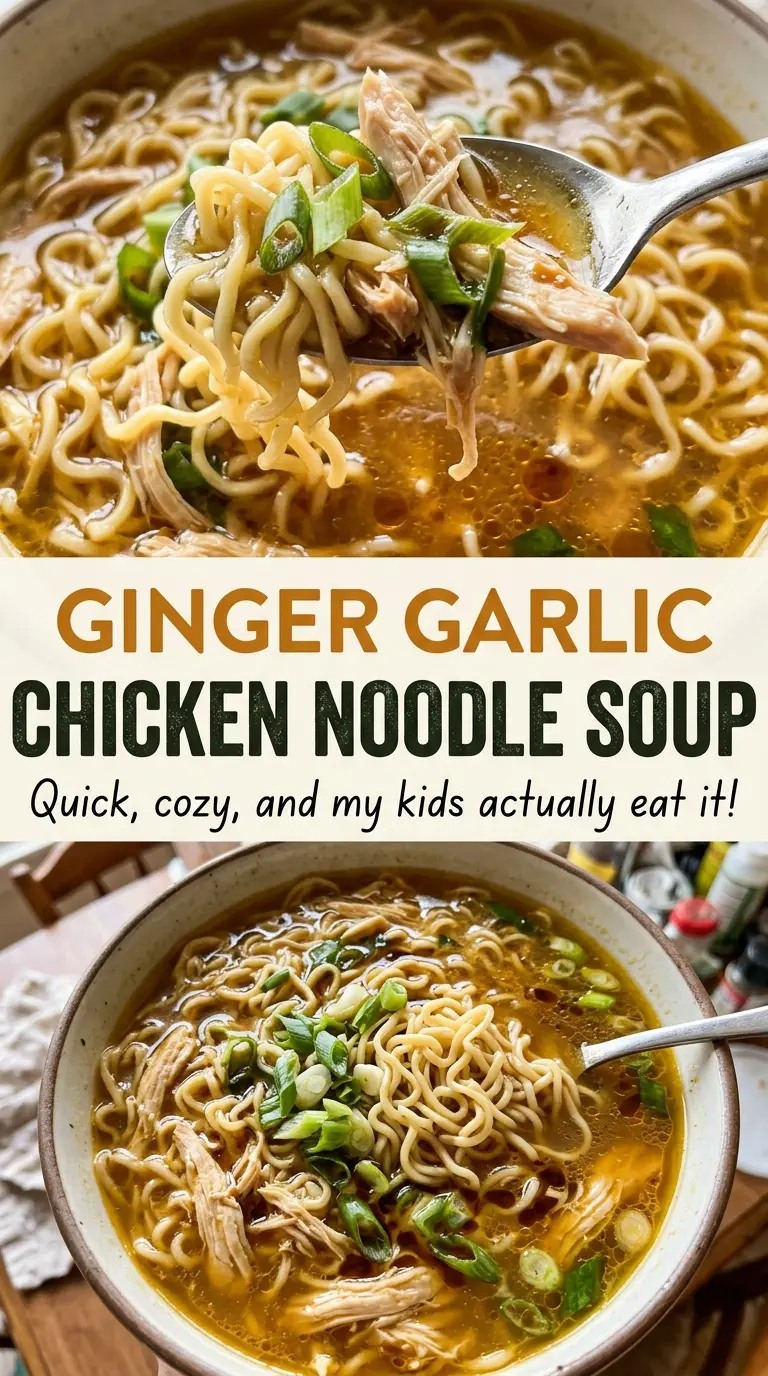
Ginger garlic chicken noodle soup lands in the bowl with a clear, fragrant broth that tastes like it has been simmering all day, even when dinner is on the table in under an hour. The ginger gives it warmth without heat, the garlic rounds out the savory base, and the chicken stays tender instead of stringy when it’s cooked gently in the broth. It’s the kind of soup that feels light but still eats like a real meal.
What makes this version work is the order. The vegetables get a head start so they soften and give the broth some body, then the garlic and ginger go in long enough to bloom without browning. A small splash of rice vinegar at the end wakes everything up, and sesame oil goes in off the heat so its aroma stays intact instead of fading into the pot.
Below, I’ll walk through the part that matters most: keeping the broth clean and the noodles from turning mushy. I’ve also included a few smart swaps, plus the storage trick that keeps leftovers from soaking up all the broth overnight.
The broth had that clean ginger-garlic flavor I was hoping for, and the noodles stayed tender instead of falling apart. I added a little extra sesame oil at the table and my husband went back for a second bowl.
Save this ginger garlic chicken noodle soup for the nights when you want a clear, savory broth with tender chicken and slurpable noodles.
The Trick to Clear Broth Instead of a Cloudy, Overcooked Pot
The biggest mistake with chicken noodle soup is letting it boil hard after the chicken goes in. A rolling boil pushes the broth into a cloudy, muddled state and can turn the chicken dry before the noodles are even added. A gentle simmer keeps the broth clean and gives the chicken enough time to cook through without shredding into tough little fibers.
The second thing that matters is building the flavor in stages. Onion, carrots, and celery soften first, then garlic and ginger bloom for just long enough to smell fragrant without turning bitter. Once the broth goes in, the pot should move into a steady, quiet simmer. That’s the difference between soup that tastes layered and soup that tastes flat.
- Chicken thighs stay juicier and give the broth a little more richness. Chicken breast works too, but pull it as soon as it reaches doneness or it will dry out.
- Fresh ginger matters here more than dried. Dried ginger won’t give you that bright, warming lift that makes this soup taste distinct.
- Sesame oil is added at the end because its aroma fades with heat. A little goes a long way, and too much will dominate the bowl.
- Rice vinegar doesn’t make the soup sour. It sharpens the broth just enough so the ginger, garlic, and chicken taste clearer.
What Each Ingredient Is Actually Doing in This Bowl
- Chicken breast or thighs — Thighs give you more forgiveness and a slightly richer broth, while breast cooks a little leaner and shreds into lighter strands. Either one works, but breast needs gentler simmering so it doesn’t go dry.
- Carrots, celery, and onion — This is the base that gives the soup sweetness and a little structure. Dice the onion finely and slice the carrots and celery evenly so they soften at the same pace.
- Garlic and ginger — These are the backbone of the soup’s aroma. Grate the ginger and mince the garlic finely so their flavor disperses through the broth instead of sitting in little pieces at the bottom.
- Chicken broth — Use one you’d actually drink on its own. A good broth carries the whole soup, and a weak one stays weak no matter how much seasoning you add.
- Soy sauce and rice vinegar — The soy sauce adds depth and salt, while the vinegar keeps the broth from tasting heavy. If you use low-sodium broth, you’ll need to season more aggressively at the end.
- Ramen noodles or egg noodles — Ramen gives you a springier bite, while egg noodles feel softer and more classic. Cook them just until tender because they keep absorbing broth after the heat is off.
Building the Broth Without Overcooking the Chicken
Softening the Vegetables First
Heat the oil in a large pot and cook the onion, carrots, and celery until the onion turns translucent and the carrots start to lose their raw crunch. You’re not looking for browning here. You’re building a sweet, savory base that will carry the ginger and garlic once they go in.
Waking Up the Ginger and Garlic
Add the garlic and ginger and stir them for about two minutes, just until the pot smells sharp and fragrant. If the garlic starts to color, the heat is too high and the flavor will turn bitter. Pull the pot back if needed; ginger and garlic need warmth, not scorching.
Simmering the Chicken Gently
Pour in the broth, soy sauce, and chicken, then bring everything up to a boil before lowering it to a simmer. The broth should move with small bubbles, not a hard churn. Cook until the chicken is just done and easy to shred, then lift it out before it overcooks in the soup.
Finishing With Noodles and Brightness
Return the shredded chicken to the pot, add the noodles, and cook until they’re tender but still have a little bite in the center. Stir in the sesame oil and rice vinegar off the heat so their flavor stays fresh. Taste the broth at the end and adjust salt and pepper after the noodles have had a chance to season the pot.
Three Ways to Adjust This Soup Without Losing What Makes It Good
Use chicken thighs for a richer bowl
Thighs hold up better during simmering and give the broth a fuller taste. If you want a more substantial soup with a slightly silkier mouthfeel, this is the swap to use.
Make it gluten-free
Use gluten-free noodles and swap the soy sauce for tamari or coconut aminos. Tamari keeps the same savory depth, while coconut aminos will taste a little sweeter and lighter.
Add extra vegetables without thinning the broth
Mushrooms, baby spinach, or thin-sliced napa cabbage can go in near the end. Add hearty vegetables early and delicate greens in the last minute so they stay tender and don’t muddy the broth.
Turn leftovers into a better next-day lunch
Store the noodles separately if you can, then add them back when reheating. That keeps them from soaking up all the broth and turning bloated by the next day.
Storage and Reheating
- Refrigerator: 4 days in a sealed container. The noodles will absorb broth as it sits, so the soup gets thicker by day two.
- Freezer: The broth and chicken freeze well for up to 3 months, but noodles soften too much. Freeze the soup without noodles if you want the best texture.
- Reheating: Warm it gently over medium-low heat until steaming, then add a splash of broth or water if needed. A hard boil will overcook the chicken and make the noodles fall apart.
Answers to the Questions Worth Asking

Ginger Garlic Chicken Noodle Soup
Ingredients
Equipment
Method
- Heat 1 tablespoon oil in a large pot over medium-high heat, then sauté onion, carrots, and celery for 4 minutes until slightly softened and glossy.
- Add minced garlic and grated ginger and cook for 2 minutes, stirring, until very fragrant and aromatic.
- Add chicken broth, soy sauce, and chicken to the pot, bring to a boil, then simmer for 20 minutes until the chicken is cooked through.
- Remove the chicken, shred it, and return the shredded chicken to the pot to rewarm in the broth.
- Add ramen noodles or egg noodles and cook for 3-5 minutes until tender, keeping the broth at a gentle simmer.
- Stir in sesame oil and rice vinegar, then season with salt and pepper to taste.
- Top the soup with green onions, cilantro, and sesame seeds, and serve hot.