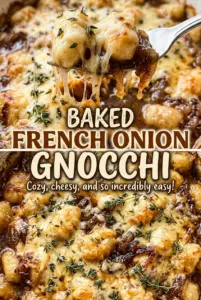
Deeply caramelized onions turn this baked French onion gnocchi into something richer than a quick skillet pasta and cozier than a classic soup. The gnocchi finish in a savory broth-cream sauce, so they soak up all that oniony flavor while staying tender in the middle, and the Gruyere on top bakes into a bronzed, stretchy crust that cracks under a spoon.
The trick is giving the onions real time. Thirty-five to forty minutes may sound long, but that slow cook is what builds the sweet, jammy base that makes the whole dish taste layered instead of flat. A splash of white wine or dry sherry lifts the browned bits off the pan, and the Worcestershire adds the quiet depth that French onion flavor always needs.
Below, you’ll find the exact cue I watch for when the onions are ready, plus the easiest way to keep the sauce creamy instead of greasy after baking. Once you’ve made it once, it settles into the kind of dinner you can pull together without much thinking.
The onions took their time, but it was worth it — the broth got silky, the gnocchi stayed pillowy, and that Gruyere top browned beautifully without getting greasy.
Save this baked French onion gnocchi for the night you want caramelized onions, tender gnocchi, and a golden Gruyere crust in one pan.
The Reason the Onions Have to Cook First, Not Last
The whole dish lives or dies on the onions. If they stay pale, the sauce tastes thin and one-note, even with broth and cheese in the pan. Caramelizing them until they’re soft, sweet, and deep brown gives the gnocchi something to cling to and keeps the final bake from tasting like melted cheese over plain dumplings.
The other common mistake is rushing the liquid. Once the wine goes in, let it cook off for a full two minutes so the sharp edge disappears. Then add the broth and cream and let the sauce come to a gentle simmer before the gnocchi go in. That way the gnocchi finish cooking in the sauce instead of turning gummy from a hard boil.
- Onions — Three large onions is the right amount for a real French onion flavor. Yellow onions work best because they break down sweetly and hold onto their body during the long cook.
- Dry white wine or dry sherry — This is not just for flavor. It lifts the browned bits from the pan and adds the same savory brightness you get in onion soup. Use something dry, not sweet.
- Gruyere — Gruyere melts smoothly and browns into that nutty, stretchy top that makes this dish feel complete. Swiss cheese can stand in if needed, but the flavor will be milder.
- Beef broth — It deepens the onion base and gives the sauce more backbone. Vegetable broth works in a pinch, but the finished dish will taste lighter and a little less like classic French onion soup.
- Gnocchi — Shelf-stable or refrigerated gnocchi both work here. Use them straight from the package; boiling first only makes them more likely to turn mushy in the oven.
Building the Sauce So the Gnocchi Stay Tender

Heat the butter and olive oil together, then add the sliced onions with a little salt and let them cook over medium-low heat. Stir often enough to keep them from sticking, but not so constantly that they never take on color. You want them deeply golden and almost jammy, with some browned edges and a sweet, cooked-down smell. If they start to scorch, lower the heat and add a spoonful of water to the pan to loosen the bottom.
Caramelizing the Onions
This is the slow part, and it’s the part you can’t fake. The onions should shrink down, turn soft, and pick up a deep brown color that tells you their natural sugar has actually cooked. If you stop too early, the finished sauce tastes flat and the cheese ends up carrying the whole dish.
Building the Brothy Base
Once the wine goes in, scrape the pan well and let it bubble until the sharp alcohol smell disappears. Stir in the garlic and thyme for just a minute so the garlic stays fragrant instead of bitter, then add the broth, Worcestershire, and cream. Bring it to a simmer, not a boil. A hard boil can separate the cream and make the sauce look broken before the gnocchi even go in.
Finishing in the Oven
Stir in the uncooked gnocchi so every piece is coated, then scatter the Gruyere evenly over the top. Bake or broil until the sauce is bubbling around the edges and the cheese is melted with browned spots across the surface. The gnocchi are done when they’re tender all the way through and the sauce has thickened slightly. If you broil, stay close — Gruyere goes from bronzed to burned fast.
How to Adapt This for the Ingredients You Have on Hand
Make It Vegetarian
Swap the beef broth for a rich vegetable broth and use vegetarian Worcestershire if that matters for your table. The dish will still be savory and satisfying, but the flavor will be a little lighter and less beefy, so keep the onions fully caramelized to carry more of the depth.
Go Gluten-Free
Use gluten-free gnocchi and check that your Worcestershire and broth are certified gluten-free. The texture stays close to the original as long as you don’t overbake it, because gluten-free gnocchi can soften a little faster once the sauce gets hot.
Swap the Cheese
If Gruyere is pricey or hard to find, use a mix of Swiss and a little parmesan. You’ll lose some of the nutty melt that makes Gruyere special, but the top will still brown well and taste balanced instead of flat.
Storage and Reheating
- Refrigerator: Store leftovers in an airtight container for up to 3 days. The gnocchi will absorb more sauce, so the dish gets thicker as it sits.
- Freezer: It freezes, but the cream sauce can turn grainy after thawing. If you do freeze it, cool it completely first and reheat gently from thawed for the best texture.
- Reheating: Warm covered in a 350°F oven until hot, adding a splash of broth if the sauce looks too tight. The common mistake is blasting it in the microwave, which makes the gnocchi tough and dries out the cheese.
Answers to the Questions Worth Asking
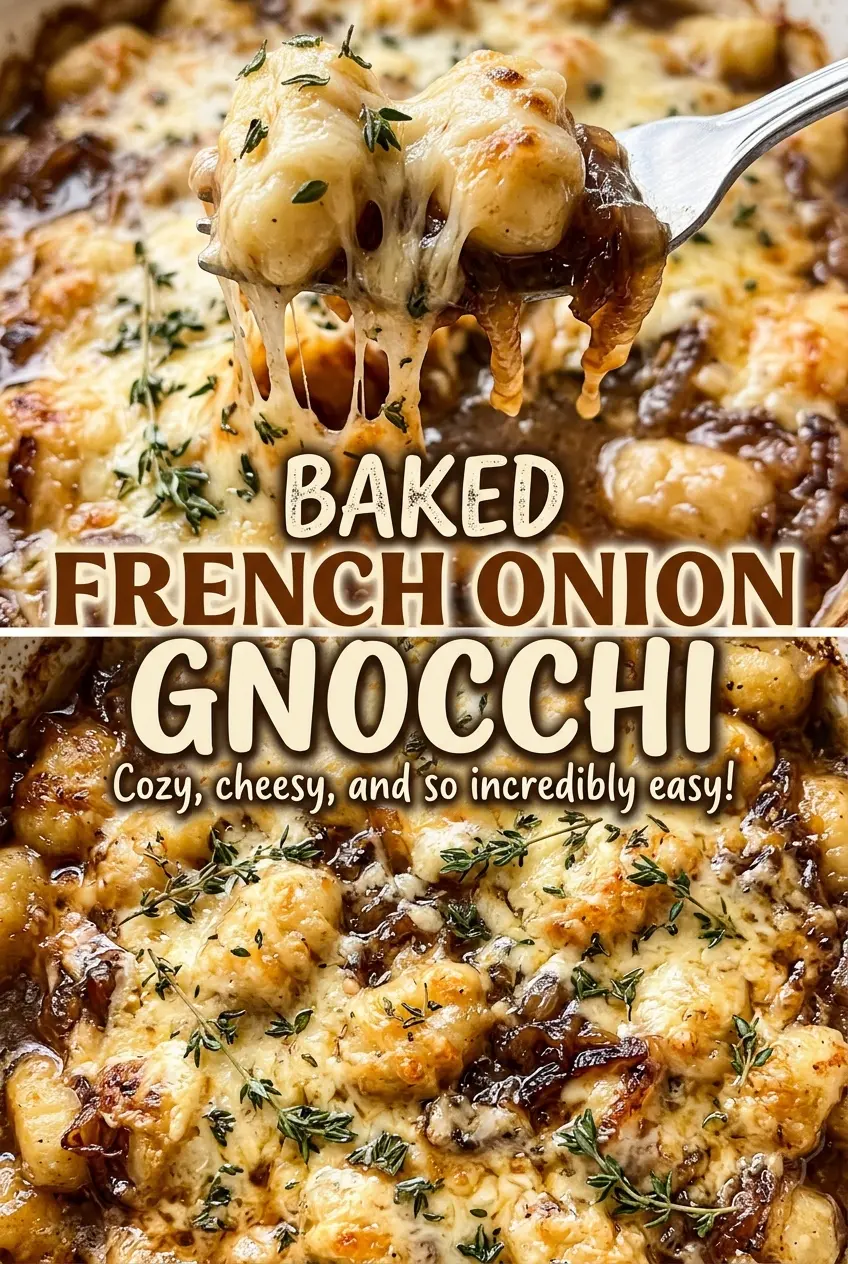
Baked French Onion Gnocchi
Ingredients
Equipment
Method
- Melt butter with olive oil in a large oven-safe skillet, then add the onions and cook over medium-low heat for 35-40 minutes until deeply caramelized and dark golden. Stir occasionally so the onions soften and brown evenly.
- Pour in the dry white wine or dry sherry to deglaze, then cook for 2 minutes to reduce slightly. Scrape up any browned bits stuck to the skillet.
- Add the minced garlic and fresh thyme, then cook for 1 minute until fragrant. Keep the heat at a gentle sizzle, not a hard boil.
- Add the beef broth, Worcestershire sauce, and heavy cream, then bring the mixture to a simmer. Reduce slightly until it looks smooth and creamy around the onions.
- Add the uncooked potato gnocchi and stir to coat in the sauce. Let them sit briefly so they start absorbing the broth before baking.
- Scatter the shredded Gruyère over the top in an even layer. Make sure the cheese reaches the edges for a browned crust.
- Broil or bake at 425F for 15-18 minutes, until the gnocchi are cooked through, the sauce is bubbling, and the cheese is golden. Watch closely at the end so the top browns without burning.