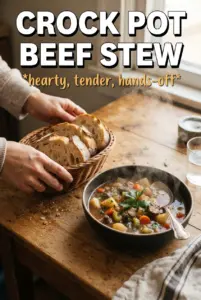
Fall-apart beef, tender potatoes, and a broth that turns deep and savory without any babysitting is what makes Crock Pot beef stew earn a permanent place in the rotation. The slow cooker does the long, quiet work here, and the payoff is a stew with beef that shreds at the edge of the spoon and vegetables that hold their shape instead of dissolving into the pot.
What makes this version work is the layering. The vegetables go in first, which keeps the beef from sitting directly on the bottom and gives the stew a little structure as it cooks. Tomato paste, Worcestershire, and red wine build a darker, richer broth than plain stock alone, and the cornstarch slurry goes in at the end so the stew thickens without turning gluey over eight hours of heat.
If you’ve ever ended up with broth that tasted flat or beef that stayed tough, the fixes are here. I also included the small details that matter most: when to salt, when to thicken, and how to tell the stew is ready before you waste time chasing the clock.
The beef got so tender it was falling apart by the spoonful, and the broth thickened up perfectly at the end. I used the red wine and it gave the stew a deeper flavor without tasting sharp at all.
Save this Crock Pot Beef Stew for nights when you want deep, rich broth and beef that turns fork-tender without standing over the stove.
The Slow Simmer That Makes Chuck Roast Turn Tender
Chuck roast needs time, not heat. That’s the main mistake that ruins beef stew: the pot gets rushed, the meat tightens up, and the broth never has time to turn silky and deep. In the slow cooker, the collagen in chuck has hours to soften, which is what gives you that spoon-tender texture instead of chewy cubes floating in gravy.
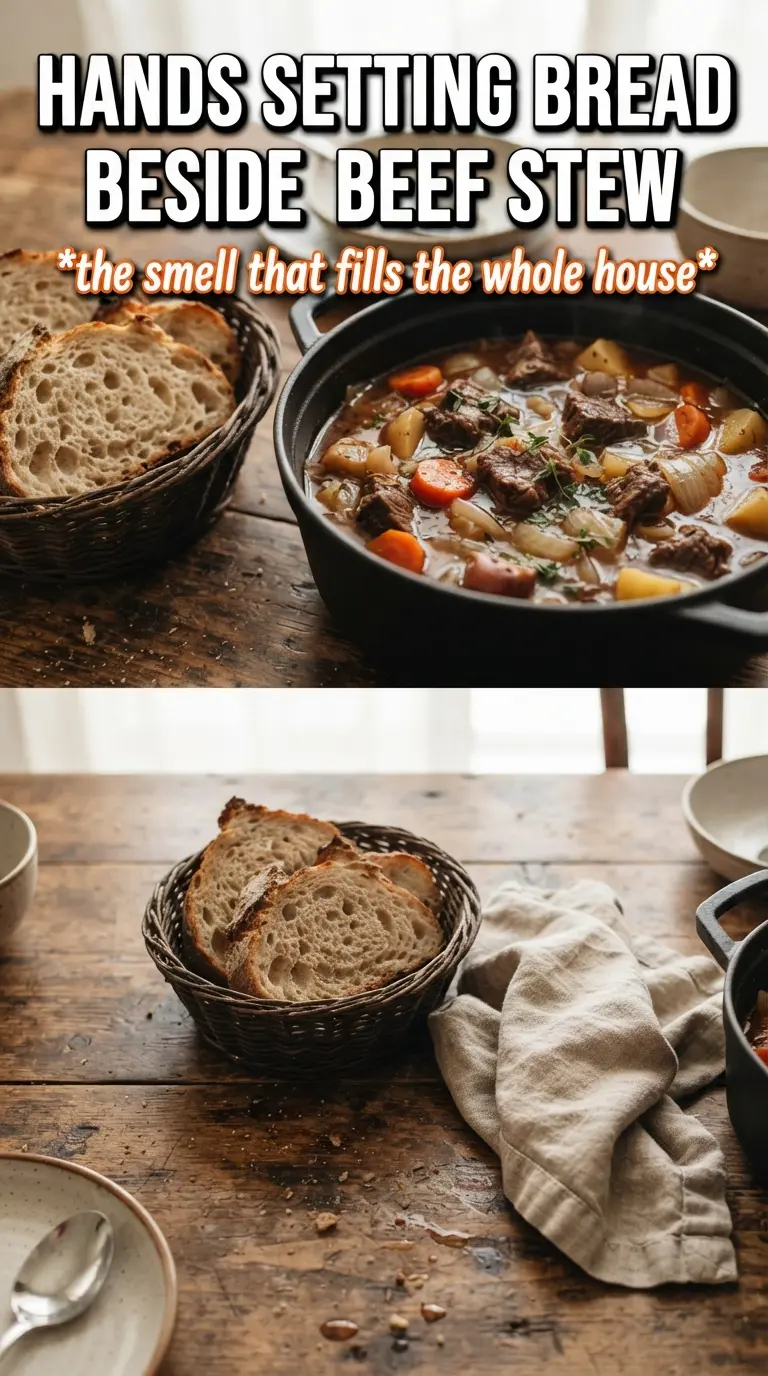
The other thing that matters is where the ingredients sit. Root vegetables and onions on the bottom keep the beef from stewing in direct contact with the hottest spot, and they also help season the broth from underneath. By the time the beef is done, the potatoes and carrots have absorbed enough of that broth to taste like they belong there, not like they were added at the last minute.
- Beef chuck — This is the right cut because it has enough fat and connective tissue to become tender over a long cook. Lean stew meat can work in a pinch, but it won’t have the same rich texture.
- Red wine — This adds depth and a little brightness. If you skip it, use extra beef broth, but the stew will taste a bit flatter. Use a wine you’d actually cook with; it doesn’t need to be fancy.
- Tomato paste and diced tomatoes — The paste gives the broth body and a darker color, while the tomatoes keep the stew from tasting heavy. Don’t leave out the paste unless you want a thinner, less developed broth.
- Baby potatoes — Halved baby potatoes hold their shape better than peeled russets. If you swap in russets, cut them into larger chunks so they don’t collapse before the beef is done.
What Each Ingredient Is Actually Doing in This Recipe
- Primary ingredient (the star) — Quality matters most. Choose the best you can find.
- Cooking medium (oil, butter, or broth) — This carries flavors and prevents dryness.
- Seasonings (salt, pepper, spices, herbs) — Layer flavors so nothing overpowers. Build depth gradually.
- Aromatics (garlic, onion, herbs) — Cook with fat to bloom flavors. Become the foundation.
- Supporting ingredients — Complement the main ingredient without overpowering it.
- Sauce or liquid (if applicable) — Brings flavors together. Balance richness with acid.
- Acid (lemon, vinegar, wine, or other) — Brightens and prevents flat-tasting results.
- Final finish (garnish, glaze, or sauce) — Prevents one-dimensional taste and adds visual appeal.
Building the Stew in the Right Order
Start With the Vegetables
Layer the potatoes, carrots, celery, and onion in the bottom of the slow cooker first. That gives the stew a base and keeps the beef from sticking to the hottest surface. If you dump everything in at once and stir, the vegetables tend to break up more by the end of the cook.
Season the Beef and Nestle It In
Season the beef generously with salt and pepper before it goes in. The meat won’t sear in this recipe, so seasoning before the long cook is where the flavor starts. Nestle it over the vegetables instead of burying it; you want the broth to move around the meat as it cooks, not trap it in one dense layer.
Pour in the Broth Mixture
Add the garlic, broth, wine, tomatoes, tomato paste, Worcestershire, thyme, rosemary, and bay leaves over the top. Stir just enough to distribute the liquid and paste, but don’t overmix the layers. The stew looks loose at the start, and that’s correct — the liquid reduces and the starches from the potatoes help build body over time.
Thicken at the End, Not the Beginning
When the beef is fall-apart tender, remove the bay leaves and stir in the cornstarch slurry. Let it cook on High for 20 to 30 minutes until the broth turns glossy and lightly thickened. If you add the slurry too early, the stew can tighten up before the beef is fully tender, and the texture goes muddy instead of velvety.
How to Adapt This for Different Pans, Diets, and Leftovers
Dairy-Free and Naturally Gluten-Free
This stew is already dairy-free, and it can be gluten-free as long as your beef broth and Worcestershire sauce are certified gluten-free. The cornstarch slurry is the thickener here, so you don’t need flour at all. That keeps the broth clean and smooth instead of pasty.
No Wine Needed
Use the extra cup of beef broth if you don’t want to cook with wine. The stew will still be rich, but it loses a little acidity and complexity. If you want to replace some of that brightness, add a small splash of red wine vinegar at the end, just enough to wake up the broth.
Using a Tougher Cut on Sale
Bottom round or rump roast can work, but they need the full low-and-slow time and they won’t taste as rich as chuck. Trim any thick exterior fat, but don’t strip the meat bare. A little fat helps the stew stay tender while it cooks.
Storage and Reheating
- Refrigerator: Store in an airtight container for up to 4 days. The broth thickens as it chills, so it will look a little denser the next day.
- Freezer: It freezes well for up to 3 months. Cool it completely first, then freeze in portions so the potatoes don’t get crushed during reheating.
- Reheating: Warm it slowly on the stovetop over medium-low or in the microwave in short bursts, stirring between rounds. Add a splash of broth or water if the stew feels too thick, because it tightens up as it sits.
Answers to the Questions Worth Asking
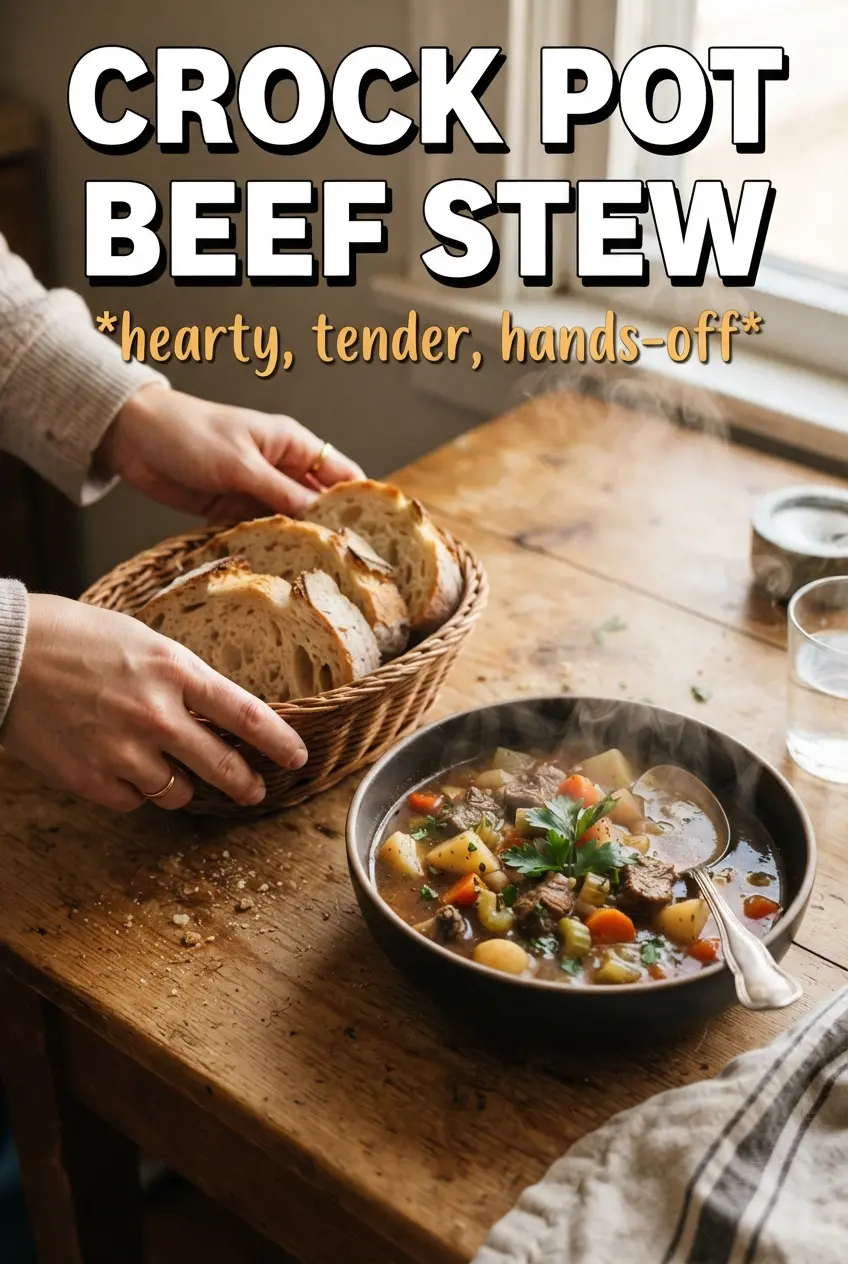
Crock Pot Beef Stew
Ingredients
Equipment
Method
- Season the beef chuck generously with salt and pepper to coat all sides for better flavor.
- Add the potatoes, carrots, celery, and onion to the bottom of the slow cooker in an even layer.
- Nestle the seasoned beef on top, then add garlic, beef broth, red wine (or extra beef broth), diced tomatoes, tomato paste, Worcestershire sauce, dried thyme, dried rosemary, and bay leaves.
- Cook on Low for 8-10 hours or on High for 4-5 hours until the beef is fall-apart tender.
- Remove the bay leaves from the stew and stir to distribute the aromatics.
- Stir the cornstarch slurry (cornstarch mixed with water) into the stew until no lumps remain.
- Cook on High for 20-30 minutes until the broth thickens and clings to the meat and vegetables.
- Season with additional salt and pepper to taste, then serve hot.