Gyoza soup gives you the comfort of dumpling night in a bowl that tastes light, fragrant, and deeply satisfying. The broth stays clear and savory instead of turning heavy, the dumplings stay tender, and the bok choy and mushrooms bring just enough bite to keep every spoonful interesting. It’s the kind of dinner that feels calm to cook and looks like you put in far more effort than you did.
What makes this version work is the order. The broth gets seasoned first with garlic, ginger, soy sauce, mirin, and rice vinegar so the dumplings cook in something already worth eating. Mushrooms go in before the gyoza because they need a little time to soften and release their flavor, while the bok choy only needs a short simmer at the end so it stays bright instead of limp. A little sesame oil stirred in off the heat gives the broth that round, toasty finish without making it greasy.
Below, I’ll walk you through the timing that keeps frozen gyoza from falling apart, the ingredient swaps that still keep the soup balanced, and the small finishing touch that makes the bowl taste complete.
The broth had that clean ginger-garlic taste I was hoping for, and the dumplings held up perfectly without getting mushy. I added a little extra chili oil at the table and my husband asked if we could make it again next week.
Save this gyoza soup for the nights when you want dumpling comfort with a light ginger-garlic broth and almost no cleanup.
The Secret to Gyoza Soup That Stays Clear, Not Cloudy
Most dumpling soups go wrong because the pot gets pushed to a hard boil. That seems faster, but it’s how you end up with torn wrappers, cloudy broth, and filling leaking into the soup. A steady simmer keeps the gyoza intact and gives the broth time to pick up the flavor of the ginger, garlic, and mushrooms without turning starchy.
The other mistake is putting the greens in too early. Bok choy only needs a couple of minutes, and if it overcooks, it gets dull and stringy instead of tender-crisp. Add the sesame oil at the very end too, because its job here is aroma, not frying; long simmering flattens it out.
- Frozen gyoza or potstickers — Frozen dumplings work beautifully here. Cook them straight from the freezer; thawing first makes the wrappers fragile and more likely to split.
- Chicken broth — Use a broth you’d actually drink on its own. Since this soup is light, a weak broth stays weak. If you only have low-sodium broth, that’s fine, but season thoughtfully at the end.
- Mirin — This adds a gentle sweetness that rounds out the soy sauce and vinegar. If you don’t have it, use a small pinch of sugar with a splash more broth, but the result will be a little less polished.
- Bok choy — Baby bok choy is ideal because the stems stay crisp while the leaves wilt quickly. If yours is large, separate the stems from the leaves and add the stems a minute before the leaves.
What Each Ingredient Is Actually Doing in This Recipe
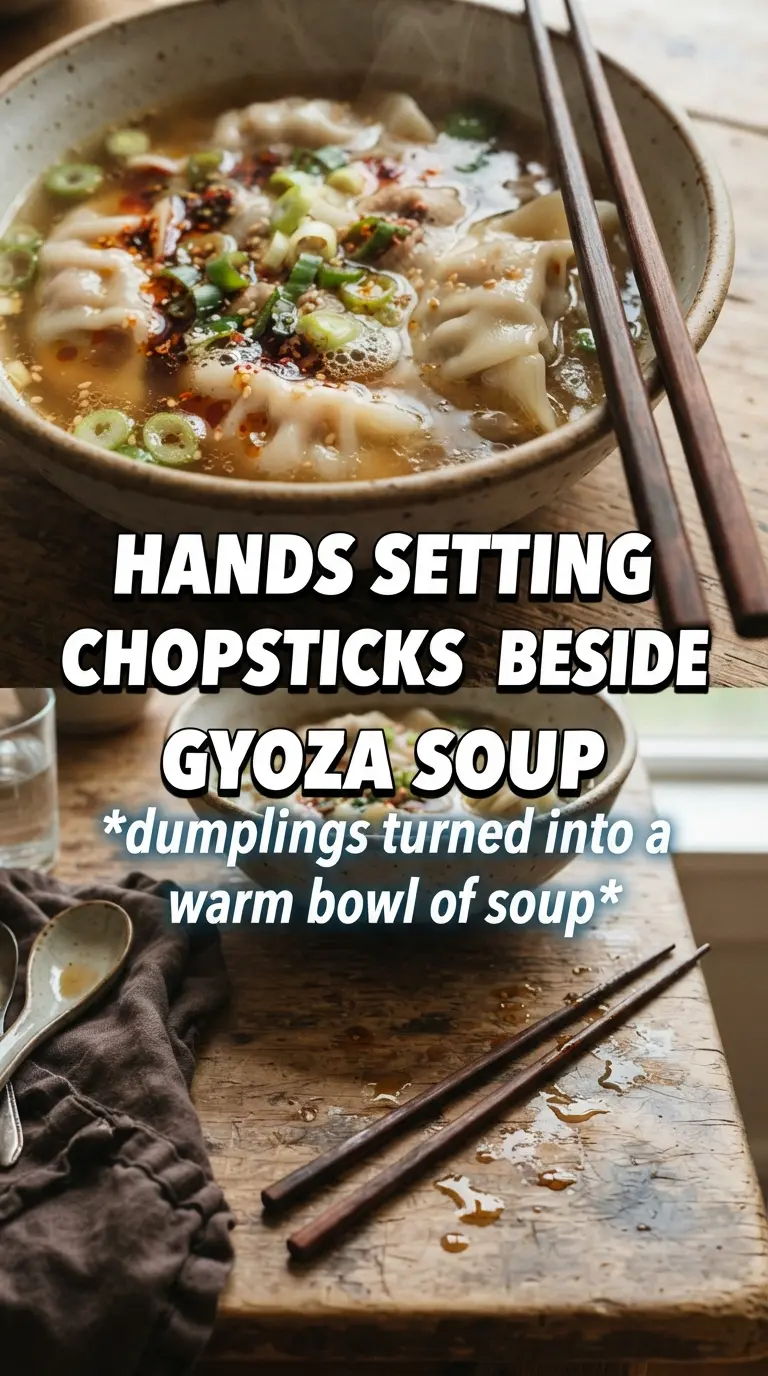
- Primary ingredient (the star) — Quality matters most. Choose the best you can find.
- Cooking medium (oil, butter, or broth) — This carries flavors and prevents dryness.
- Seasonings (salt, pepper, spices, herbs) — Layer flavors so nothing overpowers. Build depth gradually.
- Aromatics (garlic, onion, herbs) — Cook with fat to bloom flavors. Become the foundation.
- Supporting ingredients — Complement the main ingredient without overpowering it.
- Sauce or liquid (if applicable) — Brings flavors together. Balance richness with acid.
- Acid (lemon, vinegar, wine, or other) — Brightens and prevents flat-tasting results.
- Final finish (garnish, glaze, or sauce) — Prevents one-dimensional taste and adds visual appeal.
How to Build the Broth, Dumplings, and Greens in the Right Order
Starting with the Aromatics
Bring the broth to a gentle simmer with the garlic, ginger, soy sauce, mirin, and rice vinegar. You want the surface moving lazily, not boiling hard. That keeps the broth clear and lets the ginger and garlic perfume the liquid without turning sharp. If the broth smells flat at this stage, don’t rush it; give it the full five minutes so the flavor has time to settle in.
Cooking the Mushrooms Before the Dumplings
Add the shiitake mushrooms and let them simmer for 3 to 4 minutes until they soften and lose their raw edge. Shiitakes need this head start because they bring a deeper savory note once they’ve had a chance to cook through. If you dump the gyoza in first, the dumplings can overcook while the mushrooms are still chewy. Thin slices work best because they release flavor fast and don’t clutter the spoon.
Letting the Gyoza Cook in the Broth
Slide the gyoza directly into the simmering soup and cook them according to the package directions, usually 5 to 7 minutes. Don’t stir aggressively; a gentle nudge is enough to keep them from sticking. The dumplings are done when they float and the wrappers look glossy and tender, with no raw doughy patch along the seam. If the pot is boiling too hard, pull it back immediately or the wrappers can burst.
Finishing with Bok Choy and Sesame Oil
Add the bok choy during the last 2 to 3 minutes so the stems soften slightly while the leaves stay bright. Turn off the heat, stir in the sesame oil, and taste for salt. That last off-heat finish matters because sesame oil tastes cleaner and more fragrant when it isn’t simmered. Top the bowls with green onions, sesame seeds, and chili oil right before serving so every spoonful has contrast.
Three Useful Ways to Adapt Gyoza Soup
Make It Vegetarian Without Losing Depth
Swap the chicken broth for a rich vegetable broth and use vegetable gyoza. To keep the soup from tasting thin, don’t skip the ginger, garlic, and shiitake mushrooms; those are doing a lot of the savory work. A small splash of soy sauce at the end helps the broth taste complete.
Use Napa Cabbage Instead of Bok Choy
If bok choy isn’t available, napa cabbage works well and brings a softer, sweeter finish. Slice it into wide ribbons and simmer it for the last 3 to 4 minutes so it turns tender without falling apart. It won’t have quite the same crisp stem texture, but it fits the broth nicely.
Add More Heat Without Overpowering the Broth
Stir in a little chili oil at the table rather than simmering it in the pot. That keeps the broth clean-tasting and lets each person control the heat level. If you want a deeper chile note, add a pinch of red pepper flakes with the garlic and ginger.
Storage and Reheating
- Refrigerator: Store leftovers up to 3 days. The dumplings soften as they sit, but the broth keeps its flavor.
- Freezer: The broth can be frozen, but cooked gyoza don’t freeze well in soup because the wrappers turn mushy. Freeze the broth and vegetables separately from fresh dumplings if you want the best texture later.
- Reheating: Warm gently over medium-low heat until just steaming. Don’t boil it hard, or the dumplings can split and the bok choy will lose its bite.
Answers to the Questions Worth Asking
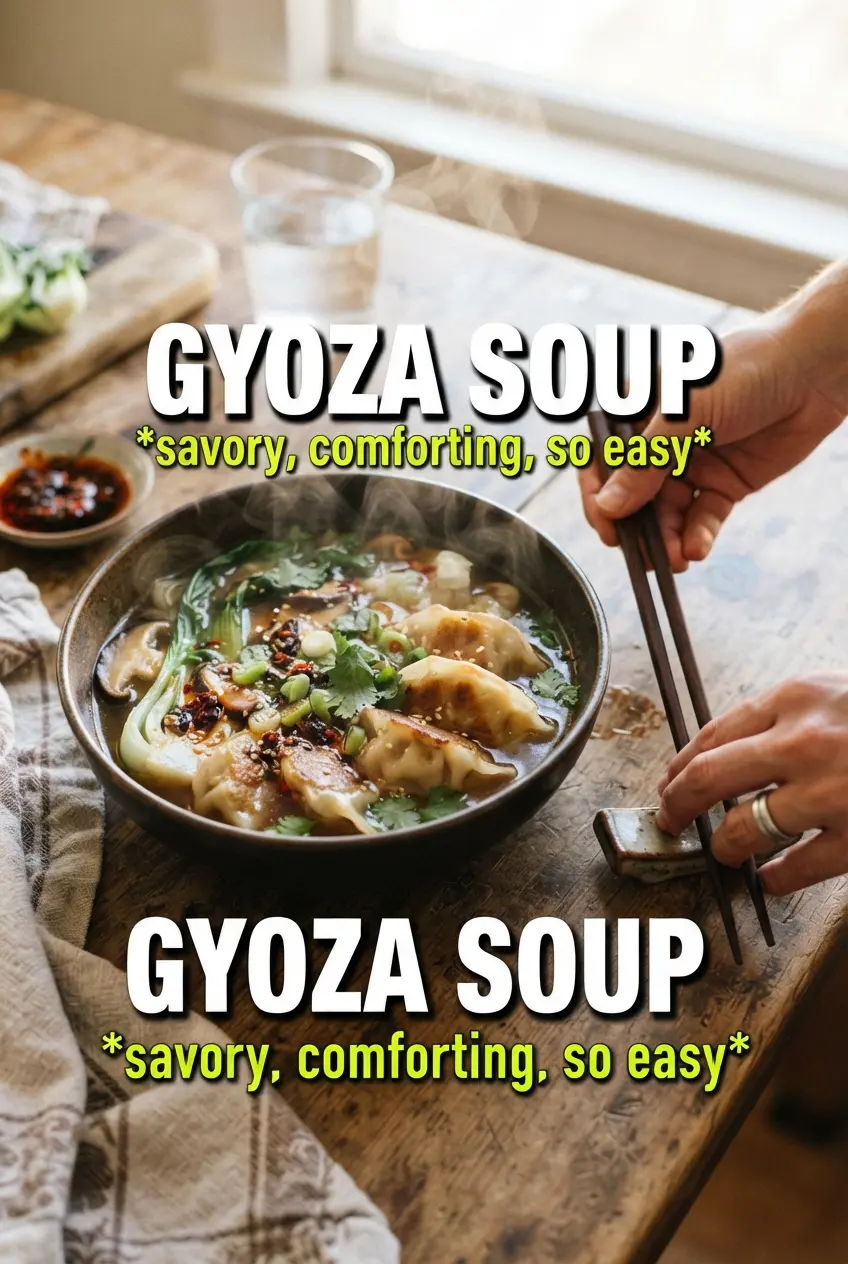
Gyoza Soup
Ingredients
Equipment
Method
- Bring the chicken broth to a simmer in a large pot and add garlic, grated ginger, soy sauce, mirin, and rice vinegar. Keep at a simmer for 5 minutes to meld the flavors.
- Add the shiitake mushrooms to the simmering broth and cook for 3 to 4 minutes until softened and fragrant. Keep the broth at a steady simmer.
- Add the gyoza dumplings directly to the simmering broth and cook according to package directions, usually 5 to 7 minutes until cooked through. Maintain a gentle simmer so the wrappers stay tender.
- Add the chopped bok choy and cook for 2 to 3 minutes, stirring occasionally, until wilted. The broth should remain gently bubbling.
- Stir in the sesame oil, then taste and season with salt as needed. Turn off the heat once the flavor is balanced.
- Ladle the gyoza soup into bowls and top with sliced green onions, sesame seeds, and chili oil. Serve hot while the dumplings are steamy and the vegetables are bright.