Chicken noodle soup gets a lot more satisfying when the bowl has enough substance to count as dinner. This version keeps the broth clear and comforting, but it adds extra staying power with diced chicken breast and chickpeas, so every spoonful has a little more chew, a little more body, and a lot more staying power than the usual version. The lemon at the end keeps it from tasting flat, which matters when you’re building flavor from a simple broth.
The trick here is timing. The chicken gets a head start in the pot, but the noodles go in late so they stay tender instead of bloating into mush. Chickpeas work surprisingly well in soup like this because they hold their shape and give the broth a heartier feel without making it heavy. A short simmer is enough to cook the chicken through and let the vegetables soften without taking away their texture.
Below you’ll find the exact order I use to keep the broth clean, the noodles intact, and the flavor bright. I’ve also included a few useful swaps in case you want to change the noodles or make it gluten-free.
The broth stayed clear, the chicken stayed tender, and the chickpeas gave it enough heft that I didn’t need bread on the side. The lemon at the end made the whole pot taste fresh instead of dull.
Love a broth that’s hearty enough for dinner? Save this high protein chicken noodle soup for the nights when you want a filling bowl with chicken, chickpeas, and lemony broth.
The Secret to Soup That Tastes Brothy, Not Blunt
The difference between a good chicken noodle soup and a forgettable one usually comes down to two things: how you build the base and when you add the noodles. Onion, carrot, and celery need a few minutes in the oil before anything else goes in. That step softens their edges and gives the broth a deeper starting point, instead of leaving you with vegetables that taste boiled and thin.
The chicken should only cook until it loses the raw pink color and picks up a little light browning. If you let it go too far at this stage, it can turn dry before the soup has a chance to simmer. The broth finishes the job. By the time the noodles go in, the chicken should be nearly cooked through, which keeps everything tender instead of overworked.
Adding lemon juice at the end is what keeps the soup from tasting flat. Acid wakes up salted broth in a way herbs alone can’t, and it’s especially useful here because chickpeas and noodles both soften the overall flavor.
What Each Ingredient Is Actually Doing in This Bowl
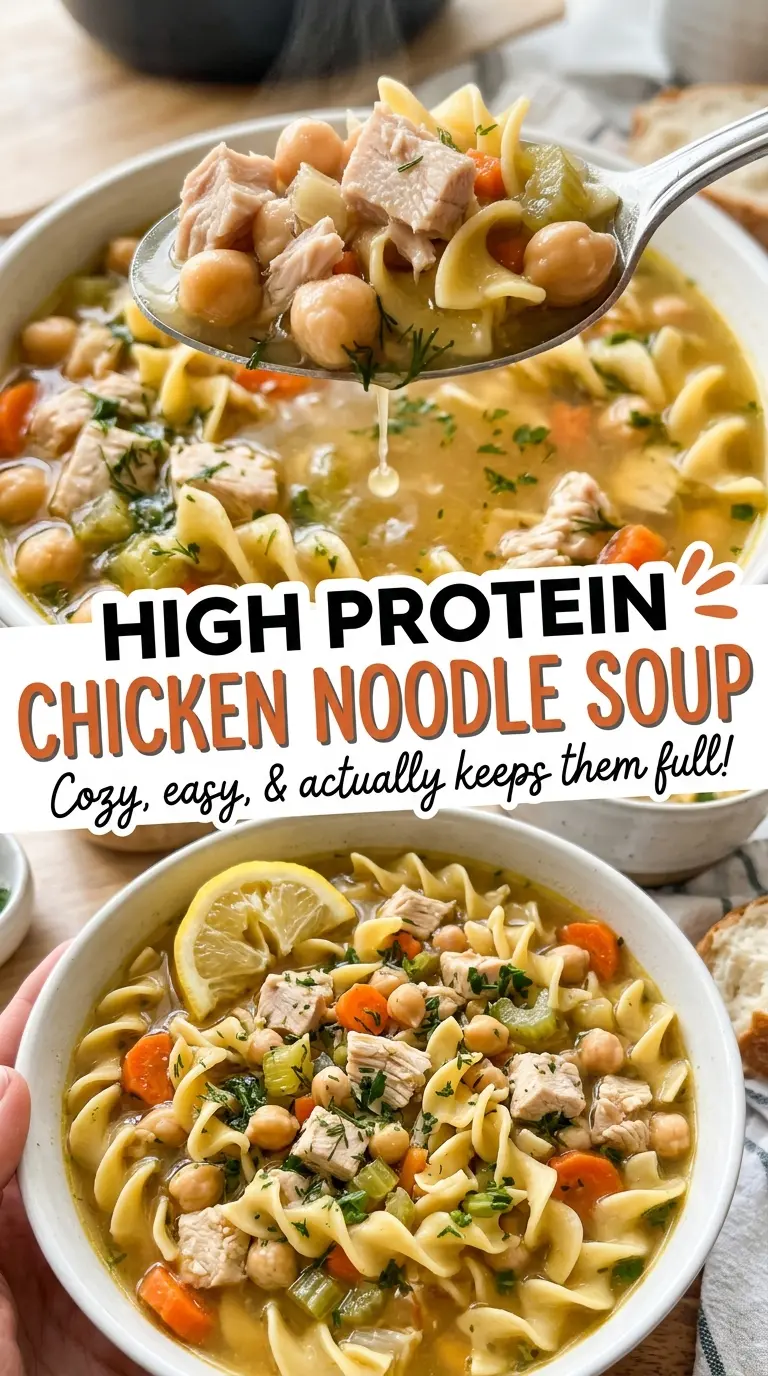
- Chicken breast — Diced chicken breast cooks quickly and gives this soup its main protein boost. Cut it into even pieces so it cooks at the same pace; large chunks can be done on the outside and undercooked in the center.
- Chickpeas — These add extra protein and a little creamy bite without making the soup heavy. Canned chickpeas are perfect here, but rinse and drain them well so the broth stays clean, not cloudy.
- Egg noodles — High-protein or whole wheat noodles hold up better than standard egg noodles and add more substance. If you use regular noodles, watch them closely because they go soft fast in hot broth.
- Chicken broth — This is the backbone of the soup, so use a broth you’d happily sip on its own. If yours is low-sodium, you’ll have more control over the final seasoning, which helps once the lemon goes in.
- Lemon juice — This is not garnish-level lemon. It brightens the whole pot and pulls the chicken, herbs, and broth together at the end.
How to Build the Bowl So the Noodles Stay Tender
Softening the vegetables first
Warm the olive oil in a large pot, then cook the onion, carrots, and celery until the onion turns translucent and the carrots start to lose their raw edge. You want them softened, not browned. If the pot runs dry or the heat is too high, the vegetables will catch before they’ve had time to flavor the oil, and that gives the soup a rough, slightly scorched taste.
Cooking the chicken without drying it out
Add the garlic for just a minute, then stir in the diced chicken and cook until the outside turns opaque and only the faintest pink remains in the center. The chicken will finish cooking in the broth, so this stage is about starting the process, not finishing it. If you overcook it here, it won’t recover later, even in a generous amount of liquid.
Simmering the broth into a complete soup
Pour in the broth, thyme, and parsley, then bring everything to a boil before lowering it to a steady simmer. That simmer should look active enough to move the surface, but not so hard that the broth splashes or turns cloudy. After about 15 minutes, the vegetables should be tender and the chicken fully cooked.
Adding noodles at the end
Stir in the chickpeas and noodles and cook just until the noodles are tender, usually 6 to 8 minutes depending on the brand. This is the point where many soups go wrong. If the noodles cook too long, they soak up too much broth and turn pasty, especially if the soup sits before serving. Pull the pot from the heat as soon as the noodles are done.
Finishing with lemon and seasoning
Stir in the lemon juice last, then taste and season with salt and pepper. Lemon should taste bright, not sharp, so start with the full amount listed and adjust only if the broth still tastes flat. Finish with fresh parsley for color and a clean herbal note that makes the bowl look as fresh as it tastes.
Three Ways to Adapt This Soup Without Losing the Point
Gluten-Free Version
Swap in certified gluten-free noodles and check your broth label before you start. Gluten-free noodles can break down faster than wheat noodles, so cook them just until tender and serve the soup right away for the best texture.
Use Rotisserie Chicken
If you already have cooked chicken, skip the browning step and stir it in after the broth has simmered with the vegetables. That saves time, but the soup will taste a little less layered, so let the broth simmer a few extra minutes before adding the noodles and chicken.
Dairy-Free, Naturally
This soup is already dairy-free as written, which makes it an easy one to serve to a crowd with different needs. Keep the broth simple and skip any creamy add-ins if you want the cleanest, brightest version of the soup.
Make It Heartier
Add an extra handful of chickpeas or a little more chicken if you want a bowl that leans more toward stew than soup. Don’t add more noodles unless you also increase the broth, or the pot will turn thick and starchy after sitting.
Storage and Reheating
- Refrigerator: Store in an airtight container for up to 4 days. The noodles will absorb broth as it sits, so expect the soup to thicken a bit.
- Freezer: This soup freezes, but the noodles soften after thawing. For best results, freeze the soup without noodles and cook them fresh when you reheat.
- Reheating: Warm gently over medium-low heat until steaming, adding a splash of broth or water if needed. Don’t boil it hard, or the chicken can tighten up and the noodles can go mushy.
Answers to the Questions Worth Asking

High Protein Chicken Noodle Soup
Ingredients
Equipment
Method
- Heat the olive oil in a large pot and sauté the onion, carrots, and celery for 5 minutes until the onion starts to soften and look glossy.
- Add the garlic and cook for 1 minute, stirring, until fragrant.
- Add the diced chicken and cook for 4 minutes, stirring, until lightly browned on the outside.
- Add the chicken broth, dried thyme, and dried parsley, bring to a boil, then simmer for 15 minutes.
- Add the chickpeas and high-protein or whole wheat egg noodles, then cook for 6-8 minutes until the noodles are tender.
- Stir in the lemon juice, then season with salt and pepper to taste.
- Garnish with fresh parsley right before serving.