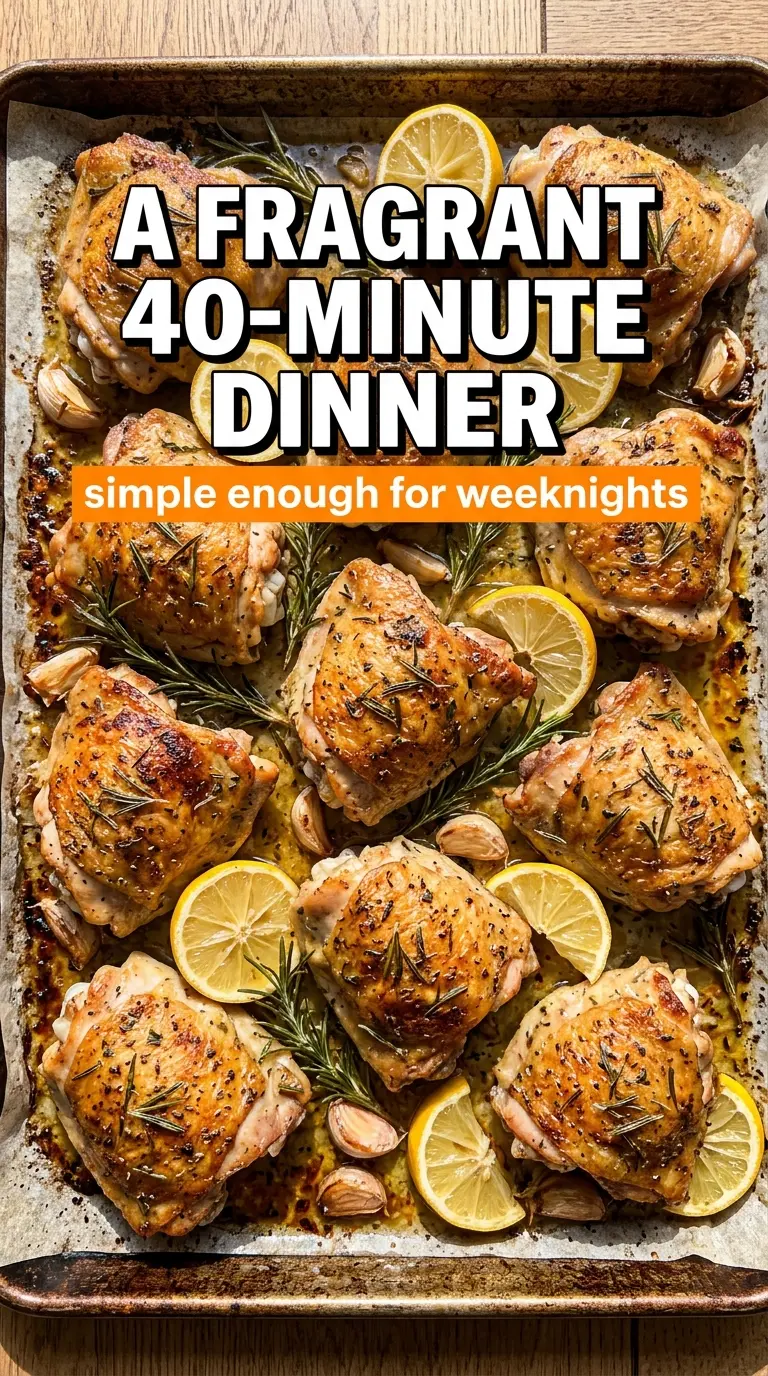
Crispy-skinned chicken thighs are one of those dinners that look and taste like you put in far more effort than you did. The skin turns deeply golden in the oven, the rosemary and garlic perfume the whole kitchen, and the meat stays juicy enough to cut with a fork. This version keeps the ingredient list short, but it still tastes layered and complete.
The trick is starting with bone-in, skin-on thighs and giving them a proper pat dry before the oven ever comes on. Moisture is the enemy of crisp skin, and it matters just as much as the hot oven temperature. The rosemary gets mixed straight into olive oil with garlic and lemon zest, which helps it cling to the chicken and roast without burning into bitter little flecks.
Below you’ll find the small details that make this recipe work every time, from where to rub the seasoning for the most flavor to how to tell when the thighs are done without drying them out.
The skin came out shatter-crisp and the rosemary-garlic mixture soaked right into the meat. I tucked the lemon slices underneath like you said, and the pan juices were incredible over rice.
Save these rosemary chicken thighs for a crisp-skinned, garlic-scented dinner that feels special with almost no fuss.
The Secret to Crisp Chicken Skin Is Dry Chicken and a Hot Oven
Chicken thighs can be forgiving, but the skin won’t crisp if it starts out damp. That first step — patting the thighs dry — is doing more work than the seasoning itself. If there’s surface moisture, the skin steams before it browns, and you end up with soft, rubbery patches instead of a crackly top.
The other piece people miss is oven heat. Four hundred twenty-five degrees gives you enough intensity to render some of the fat from the skin while the meat stays juicy underneath. Lower heat will cook the chicken through, but it doesn’t give you the same browned edges or that clean release from the parchment-lined pan.
- Chicken thighs: Bone-in, skin-on thighs are the right cut here. Boneless thighs cook faster, but they don’t give you the same contrast between crisp skin and succulent meat.
- Fresh rosemary: Fresh is worth using because dried rosemary can turn sharp and woody in the oven. Chop it finely so it spreads evenly through the oil mixture instead of clumping.
- Garlic: Minced garlic brings fragrance and depth, but it can burn if it’s left in direct contact with a very hot pan. Mixing it with oil helps protect it and keeps the flavor mellow.
- Lemon zest and slices: The zest goes into the seasoning for aroma, while the slices underneath the chicken add a little steam and acidity to the pan juices. If you don’t have fresh lemon, skip the zest rather than using bottled lemon juice here; the bottled version doesn’t give the same bright finish.
Getting the Thighs Seasoned So the Flavor Stays Put
The olive oil carries the rosemary, garlic, salt, pepper, and lemon zest across the chicken and helps the skin brown instead of drying out. A little oil goes a long way here; you’re coating the thighs, not drowning them. Too much oil can pool on the pan and soften the skin from underneath.
Getting some of the mixture under the skin is the move that makes this taste seasoned all the way through. You don’t need to separate the skin completely — just lift it gently with your fingers and spread a little of the herb mixture underneath. That gives you a more flavorful bite and keeps the top from being the only part that tastes seasoned.
Roasting Until the Skin Is Glassy and the Meat Is Done
Coating and Arranging
Rub the chicken with the rosemary mixture, then arrange the thighs skin-side up with a little space between them. Crowding the pan traps steam, and steam is what keeps the skin pale. Tuck the lemon slices between the pieces so they flavor the pan without sitting directly under the thighs and making the bottoms soggy.
The Roast
Slide the pan into the hot oven and roast for 35 to 40 minutes. You’re looking for skin that’s deep golden and starting to look taut and blistered. If the thighs are crowded or especially large, they may need a few extra minutes; use an instant-read thermometer and pull them when the thickest part reaches 165°F.
The Resting Finish
Let the chicken rest for 5 minutes before serving. That pause keeps the juices from running out the moment you cut in, and it gives the skin a minute to settle instead of softening from the inside steam. If you want the skin at its crispiest, serve it right away rather than covering the pan tightly.
How to Adapt These Rosemary Chicken Thighs for Different Nights
Make it dairy-free without changing a thing
This recipe is naturally dairy-free, which is part of why it works so well for a weeknight dinner. The olive oil does the same job butter would do for browning and flavor carry, but without adding anything that can burn at high heat.
Use dried rosemary when that’s what you have
Dried rosemary works in a pinch, but use less because its flavor is more concentrated and more piney. Crush it between your fingers before mixing so it softens a little in the oil and doesn’t stay prickly on the chicken.
Turn it into a full sheet-pan dinner
You can add sturdy vegetables like halved baby potatoes, carrots, or onions around the chicken, but give them a head start if they need longer than the thighs. If everything goes in at once, the chicken will be done before the vegetables have time to caramelize.
Storage and Reheating
- Refrigerator: Store leftovers in an airtight container for up to 4 days. The skin will soften in the fridge, but the meat stays juicy.
- Freezer: The cooked chicken freezes well for up to 3 months. Wrap each thigh tightly and freeze in a single layer before transferring to a bag so the pieces don’t stick together.
- Reheating: Reheat in a 375°F oven until hot, about 15 to 20 minutes. A microwave will warm the meat, but it turns the skin rubbery, so the oven is the better choice if you want anything close to crisp.
Questions I Get Asked About This Recipe

Oven Baked Rosemary Chicken Thighs
Ingredients
Equipment
Method
- Preheat the oven to 425°F and line a sheet pan with parchment paper.
- Pat the chicken thighs dry with a paper towel so the skin crisps in the oven.
- In a small bowl, combine the olive oil, garlic, rosemary, lemon zest, kosher salt, and black pepper.
- Rub the rosemary-olive oil mixture evenly over the chicken thighs, getting under the skin where possible for maximum flavor.
- Arrange the chicken skin-side up on the sheet pan with lemon slices tucked between the pieces, then roast for 35–40 minutes at 425°F until the skin is golden and the internal temperature reaches 165°F.
- Let the chicken rest for 5 minutes before serving, so juices redistribute and the skin stays crisp.