Layers of seasoned sushi rice, creamy spicy salmon, and a crisp, browned top turn into the kind of dinner people keep going back for with a spoon. It has all the flavors of a spicy salmon roll, but everything bakes together in one dish, so you get the same payoff without the rolling mat, the careful slicing, or the mess. The rice stays tangy and sticky, the salmon mixture turns rich and savory, and the broiler finishes the top with just enough color to make each bite taste built, not thrown together.
What makes this version work is the balance. Warm rice gets dressed with rice vinegar, sugar, and salt while it’s still soft enough to absorb the seasoning, which keeps the bottom layer from tasting flat. The salmon filling leans creamy, but not heavy, because the soy sauce, sesame oil, and sriracha cut through the mayonnaise. If you skip the brief broil at the end, you lose the little roasted edge that makes the whole dish taste more like a proper bake and less like warm leftovers.
Below, I’ve included the small details that matter here: how to keep the rice from turning dry, when the salmon mixture is ready to spread, and the simplest swaps if you want to use crab or leave it out entirely.
The rice stayed perfectly seasoned and the salmon layer broiled up with those golden edges I was hoping for. My kids ate it with chopsticks and asked for it again the next night.
Save this Salmon Sushi Bake for a fast, crowd-pleasing dinner with creamy spicy salmon and a broiled nori finish.
The Trick Is Getting the Rice Layer Seasoned While It’s Still Warm
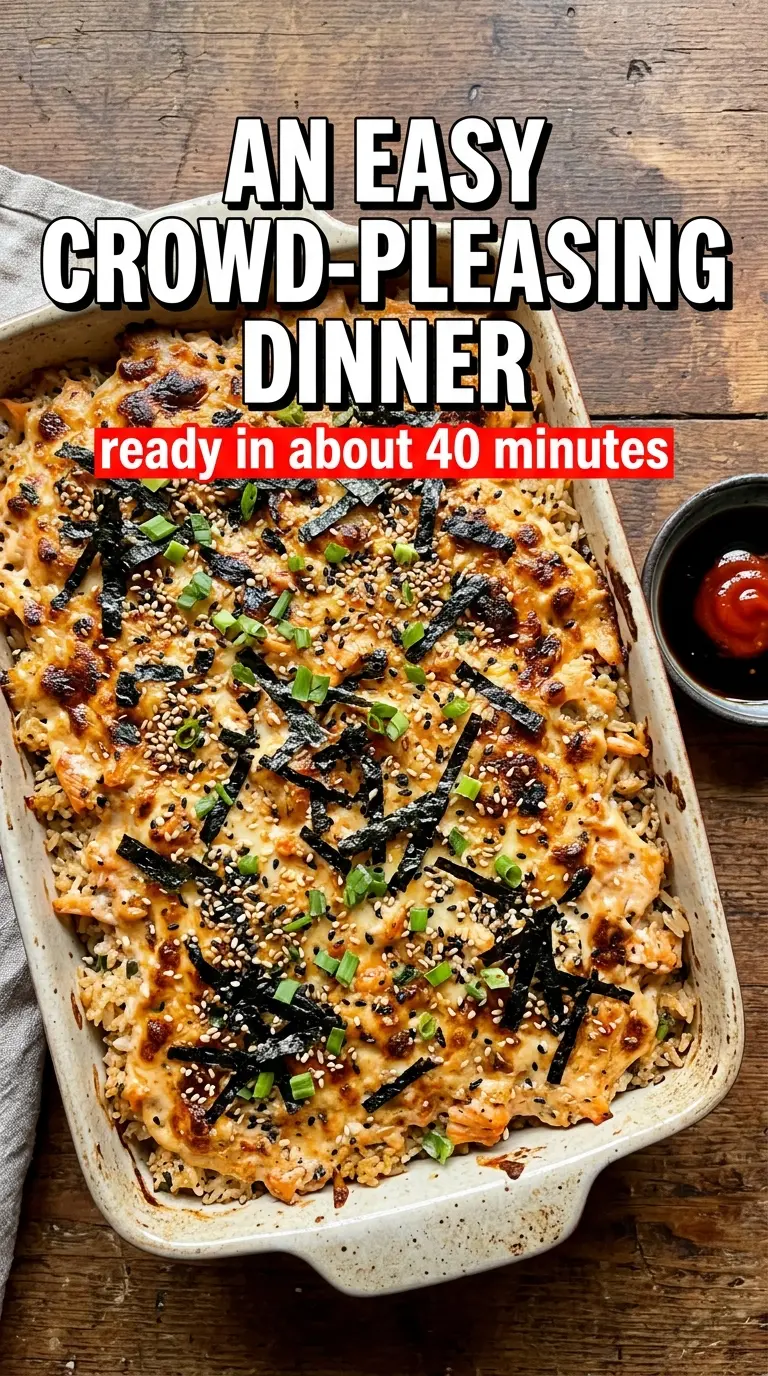
Most sushi bakes go wrong before the topping even hits the pan. If the rice is cold, the vinegar mixture sits on the surface instead of soaking in, and the bottom layer tastes plain compared with the filling. Warm rice absorbs the seasoning fast, and that little bit of steam helps the grains settle into a compact base that slices better after baking.
Press the rice into the dish firmly enough that it holds together, but not so hard that it turns dense. The goal is a tight layer that bakes into a clean foundation for the salmon, not a packed brick. If the rice seems sticky on the spoon, that’s exactly what you want here.
- Sushi rice — Short-grain rice gives you the sticky, cohesive base this bake needs. Long-grain rice won’t hold together the same way, so the layers separate when you serve it.
- Rice vinegar, sugar, and salt — This is the seasoning that makes the rice taste like sushi instead of plain rice. Don’t swap in plain vinegar; it’s sharper and missing the roundness that sushi rice needs.
- Salmon — Cook it until it flakes easily, then break it into medium pieces so it stays substantial in the topping. Leftover baked salmon works well here, and that’s the easiest way to move this dish along fast.
- Mayonnaise — This is what makes the topping creamy and spreadable. Use a full-fat mayo if you can; lighter versions can turn thin once they hit the heat.
- Sriracha, soy sauce, and sesame oil — These three ingredients give the salmon layer heat, salt, and that toasted, nutty note. They matter more than the crab does, so don’t be tempted to underseason the mixture.
- Imitation crab — Optional, but it adds a sweet seafood note and a little extra texture. If you leave it out, add a bit more salmon so the topping still feels generous.
Building the Bake So the Top Browns, Not Just Melts
Season the rice first
Toss the warm rice with vinegar, sugar, and salt while it’s still hot enough to take on the seasoning. You want each grain glossy and lightly tangy, not wet or soupy. If the rice looks patchy after mixing, keep folding for another minute before it goes into the pan.
Mix the salmon until it looks spreadable
Combine the flaked salmon with mayonnaise, sriracha, soy sauce, sesame oil, and crab if you’re using it. The mixture should hold together in soft mounds, not run across the bowl. If it feels loose, the salmon was probably too warm or too finely broken up; chill it for a few minutes and it firms up enough to spread cleanly.
Use the broiler for the finish
Bake first, then broil just until the top gets faintly golden and bubbling around the edges. This is where the dish gets its restaurant-style look and a little toasted depth. Watch it closely because the line between golden and scorched is short, especially with mayonnaise in the topping.
Make It Spicier Without Losing the Creamy Texture
Add another teaspoon or two of sriracha, then stop before the mixture turns thin. Heat should ride on the creamy salmon layer, not break it apart, so extra sauce is better than dumping in a bunch of liquid chili sauce.
Make It Dairy-Free Without Changing the Texture
Use a dairy-free mayonnaise and keep the rest of the topping the same. Since the creaminess comes from mayo, not cheese, this swap holds up well and keeps the bake just as rich.
Skip the Crab and Keep It Salmon-Forward
Leave out the imitation crab and increase the salmon by a few ounces if you want a cleaner, more direct flavor. The result is a little less sweet and a little more savory, which works well if you’re serving this with extra sriracha at the table.
Storage and Reheating
- Refrigerator: Store covered for up to 3 days. The rice firms up a little, but the flavor stays strong.
- Freezer: I don’t recommend freezing this one. The rice texture gets dry and the creamy salmon layer can separate after thawing.
- Reheating: Warm individual portions in the oven at 325°F until heated through, or microwave in short bursts with a loose cover. The mistake to avoid is blasting it until the mayo topping splits and the rice turns hard at the edges.
Questions I Get Asked About This Recipe
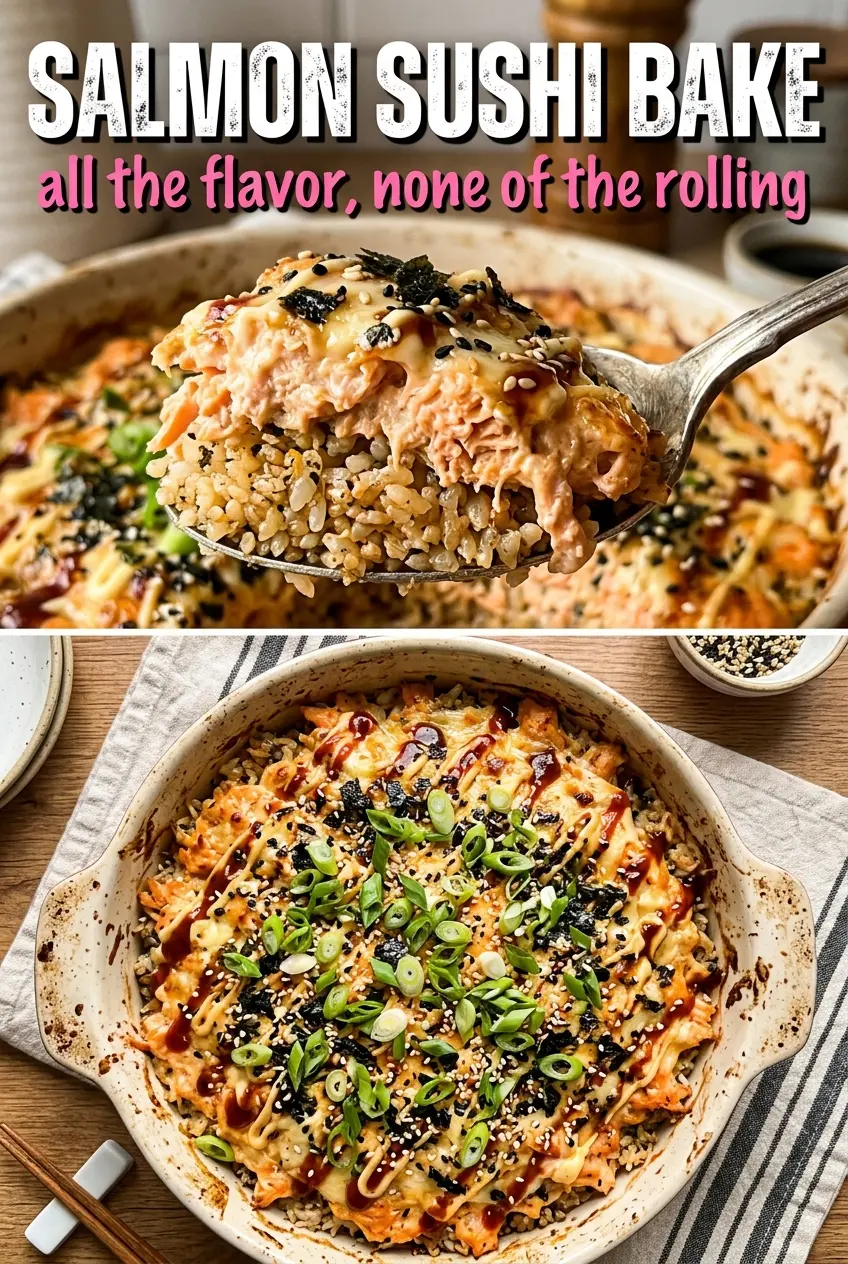
Salmon Sushi Bake
Ingredients
Equipment
Method
- Preheat the oven to 400°F and grease a 9x13-inch baking dish.
- Toss the warm cooked sushi rice with rice vinegar, granulated sugar, and salt, then press evenly into the bottom of the baking dish.
- Let the rice rest 2 minutes to set the layer before topping.
- Combine the flaked salmon, mayonnaise, sriracha, soy sauce, sesame oil, and imitation crab if using until evenly mixed.
- Spread the salmon mixture evenly over the rice layer.
- Bake for 15 minutes at 400°F.
- Broil for 2–3 minutes to get a lightly golden, bubbling top.
- Top with green onions, crumbled nori, and sesame seeds.
- Serve with extra soy sauce and sriracha for dipping and extra heat.