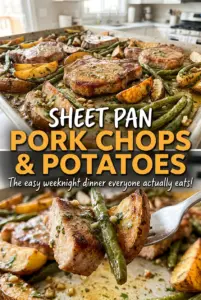
Golden pork chops, caramelized potatoes, and tender green beans all on one pan is the kind of dinner that earns a permanent place in the rotation. The chops stay juicy, the potatoes pick up the browned edges they need, and the garlic butter slides into every crack and crevice on the pan. Nothing here tastes like it was rushed, even though the oven does most of the work.
The trick is giving the potatoes a head start before the pork goes in. That first roast builds color and gets the centers moving in the right direction, so everything finishes at the same time instead of leaving you with pale potatoes or overcooked chops. A quick sear on the pork chops adds another layer of flavor and keeps the final texture from turning soft in the oven.
Below, you’ll find the timing that keeps the potatoes from steaming, the seasoning that works best on bone-in chops, and the small step that keeps the garlic from burning in the oven. It’s a simple method, but the order matters.
The potatoes got those crispy edges underneath and the pork stayed juicy all the way through. I was nervous about the green beans getting mushy, but they came out perfect with the garlic butter.
Save these sheet pan pork chops and potatoes for the nights when you want crisp edges, juicy pork, and one pan to wash.
The Shortcut That Keeps Pork Chops Juicy While the Potatoes Finish
The biggest mistake in sheet pan pork chop dinners is trying to cook everything at once. Potatoes need more time than pork chops, and if you wait for the potatoes to catch up, the chops sit in the oven long enough to dry out. Starting the potatoes first changes the whole dish. They get a head start on browning, and the pork only spends the last part of the roast in the heat, which is exactly how you keep it tender.
Searing the chops before they go on the pan does more than add color. It gives you a crust that holds up in the oven and keeps the surface from looking gray or steamed. The other piece that matters is the garlic butter: it goes on near the end so the garlic perfumes the pan without burning in the high heat.
What Each Ingredient Is Actually Doing in This Dish
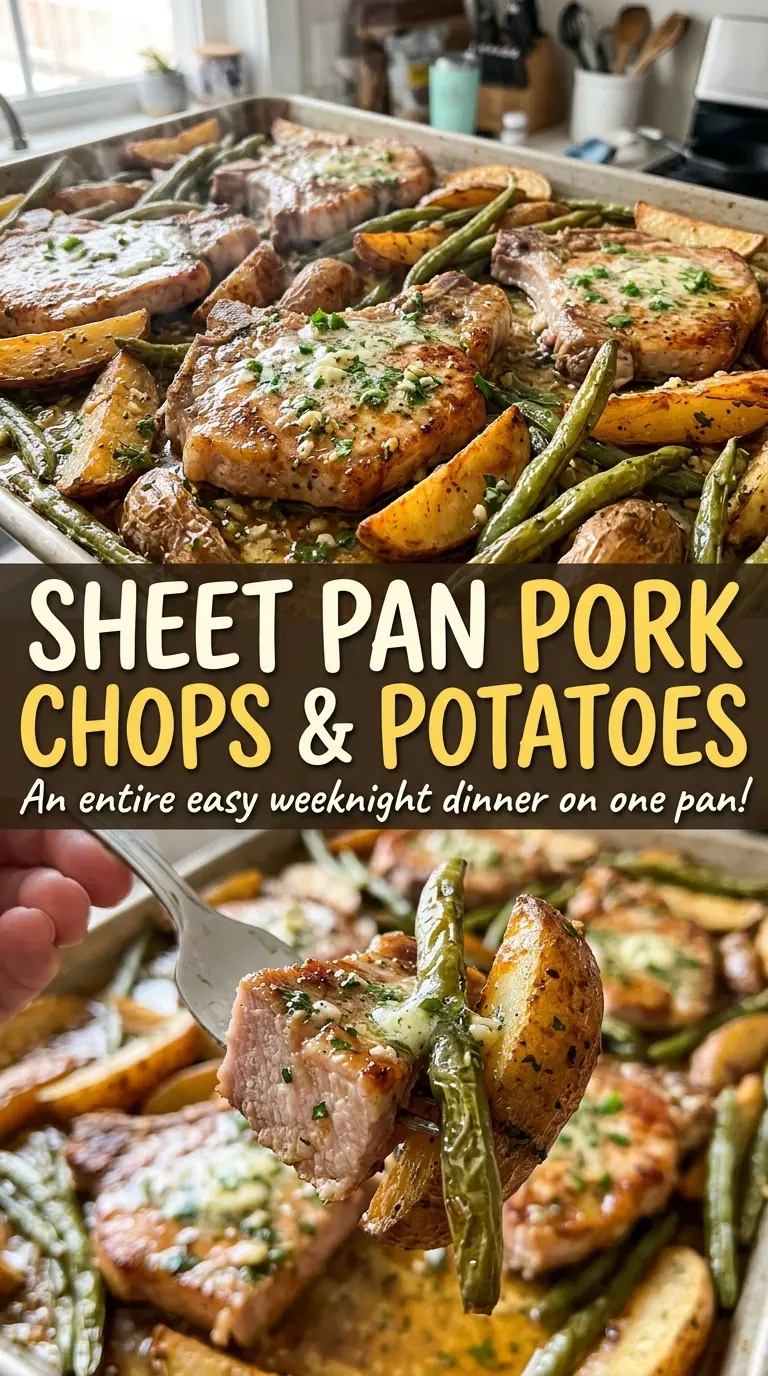
- Bone-in pork chops — Bone-in chops stay juicier than boneless ones and handle the oven heat better. About 1 inch thick is the sweet spot here; thinner chops cook too fast and dry out before the potatoes are ready.
- Baby potatoes — Halving them gives more surface area for browning. If you only have larger potatoes, cut them into similar-size wedges so they roast evenly instead of leaving you with hard centers and burnt edges.
- Green beans — These go in late because they cook fast and need just enough heat to blister and soften. If you add them at the start, they’ll lose their snap and turn drab.
- Olive oil and butter — Olive oil helps the potatoes brown, while the butter adds richness at the end. Using butter too early would invite scorching, especially in a 425°F oven.
- Rosemary, thyme, garlic powder, and smoked paprika — This seasoning mix gives the dish its backbone without needing a marinade. Garlic powder seasons the meat more evenly than fresh garlic would at the searing stage, and smoked paprika adds a little depth without making the dish taste smoky in a heavy way.
- Fresh garlic — This is for the finish, not the sear. Mixed into melted butter, it softens just enough in the oven to taste round and fragrant instead of sharp.
The Order That Builds Flavor Without Overcooking Anything
Roasting the Potatoes First
Heat the oven to 425°F and line a rimmed baking sheet with parchment. Toss the halved potatoes with olive oil, rosemary, thyme, garlic powder, salt, and pepper, then spread them cut-side down on the pan in a single layer. If they’re piled up, they’ll steam instead of browning, and that’s the difference between a good sheet pan dinner and a bland one. Roast them for 15 minutes before anything else goes on the pan.
Searing the Pork Chops
Pat the pork chops dry, then season both sides with smoked paprika, salt, and pepper. Sear them in a hot skillet with the remaining olive oil for about 2 minutes per side, just until a browned crust forms. You’re not cooking them through here; you’re building flavor and setting the surface so they finish well in the oven. If the pan smokes heavily, it’s too hot and the seasoning can burn before the chops color properly.
Finishing Everything Together
Push the potatoes toward the edges of the pan and place the pork chops in the center. Scatter the green beans around the pan, then spoon or drizzle the garlic butter over the pork and vegetables. Roast 18 to 20 minutes more, until the pork reaches 145°F in the thickest part and the potatoes are tender with browned edges. Let the chops rest a few minutes before serving so the juices stay inside the meat instead of running onto the cutting board.
How to Adapt This for Different Tables and Different Pan Sizes
Make It Dairy-Free
Swap the butter for more olive oil or a dairy-free butter substitute. You’ll lose a little of the round richness that butter brings, but the garlic and herbs still carry the dish well. Drizzle the fat on at the end so the garlic doesn’t scorch in the oven.
Use Boneless Pork Chops
Boneless chops work, but they cook faster and dry out sooner. Cut the final oven time back a few minutes and start checking early with a thermometer. They’ll still taste good, but bone-in chops give you a little more cushion and better texture.
Swap the Green Beans
Asparagus, broccoli florets, or zucchini all work in the same slot. Use something that cooks quickly and add it during the last stretch so it stays bright and doesn’t collapse into the pan juices.
Make It Gluten-Free and Naturally Low-Carb
This recipe already fits both categories as written, which is part of why it works so well for weeknight cooking. Just check that your spices are pure and not blended with fillers if you’re cooking for someone with strict gluten sensitivity.
Storage and Reheating
- Refrigerator: Store leftovers in an airtight container for up to 3 days. The potatoes will soften a little, but the flavors hold up well.
- Freezer: The pork chops freeze better than the potatoes and beans. If you freeze the whole dish, expect the vegetables to soften after thawing; wrap tightly and use within 2 months.
- Reheating: Reheat in a 325°F oven, covered loosely with foil, until warmed through. The common mistake is blasting it in the microwave, which dries out the pork and turns the potatoes leathery before the center is hot.
Answers to the Questions Worth Asking
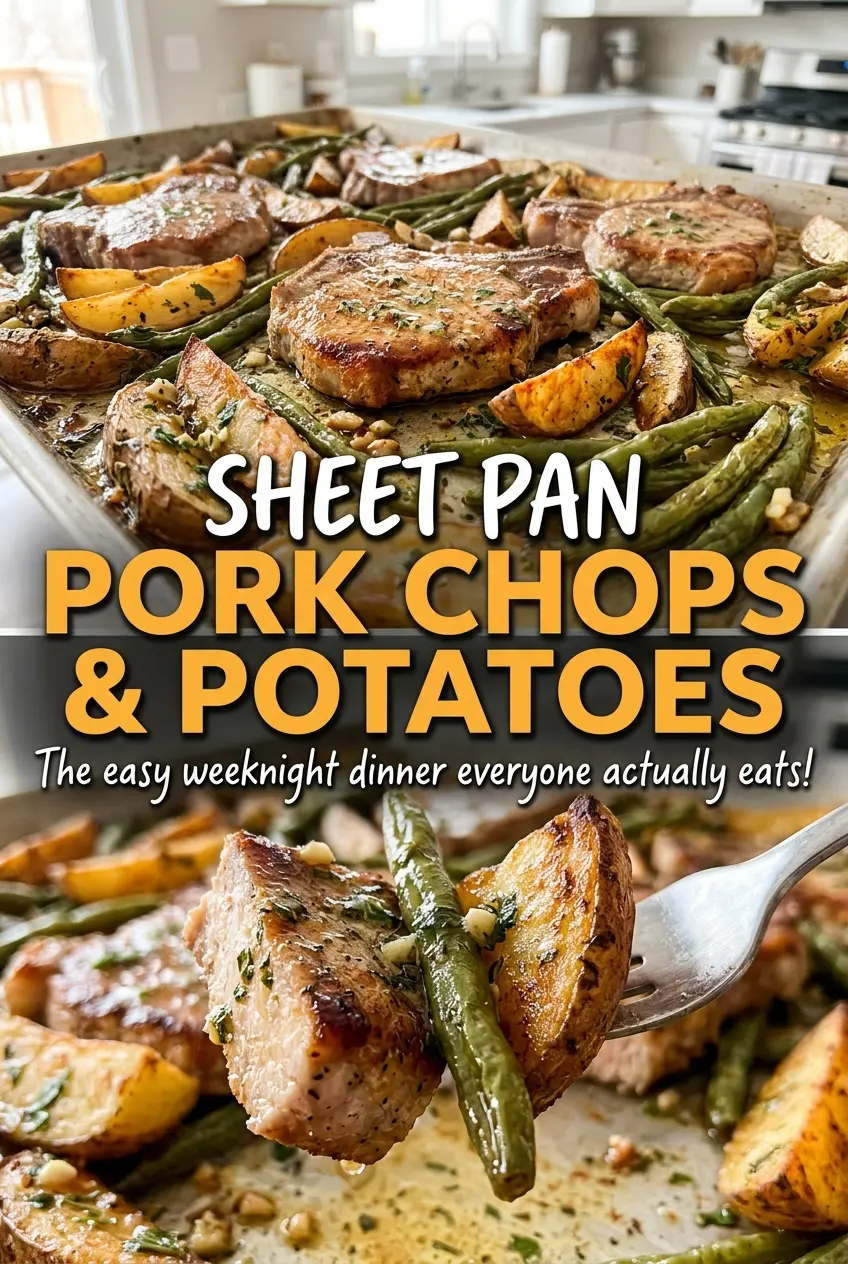
Sheet Pan Pork Chops And Potatoes
Ingredients
Equipment
Method
- Preheat oven to 425F and line a large rimmed baking sheet with parchment as the pan heats.
- Toss baby potatoes with 2 tablespoons olive oil, dried rosemary, dried thyme, garlic powder, salt, and pepper, then spread them on the pan in a single layer.
- Roast the potatoes for 15 minutes at 425F until the edges begin to brown.
- Season the bone-in pork chops with smoked paprika, salt, and pepper.
- Heat the remaining olive oil in a hot skillet and sear pork chops for 2 minutes per side.
- Push potatoes to the edges, place pork chops in the center, and add green beans around the chops.
- Mix garlic with melted butter and drizzle over everything so it pools around the pork and coats the potatoes and beans.
- Roast for 18-20 more minutes at 425F until pork chops are cooked through to 145F, then garnish with fresh parsley.