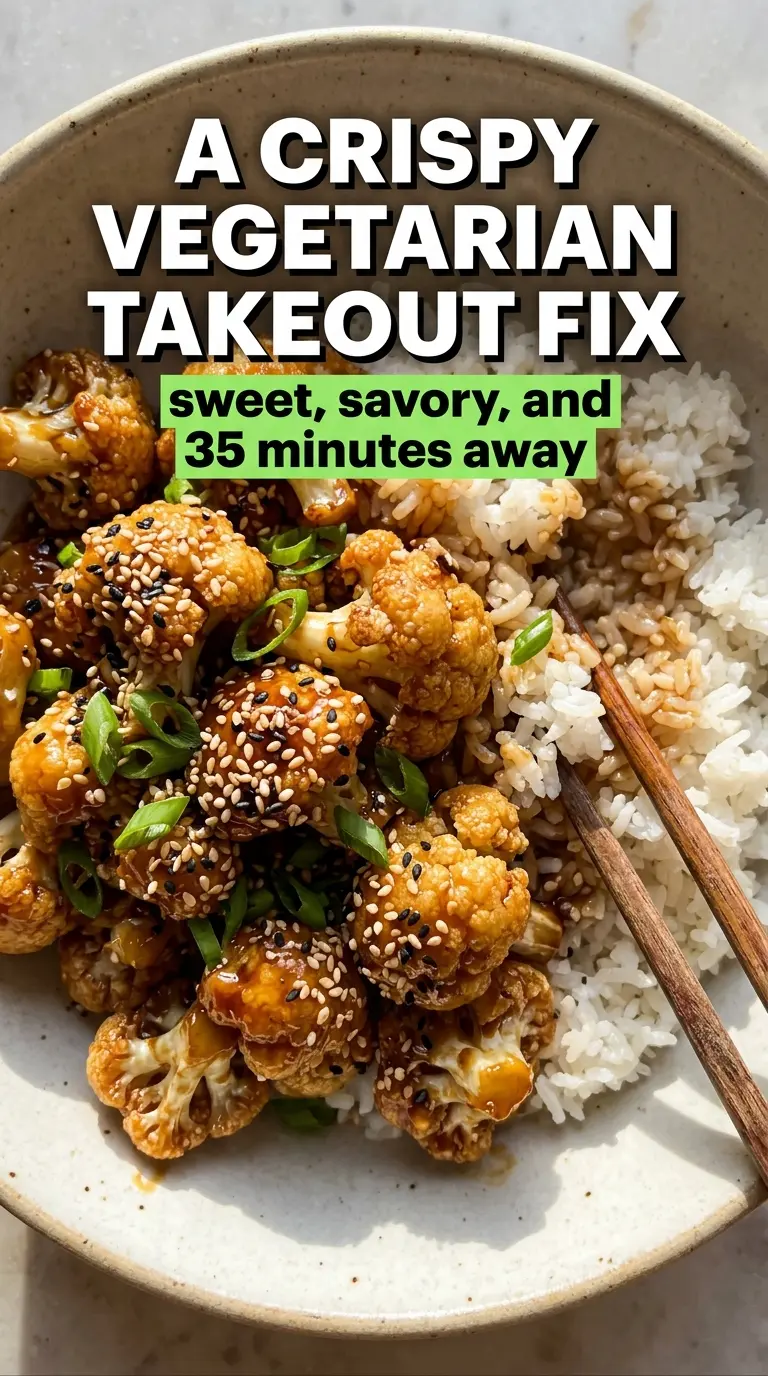
Crispy roasted cauliflower coated in a glossy sesame sauce has the kind of pull that makes it disappear from the pan before dinner even starts. The florets keep a little bite under the sauce, so you get crunch at the edges, tenderness in the middle, and that sweet-savory coating clinging to every ridge. It tastes like takeout in the best way, but it doesn’t go soggy the minute it hits the table.
The trick is roasting the cauliflower hard enough to brown it before the sauce goes on. Cornstarch helps pull moisture off the florets and gives the oven heat something to work with, which is why the edges crisp instead of steaming. The sauce matters too: brown sugar for that sticky finish, rice vinegar for balance, and sesame oil added in a small amount so it smells nutty without turning heavy.
Below, I’ll show you exactly when the cauliflower is ready for sauce, how thick the glaze should be, and the easiest way to adapt this into a main dish or a side.
The sauce thickened up beautifully and coated every piece without making the cauliflower soft. I served it with rice and my husband went back for seconds before I sat down.
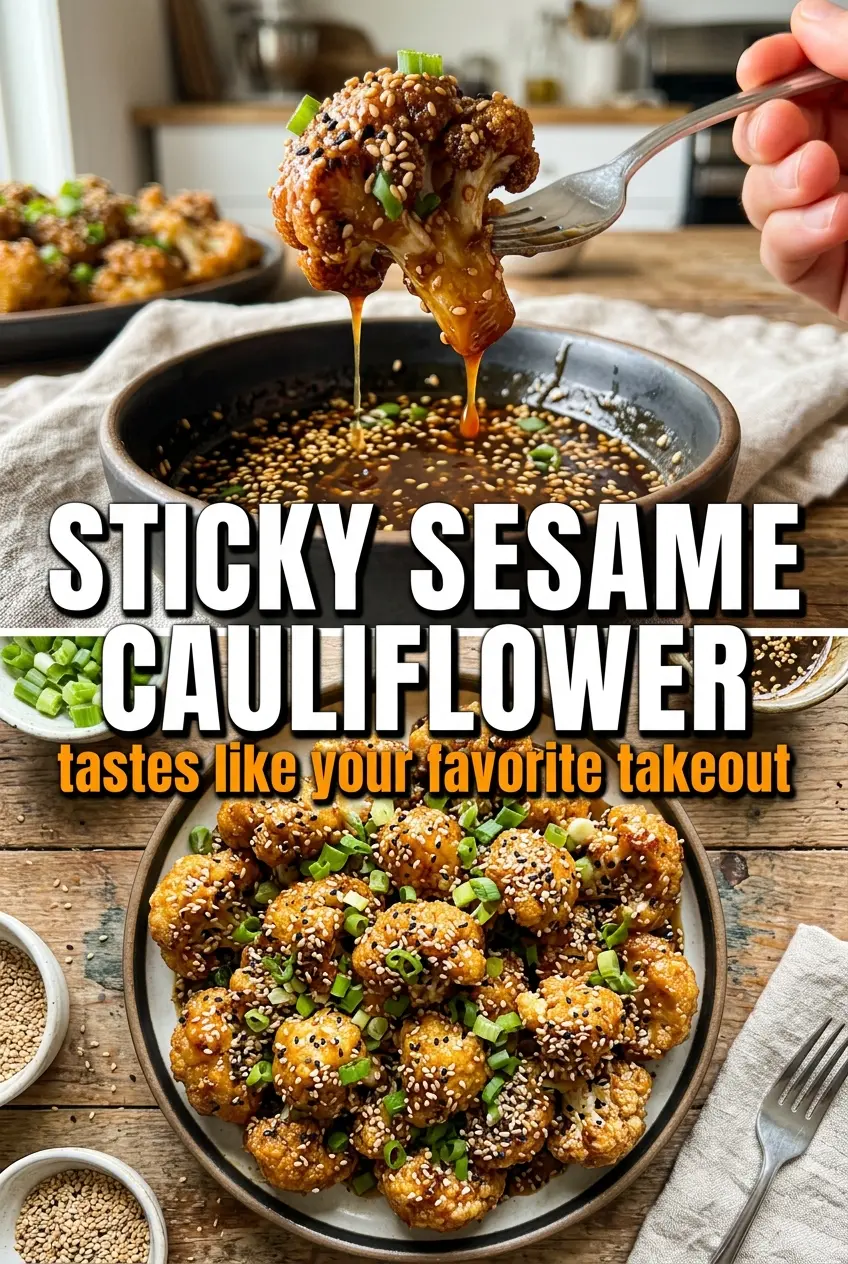
Sticky Sesame Cauliflower brings crispy edges and a glossy takeout-style glaze to the table fast.
The Secret to Crispy Cauliflower Before the Sauce Hits
Cauliflower only gets sticky sesame sauce right if it starts out dry and browned. If the florets are crowded or wet, they steam in the oven and the coating slides off instead of clinging. That’s why the cornstarch and oil go on before roasting: the starch pulls moisture off the surface and the oil helps the edges blister into something crisp enough to stand up to sauce.
The other mistake is saucing too soon. The cauliflower should come out deeply golden with a few dark spots on the edges, not pale and soft. Once it’s tossed in the glaze, it will soften a little, so the roasting stage needs to do the heavy lifting.
- Cauliflower: Fresh florets with even sizing roast more evenly. If the pieces are wildly different, the small ones burn before the large ones are tender.
- Cornstarch: This is what gives the surface that thin, dry coating that turns crisp. There isn’t a substitute that behaves exactly the same way here; arrowroot works in a pinch, but it browns a little differently.
- Vegetable oil: Use a neutral oil so the sesame sauce stays in charge. Olive oil brings too much flavor and can taste out of place here.
- Sesame oil: This is the ingredient that makes the sauce smell like takeout. A little goes a long way, and adding more won’t improve it — it can turn bitter and heavy.
How the Sauce Turns Glossy Instead of Thin and Watery
While the cauliflower roasts, the sauce should move from a loose, shiny liquid to something that lightly coats a spoon. The brown sugar needs heat to dissolve fully, and the cornstarch slurry only works once the sauce is at a simmer. If you dump the slurry into a cold pan, it will stay cloudy and won’t thicken properly.
Garlic and ginger go in early so they soften and perfume the sauce, but don’t let the heat get too high. A hard boil can scorch the sugar and make the sesame oil taste flat. You want a gentle simmer and a sauce that thickens in a minute or two, just enough to look lacquered.
- Soy sauce: This brings the salty, savory backbone. Use a regular soy sauce for the best balance; low-sodium works if you want a slightly milder finish.
- Brown sugar: It gives the glaze its sticky body and a deeper sweetness than white sugar. You can swap in honey, but the sauce will be a little looser and less caramel-like.
- Rice vinegar: This keeps the sauce from tasting one-note sweet. If you don’t have it, apple cider vinegar works, but start with a little less because it bites harder.
- Cornstarch slurry: The slurry has to be mixed smoothly before it goes into the pan. If it sits too long, stir it again right before adding so the starch doesn’t settle.
The Three Minutes That Turn Roasted Cauliflower Into Dinner
Coating the Florets
Toss the cauliflower until every surface looks lightly dusty, then add the oil and salt and keep mixing until the coating turns even. If you see dry cornstarch pockets, those will bake into chalky spots, so scrape the bowl and work it through with your hands if needed. A thin, even coat is what gives you crisp edges instead of a floury shell.
Roasting Until the Edges Brown
Spread the florets out in one layer with space around them. If they’re piled up, they’ll steam and stay pale. Flip them halfway through roasting so both sides pick up color, and keep going until the bottoms are deep golden and the tips look a little shrunken and crisp. That’s the sign they’re ready for sauce, not just tender.
Thickening the Glaze
Bring the sauce to a simmer before adding the slurry, then stir constantly as it thickens. It should go from thin and glossy to slightly syrupy fast. If it turns pasty or gummy, the heat was too high or the slurry sat too long before using. Pull it back to a gentle simmer and add a splash of water if it gets too tight.
Tossing and Finishing
Add the cauliflower to the pan or a large bowl and toss fast while the sauce is hot. The goal is a shiny coating, not a pool of sauce at the bottom. Finish with sesame seeds and sliced green onions while the glaze is still tacky so they stick instead of sliding off.
Three Smart Ways to Change This Without Losing the Point
Make It Gluten-Free
Use a gluten-free soy sauce or tamari. The sauce still thickens the same way, and the flavor stays balanced, but tamari usually tastes a little rounder and less sharp than standard soy sauce.
Turn It Into a Main Dish
Serve the cauliflower over rice with steamed broccoli, or fold in shelled edamame for more protein. The sauce is bold enough to carry the dish, but you’ll want something plain underneath it so the glaze stays the main event.
Make It Lower-Sugar
Cut the brown sugar back a little if you want a less sticky finish, but don’t remove it completely. The sugar helps the sauce glaze instead of tasting flat, and without enough of it the coating will turn thin and sharp instead of balanced.
Storage and Reheating
- Refrigerator: Store leftovers in an airtight container for up to 4 days. The cauliflower softens, but the flavor holds well.
- Freezer: It freezes, but the texture gets softer after thawing, so I don’t recommend it if crispness matters.
- Reheating: Reheat on a sheet pan in a 400°F oven or in an air fryer until the edges wake back up. The microwave makes the coating sticky but flabby, which is the fastest way to lose the texture that makes this dish work.
Answers to the Questions Worth Asking
Sticky Sesame Cauliflower
Ingredients
Equipment
Method
- Preheat the oven to 425°F and line a sheet pan with parchment paper, so the florets crisp evenly as they roast.
- Toss the cauliflower florets with the cornstarch, vegetable oil, and kosher salt until every piece looks evenly coated.
- Spread the cauliflower in a single layer on the prepared sheet pan and roast for 20–25 minutes, flipping halfway, until golden and crispy.
- In a saucepan over medium heat, whisk together the soy sauce, brown sugar, rice vinegar, sesame oil, garlic, and ginger until smooth.
- Bring the mixture to a simmer, then keep it at a steady bubble as the flavors meld.
- Stir in the cornstarch slurry and cook for 1–2 minutes, until thickened and glossy, then turn off the heat.
- Toss the roasted cauliflower in the sticky sauce until coated and visibly clinging to the florets.
- Sprinkle with sesame seeds and green onions for garnish, then serve immediately while the coating is at its stickiest.