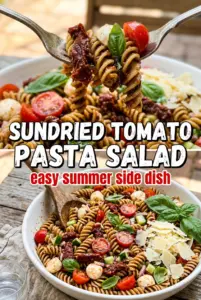
Tangy sundried tomatoes, tender pasta, and a bright herby dressing make this pasta salad the one people keep coming back to at potlucks, BBQs, and make-ahead lunches. The flavor lands in that perfect middle ground: bold enough to taste exciting straight from the fridge, but balanced enough that you want another scoop. It holds its texture well, too, which matters more than people think when a pasta salad sits out for a while.
What makes this version work is the dressing. The reserved sundried tomato oil brings a deeper, richer tomato flavor than plain olive oil, and the red wine vinegar keeps the whole bowl from tasting heavy. I also like adding the cheese at the end so the mozzarella stays soft and creamy instead of getting slick and buried under the dressing.
Below, I’ll walk through the one step that keeps pasta salad from turning gummy, plus the small timing trick that makes the basil taste fresher and the cheese better in every bite.
The dressing coated everything evenly and the pasta stayed firm after chilling overnight. I brought it to a picnic and there wasn’t a spoonful left.
Save this sundried tomato pasta salad for the potluck nights when you need a make-ahead side with a bright, herby dressing.
The Reason This Salad Tastes Better After a Few Hours
Pasta salad fails when the dressing sits on top instead of soaking in. The fix is simple: toss the pasta while it’s fully cooled but still a little porous, then let it rest so the oil and vinegar can work into the noodles. If you dress it while the pasta is warm, the pasta drinks too much and gets soft; if you wait until the last second, the seasoning never settles in.
The other mistake is overdressing a bowl that already has juicy tomatoes and cucumbers. This salad needs enough dressing to coat every rotini groove, but not so much that the vegetables start weeping and loosening everything up. Chill time helps here. A short rest in the fridge lets the pasta absorb flavor without losing its bite.
What Each Ingredient Is Actually Doing in This Dish
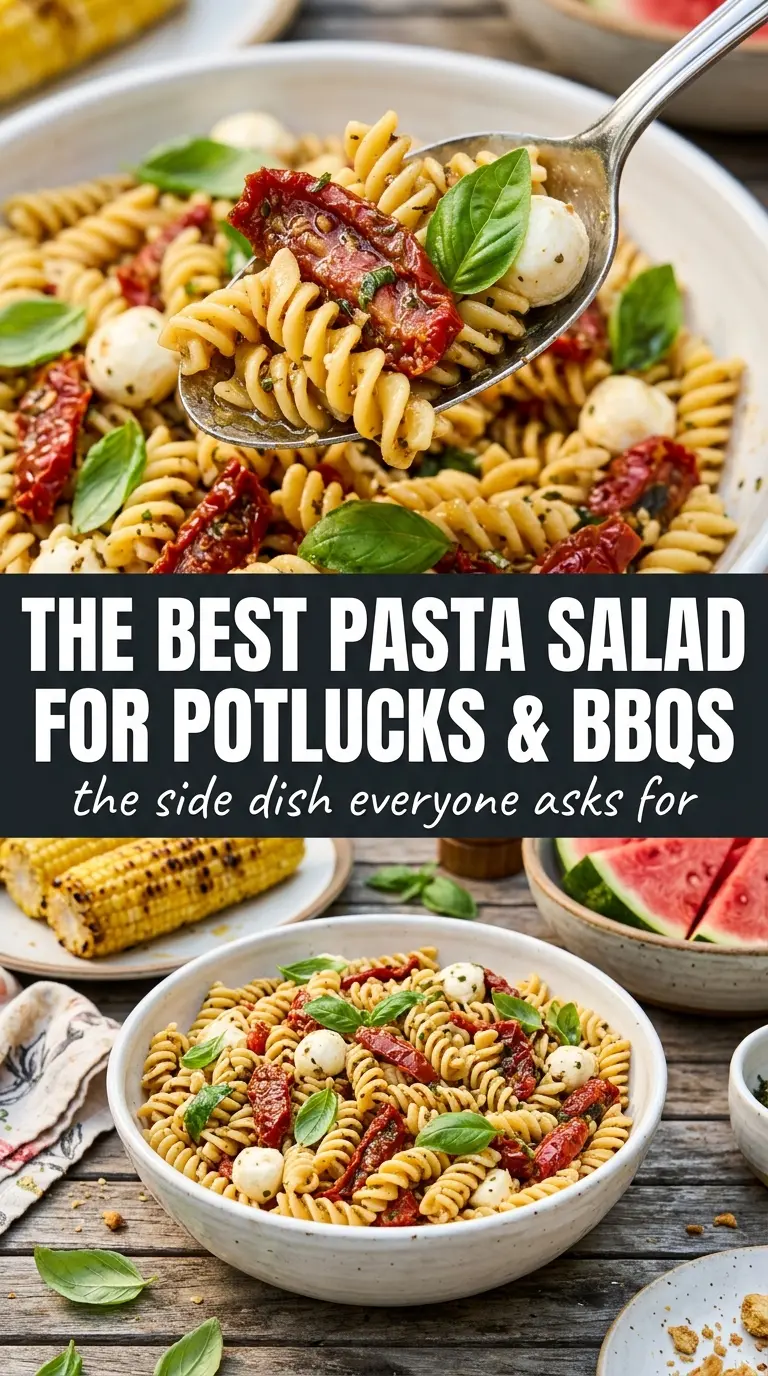
The sundried tomatoes bring concentrated tomato flavor and a little chew, which is what keeps the salad from tasting flat. Using the oil from the jar matters here because it already carries that same rich flavor, and it blends better than plain olive oil with the vinegar and garlic.
- Rotini or fusilli — The twists hold the dressing in every curve. Any short pasta with ridges works, but long pasta or smooth shapes won’t trap the sauce as well.
- Red wine vinegar — This keeps the oil-based dressing bright. Lemon can work in a pinch, but it changes the character of the salad and makes it taste sharper rather than balanced.
- Mozzarella pearls — They bring a creamy, mild bite that softens the acidity. Cubed mozzarella works too, but pearl mozzarella gives you better distribution without needing much knife work.
- Fresh basil — Add it at the end. Basil bruises fast, and if it sits in the dressing too long it turns dark and loses that fresh aroma that makes the salad taste alive.
Building the Salad So the Pasta Stays Firm and the Cheese Stays Creamy
Cooking the Pasta Just Past the Bite
Cook the pasta in well-salted water until it’s al dente, then stop it with a rinse under cold water. That rinse sounds minor, but it keeps the pasta from carrying over into mush while it sits in the bowl. Drain it well after rinsing so you’re not diluting the dressing with extra water.
Whisking the Dressing Until It Looks Glossy
Combine the reserved sundried tomato oil, red wine vinegar, garlic, Italian seasoning, salt, and pepper in a small bowl. Whisk until the oil and vinegar look emulsified and a little glossy, not separated and oily on top. If the garlic sits in the vinegar for a few minutes before tossing, the sharp edge mellows a bit and spreads more evenly through the salad.
Tossing Everything in the Right Order
Mix the cooled pasta with the sundried tomatoes, cherry tomatoes, cucumber, and red onion first, then pour the dressing over the top. Toss until every piece looks lightly coated. Fold in the mozzarella, basil, and Parmesan last so the cheese stays intact and the herbs don’t get bruised by too much stirring.
Letting It Chill Before Serving
Give the salad at least 30 minutes in the fridge before serving. That resting time lets the pasta absorb flavor and gives the onion a little edge without turning harsh. If it looks a little dry after chilling, a small drizzle of olive oil or a spoonful of reserved dressing brings it right back.
How to Adapt This for Different Diets and Different Fridges
Make It Dairy-Free
Leave out the mozzarella and Parmesan, then add a handful of chopped olives or extra cucumbers for another savory note. The salad still tastes complete because the sundried tomato oil and vinegar carry enough flavor on their own.
Make It Gluten-Free
Use your favorite gluten-free rotini and cook it one minute less than the package suggests. Gluten-free pasta softens faster as it sits, so rinsing it cold and not overcooking it matters even more here.
Add Protein for a Main Dish
Toss in diced grilled chicken, chickpeas, or salami depending on what you want the meal to lean toward. Chickpeas keep it vegetarian and sturdy for lunch boxes, while chicken makes it more filling without changing the overall flavor much.
Storage and Reheating
- Refrigerator: Keeps well for 3 to 4 days. The pasta softens a little and the vegetables release some moisture, but the flavor deepens.
- Freezer: Not a good freezer salad. The cucumbers, tomatoes, and mozzarella change texture after thawing and turn watery.
- Reheating: Serve cold or let it sit at room temperature for 15 to 20 minutes. If the dressing looks tight after chilling, stir in a small splash of reserved sundried tomato oil before serving.
Answers to the Questions Worth Asking
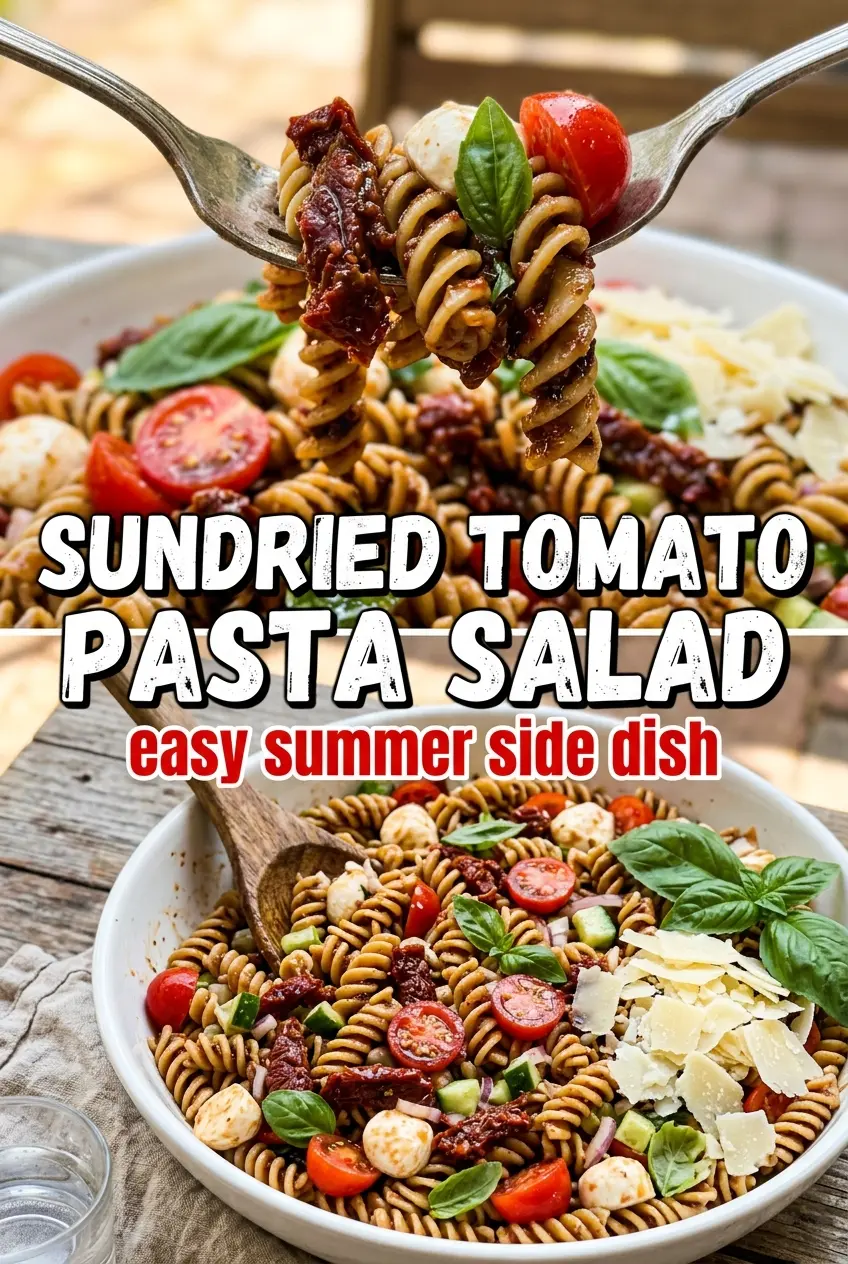
Sundried Tomato Pasta Salad
Ingredients
Equipment
Method
- Cook the rotini or fusilli in salted boiling water according to package directions until al dente, about 8–12 minutes. Drain and rinse under cold water to stop the cooking, then set aside to cool fully.
- In a small bowl, whisk together the reserved sundried tomato oil, red wine vinegar, minced garlic, Italian seasoning, kosher salt, and black pepper until smooth and well combined. Keep it ready for tossing.
- In a large bowl, combine the cooled pasta, chopped sundried tomatoes, halved cherry tomatoes, diced cucumber, and thinly sliced red onion. Toss gently so the vegetables are evenly distributed.
- Pour the dressing over the salad and toss well to coat every piece. Make sure the pasta is lightly glossy from the vinaigrette.
- Fold in the mozzarella, chopped basil, and grated Parmesan just before serving. Keep mixing until the cheese is evenly scattered so it stays creamy, not soggy.
- Chill for at least 30 minutes before serving, or up to 2 days. The flavor only gets better with time, so taste after chilling if you want more salt or pepper.