Tomato broth, tender chickpeas, and wilted kale come together in a soup that tastes like it simmered all afternoon, even though the pot is on the stove for barely half an hour. The broth turns savory and rounded from rosemary, garlic, and a parmesan rind, and mashing a portion of the chickpeas gives the soup a body that feels satisfying instead of thin.
What makes this version work is the layering. The onion goes soft first, then the garlic gets just enough time to bloom without going bitter, and only then do the broth and tomatoes go in. That order matters because it builds flavor before the liquid ever starts simmering. The kale gets added at the end so it stays green and tender instead of overcooked and drab.
Below, I’ve included the small things that make this soup taste finished — the trick for thickening it without cream, the best substitute if you don’t have a parmesan rind, and how to keep the kale from turning limp and muddy.
The broth was rich and garlicky, and mashing some of the chickpeas gave it that creamy texture without adding cream. I also loved that the kale stayed tender but still had a little bite.
Save this Tuscan Chickpea Soup for the nights when you want a hearty, pantry-friendly dinner with rosemary, tomatoes, and a silky broth.
The Reason This Soup Tastes Slow-Cooked in Half the Time
Tomato-based soups can taste flat if everything goes into the pot at once. The fix is giving the onion and garlic a head start in olive oil before the broth is added. That first layer of flavor makes the finished soup taste deeper, not just salty. It also keeps the garlic from getting harsh, which is the fastest way to ruin a simple soup like this.
The other thing that matters here is texture. Chickpeas can turn chalky if they stay whole in a thin broth, so mashing or blending a portion of them gives the soup a creamy, almost rustic body without any dairy. You still get plenty of intact chickpeas in each spoonful, but the broth clings a little instead of running straight off the spoon.
- Olive oil — This is where the base starts. Use a good-tasting oil if you have it, since the soup is light enough that the flavor comes through.
- Parmesan rind — Optional, but worth adding if you have one. It melts some savory depth into the broth without making the soup heavy. If you skip it, add a little extra salt at the end and finish with parmesan at the table.
- Fire-roasted tomatoes — They bring a little sweetness and a subtle smoky note that plain diced tomatoes won’t give you. If you only have regular diced tomatoes, the soup still works, but the broth will taste brighter and less rounded.
- Kale — Add it at the end so it softens without losing its color. If you use spinach instead, stir it in during the last minute; it wilts faster and disappears into the broth more quickly.
What Each Ingredient Is Actually Doing in This Recipe
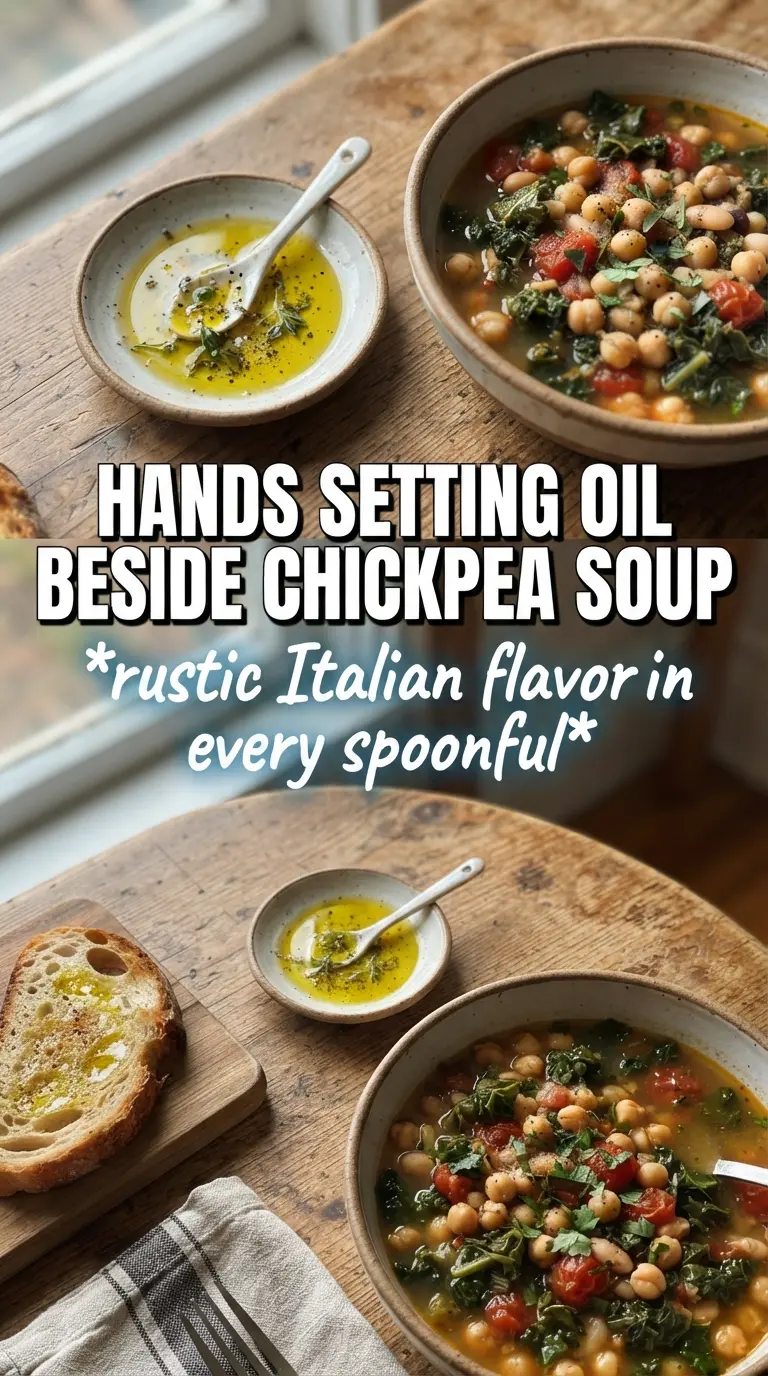
- Primary ingredient (the star) — Quality matters most. Choose the best you can find.
- Cooking medium (oil, butter, or broth) — This carries flavors and prevents dryness.
- Seasonings (salt, pepper, spices, herbs) — Layer flavors so nothing overpowers. Build depth gradually.
- Aromatics (garlic, onion, herbs) — Cook with fat to bloom flavors. Become the foundation.
- Supporting ingredients — Complement the main ingredient without overpowering it.
- Sauce or liquid (if applicable) — Brings flavors together. Balance richness with acid.
- Acid (lemon, vinegar, wine, or other) — Brightens and prevents flat-tasting results.
- Final finish (garnish, glaze, or sauce) — Prevents one-dimensional taste and adds visual appeal.
How to Build the Broth So It Stays Rich, Not Watery
Softening the Onion First
Cook the onion in olive oil until it’s translucent and just starting to turn golden at the edges. That takes the raw edge off and gives the broth a sweeter base. If the onion browns too fast, the heat is too high and the garlic will burn later, so keep the pot at a steady medium.
Blooming the Garlic and Red Pepper Flakes
Add the garlic and red pepper flakes after the onion is soft, then stir for about 2 minutes. You should smell the garlic, but it shouldn’t take on much color. If it starts to brown, pull the pot off the heat for a moment, because bitter garlic will carry through the whole soup.
Simmering the Chickpeas in the Broth
Add the chickpeas, tomatoes, broth, rosemary, Italian seasoning, and parmesan rind, then bring everything to a boil before dropping it down to a steady simmer. Let it go for about 20 minutes so the chickpeas absorb flavor and the rosemary has time to do its work. If the soup tastes thin at this stage, it usually needs a little more simmer time, not more seasoning.
Thickening and Finishing the Bowl
Remove the rosemary sprigs and parmesan rind, then mash or blend about a third of the chickpeas. That gives the broth a creamy texture without turning it into purée. Stir in the kale last and cook just until wilted, then finish with lemon, olive oil, and parmesan so the soup tastes bright instead of heavy.
How to Adapt This for What’s in Your Pantry
Dairy-Free and Still Full of Body
Skip the parmesan rind and top the soup with a good drizzle of olive oil and a squeeze of lemon. You lose a little savory depth, so season more carefully at the end, but the soup still tastes rich because the chickpeas are doing the thickening work.
Spinach Instead of Kale
Spinach works if that’s what you have, but it wilts almost instantly and gives a softer, more delicate texture. Add it at the very end and turn off the heat as soon as the leaves collapse.
Making It Gluten-Free and Vegetarian
The recipe is already naturally gluten-free and vegetarian as long as your vegetable broth is certified gluten-free and your parmesan rind comes from vegetarian-friendly cheese if that matters for your table. If you need to keep it fully vegetarian without cheese rennet concerns, just leave out the rind and finish with lemon and olive oil.
Making the Soup Thicker
Blend more of the chickpeas if you want a thicker, stew-like bowl. Use an immersion blender right in the pot, or scoop out a cup or two and mash them with a fork before stirring them back in. Don’t blend the whole pot unless you want a creamy soup with little texture left.
Storage and Reheating
- Refrigerator: Store for up to 4 days. The broth thickens as it sits because the chickpeas keep releasing starch.
- Freezer: Freezes well for up to 3 months. Leave a little headspace in the container, since the soup expands, and add the kale fresh if you want the best texture.
- Reheating: Warm it gently on the stove over medium-low heat with a splash of broth or water. A hard boil can make the kale dull and can push the chickpeas toward mushy.
Answers to the Questions Worth Asking
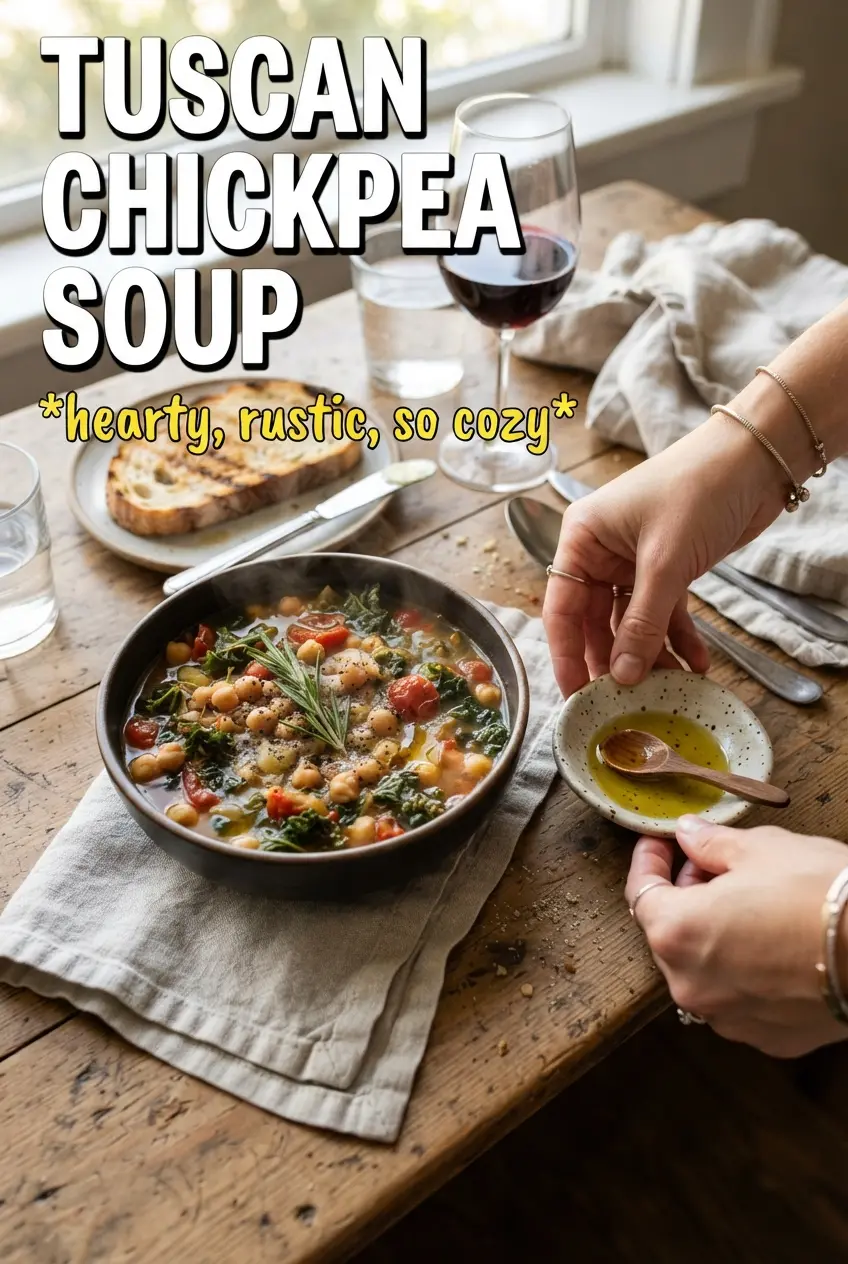
Tuscan Chickpea Soup
Ingredients
Equipment
Method
- Heat the olive oil in a large pot over medium heat. Sauté the onion for 5 minutes, stirring until softened and slightly translucent.
- Add the garlic and red pepper flakes to the pot. Cook for 2 minutes, stirring constantly, until fragrant.
- Add the chickpeas, fire-roasted diced tomatoes, vegetable broth, rosemary, Italian seasoning, and parmesan rind. Bring to a boil, then keep the ingredients moving as they heat through.
- Reduce to a simmer and cook for 20 minutes. Remove the rosemary and parmesan rind after simmering.
- Mash or blend about a third of the chickpeas for a thicker consistency. Stop once the soup looks creamy but still has chunks.
- Add the kale to the pot. Cook for 5 minutes, stirring until wilted and tender.
- Season the soup with salt and pepper, and squeeze in lemon to taste. Drizzle with olive oil and top with parmesan before serving.