Tender chicken, sun-dried tomatoes, and spinach baked under a blanket of creamy parmesan and mozzarella turns this casserole into the kind of dinner that disappears fast. The sauce clings to every piece of chicken, the tomatoes bring a sweet-tangy punch, and the spinach softens into the cream without turning the dish heavy. It tastes like something you ordered at a small Italian restaurant, but it lands on the table with far less effort and a lot less cleanup.
What makes this version work is the way the sauce starts in the skillet before it ever goes into the oven. Browning the chicken first gives the pan fond, and that browned flavor becomes part of the sauce instead of getting washed away. The parmesan thickens the cream as it simmers, so by the time the casserole bakes, you already have a sauce with body rather than a thin liquid hoping to set in the oven.
Below, I’ve broken down the part that matters most: how to keep the cream smooth, how long to bake it without drying out the chicken, and a few easy swaps if you need to adapt the dish for what’s already in your kitchen.
The sauce thickened up beautifully and the chicken stayed juicy even after baking. My husband went back for seconds and asked if I could put this in the regular dinner rotation.
Save this baked Tuscan chicken casserole for the nights when you want creamy parmesan chicken, wilted spinach, and sun-dried tomatoes all in one pan.
The Secret to Keeping the Cream Sauce Smooth After Baking
The biggest mistake in a baked cream casserole is rushing the sauce and relying on the oven to fix it. If the cream goes in before the pan is hot enough, or if the cheese is dumped in over high heat, you end up with a sauce that looks grainy or separates in the oven. The skillet stage matters because it gives the parmesan time to melt into the cream before the casserole ever bakes.
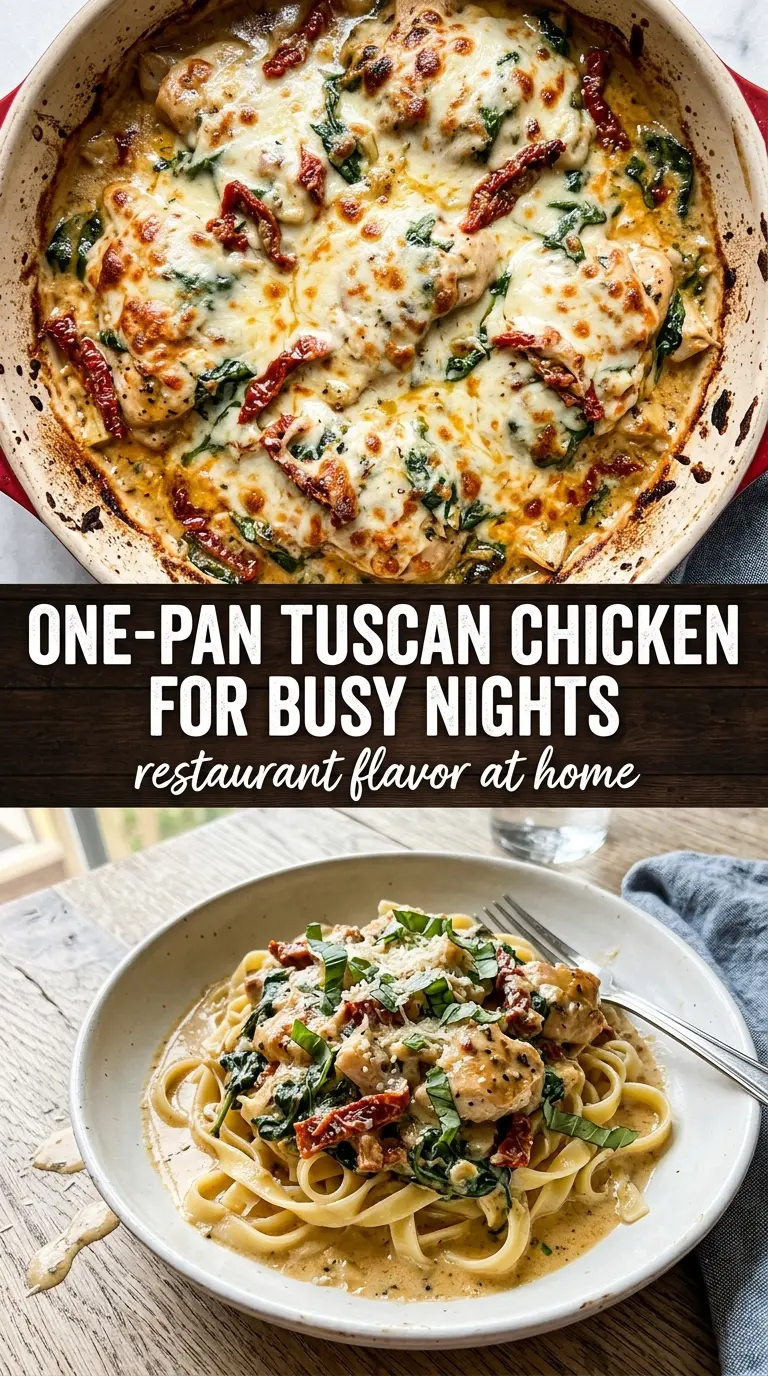
That’s why the sauce here is thickened on the stove first, then finished in the oven just long enough to bubble around the edges. The cream should simmer, not boil. Once it turns glossy and starts coating a spoon, it’s ready for the spinach and mozzarella. The oven is there to finish the chicken and brown the top, not to rescue a thin sauce.
- Chicken breasts — Cubing the chicken keeps the cooking time short and gives you more browned surface area. If your pieces are uneven, the smaller ones overcook before the larger ones are done, so cut them into similar bite-sized chunks.
- Sun-dried tomatoes — These do the heavy lifting for flavor. Oil-packed tomatoes bring a softer texture and a richer taste, while dry-packed tomatoes work too if you chop them small and give them a brief soak in hot water first.
- Heavy cream — This gives the sauce enough fat to stay smooth in the oven. Half-and-half can work in a pinch, but the sauce will be thinner and more likely to break if it boils.
- Parmesan cheese — Use grated parmesan, not the powdery shelf-stable kind if you can help it. Freshly grated parmesan melts more evenly and gives the sauce a cleaner, sharper finish.
- Mozzarella cheese — This is mostly for the top. It melts into that familiar stretchy cap, but it doesn’t thicken the sauce the way parmesan does, so don’t use it as a replacement.
- Spinach — Fresh spinach wilts fast and folds into the sauce without adding extra water. Frozen spinach will work only if you thaw it fully and squeeze it dry, or the casserole turns loose and watery.
Building the Casserole in the Skillet Before It Hits the Oven
Getting the Chicken Color First
Heat the oil until it shimmers, then add the chicken in a single layer so it can brown instead of steam. You’re looking for light golden edges and a little color on the bottom, not a hard crust. If the pan is crowded, the chicken will release liquid and sit in it, which leaves you with pale pieces and a bland sauce base. Work in batches if your skillet is tight.
Waking Up the Tomatoes and Garlic
Add the garlic and sun-dried tomatoes after the chicken has some color, then cook them just long enough for the garlic to smell fragrant. Garlic burns fast, especially once the pan is hot, so this stage should stay brief. The tomatoes should soften slightly and coat the pan with their oil and seasoning. That little bit of fat carries the flavor into the cream.
Thickening the Sauce Before the Bake
Pour in the cream and stir in the parmesan, then let the sauce simmer gently until it lightly coats the spoon. If it looks thin at this point, keep it on the heat a minute or two longer. The sauce should look glossy and smooth, not bubbling hard. Once the spinach goes in, it will loosen slightly as it wilts, so you want it a touch thicker than the final result.
Finishing Under the Broiler-Style Heat of the Oven
After the mozzarella goes over the top, bake until the chicken is cooked through and the cheese is fully melted with browned spots at the edges. The casserole is done when the sauce is bubbling and the center of the largest chicken pieces reaches temperature. Let it rest for five minutes before serving so the sauce settles back around the chicken instead of running across the plate.
What to Change When You Need a Different Version
Dairy-Free Version That Still Feels Creamy
Use a full-fat unsweetened coconut cream or an oat-based cooking cream in place of the heavy cream, then swap the parmesan and mozzarella for dairy-free alternatives that melt well. The sauce won’t taste exactly the same, but the tomatoes and garlic carry enough flavor that it still lands in the same cozy lane. Keep the heat low so the substitute cream stays smooth.
Lower-Carb Serving Idea
This dish already leans low-carb, so the easiest adjustment is what you serve under it. Spoon it over roasted cauliflower, zucchini noodles, or sautéed mushrooms instead of pasta. That lets the sauce stay the star without adding anything that competes with the Tuscan flavors.
Using Chicken Thighs Instead of Breasts
Boneless, skinless chicken thighs work well here and stay extra juicy. Cut them into similar-size pieces and expect them to take a few minutes longer in the oven. The flavor gets a little richer, and the casserole is more forgiving if you tend to leave chicken in the oven a minute too long.
Storage and Reheating
- Refrigerator: Store leftovers in an airtight container for up to 4 days. The sauce thickens as it chills, which is normal.
- Freezer: It freezes, but cream sauces can separate a bit when thawed. If you do freeze it, cool it completely first and reheat gently so the sauce has the best chance of staying together.
- Reheating: Warm it covered in a 325°F oven or in short bursts on the stove over low heat with a splash of cream. High heat is the fastest way to turn the sauce oily or grainy.
Questions I Get Asked About This Dish
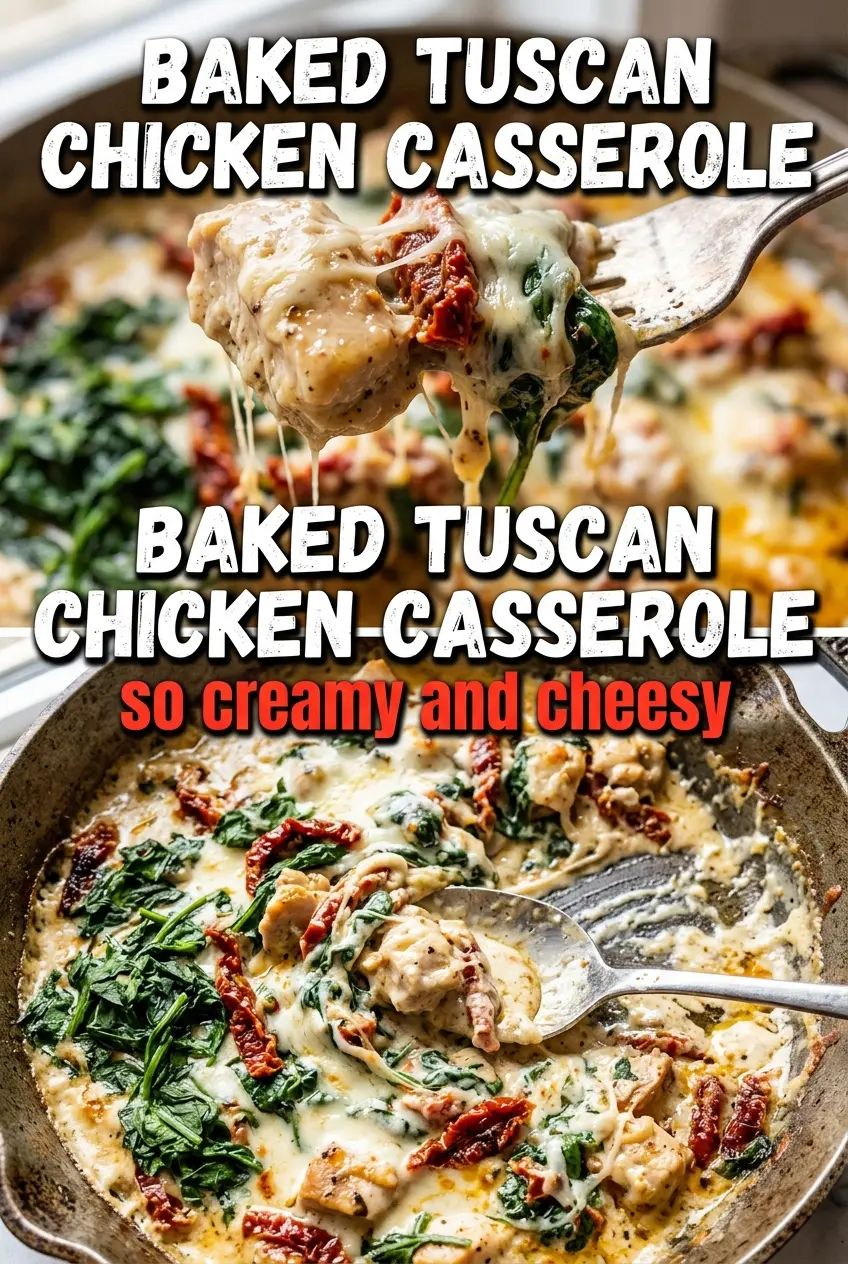
Baked Tuscan Chicken Casserole
Ingredients
Equipment
Method
- Preheat the oven to 375°F. Heat the olive oil in an oven-safe skillet over medium-high heat and sear the chicken until golden on both sides, about 5–6 minutes total.
- Add the garlic and sun-dried tomatoes, cooking for 1–2 minutes until fragrant.
- Stir in the heavy cream and parmesan cheese, simmering until slightly thickened, about 3–4 minutes.
- Add the spinach and stir until just wilted.
- Sprinkle the mozzarella cheese evenly over the top.
- Transfer the skillet to the oven and bake for 15–20 minutes, until the chicken is cooked through and the cheese is bubbly.
- Let rest for 5 minutes before serving.