Chicken noodle and wild rice soup has the kind of comfort that lands in the bowl thick, creamy, and full of actual texture instead of turning into a bland one-note broth. The wild rice stays pleasantly chewy, the egg noodles soften just enough to soak up the broth, and the shredded chicken makes it feel like a full meal without any fuss. It’s the bowl I want when dinner needs to be warm, filling, and straightforward.
This version works because the chicken simmers right in the broth with the vegetables and herbs, so the soup builds flavor from the start instead of relying on a shortcut at the end. The roux goes in after the chicken is shredded, which gives the broth body without making it heavy or pasty. Adding the cream after the thickening step keeps the soup smooth, and timing the noodles last keeps them from going mushy.
The broth got silky after I whisked in the roux, and the wild rice still had a nice bite instead of getting lost. I used rotisserie chicken and it still tasted like it simmered all afternoon.
Save this creamy chicken noodle and wild rice soup for the nights when you want a filling bowl with chewy rice, tender noodles, and a broth that actually tastes like dinner.
The Reason This Soup Stays Creamy Without Turning Heavy
Wild rice and noodles ask for different timing, and that’s where a lot of chicken soup recipes go wrong. If you cook everything together from the start, the noodles collapse before the rice is tender, and the broth can get dull or starchy. Here, the chicken and vegetables simmer long enough to flavor the pot, then the noodles finish at the end so they stay soft but intact.
The other trick is the roux. It thickens the broth without making it gluey, but only if you whisk it into hot broth until smooth before it goes back into the pot. If you dump flour straight into the soup, you’ll chase little lumps around the pan for the rest of the night.
What Each Ingredient Is Actually Doing in This Soup

- Chicken breast — It simmers gently in the broth and shreds cleanly, which gives you a lighter soup with plenty of protein. Thighs also work if you want a richer result, and they stay a little more forgiving if they cook a bit past the ideal point.
- Wild rice blend — This is what gives the soup its chew and nutty backbone. A true wild rice blend is more practical than straight wild rice here because it softens in a more predictable way and helps the soup feel substantial without taking forever to cook.
- Carrots, celery, onion, and garlic — These build the base flavor in the broth, so don’t rush the simmer. Dice the onion small and slice the carrots and celery evenly so they soften at the same pace and don’t leave you with crunchy pieces at the end.
- Heavy cream — This gives the soup its smooth, rounded finish. Half-and-half will work in a pinch, but the broth won’t feel as plush, and you’ll want to keep the heat low so it doesn’t separate.
- Butter and flour — Together they form the roux that thickens the broth and keeps the cream from feeling thin. Let the flour cook for a minute or two so the soup doesn’t taste raw.
- Egg noodles — They soak up the broth and turn the soup into something spoonable and filling. Add them last because they keep cooking in the hot liquid even after the burner is off.
Building the Soup in the Right Order So Nothing Turns Mushy
Letting the Chicken and Rice Set the Pace
Start everything except the cream, roux, and noodles in the pot and bring it to a steady simmer. You want the broth moving gently, not boiling hard, so the chicken stays tender and the rice has time to open up without tearing apart the vegetables. After about 30 minutes, the rice should be nearly tender and the chicken should shred with little resistance. If the broth is boiling aggressively, the chicken will tighten and the carrots can turn soft before the rice catches up.
Making the Roux Separate from the Soup
Melt the butter in a small pan, whisk in the flour, and let it cook until it smells a little nutty and looks like wet sand. Then whisk in one cup of hot broth until the mixture turns smooth and glossy. That extra step matters because it disperses the flour before it hits the soup, which keeps the final texture velvety instead of grainy. If the mixture looks lumpy, keep whisking before you add it back to the pot.
Finishing with Cream and Noodles
Stir the roux back into the soup, then add the cream and let the pot return to a gentle simmer. Add the noodles only after the soup is thickened, because they cook fast and keep softening as they sit. You’re looking for noodles that are tender at the edges but still have a little bite in the center. If the soup gets too thick, loosen it with a splash of broth before serving instead of letting the noodles soak up all the liquid.
Three Ways to Adapt This Soup Without Losing What Makes It Good
Use rotisserie chicken for a faster weeknight version
Skip the chicken simmering step and stir in about 3 to 4 cups of shredded rotisserie chicken after the broth and vegetables have cooked. You’ll lose a little of the built-in chicken flavor, so use a good broth and don’t skimp on the thyme. The tradeoff is speed, and it’s an easy one to make on a busy night.
Make it dairy-free without breaking the texture
Swap the butter for olive oil or a dairy-free butter and use full-fat canned coconut milk or an unsweetened oat-based cooking cream instead of heavy cream. The soup will still thicken from the roux, but the flavor will be a little less rich and more brothy. Keep the heat low after adding the substitute so it stays smooth.
Make it gluten-free with the right noodle swap
Use a gluten-free flour blend for the roux and swap the egg noodles for a gluten-free pasta that holds its shape well. Rice pasta works, but it softens faster than wheat noodles, so add it near the end and watch it closely. The soup will still thicken and feel hearty, just with a slightly softer finish.
Storage and Reheating
- Refrigerator: Store in an airtight container for up to 4 days. The noodles will keep absorbing broth, so expect the soup to thicken.
- Freezer: It freezes well without the noodles, but the dairy and pasta both change texture after thawing. For the best result, freeze the base and add freshly cooked noodles when reheating.
- Reheating: Warm it gently on the stove over low heat with a splash of broth to loosen it. If you boil it, the cream can split and the noodles can turn overly soft.
Answers to the Questions Worth Asking
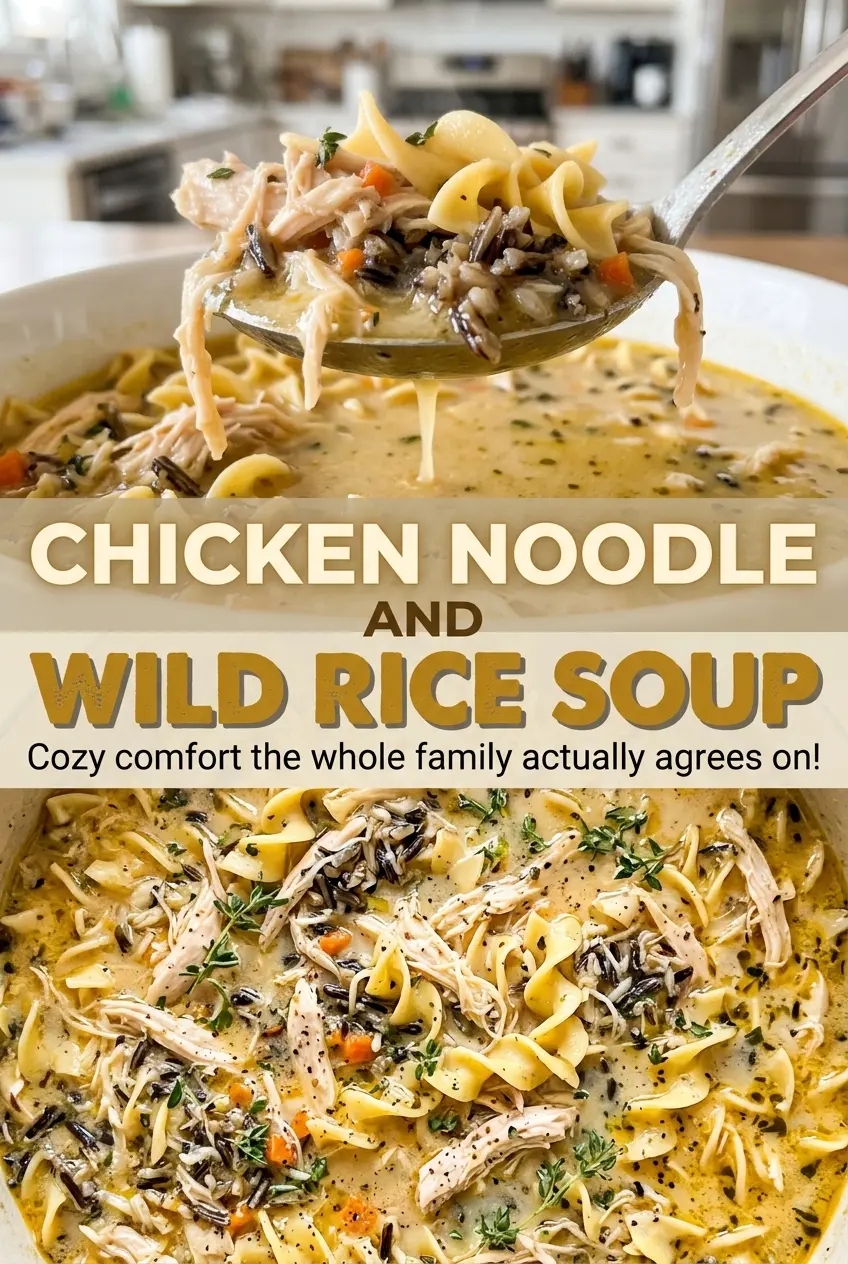
Chicken Noodle And Wild Rice Soup
Ingredients
Equipment
Method
- Combine chicken breast, chicken broth, wild rice blend, carrots, celery, onion, garlic, dried thyme, and dried parsley in a Dutch oven. Bring to a simmer and cook for 30 minutes, until the wild rice is nearly tender, with occasional stirring so the rice cooks evenly.
- Remove the chicken from the pot and shred it, then return the shredded chicken to the Dutch oven. Stir until evenly distributed throughout the simmering soup.
- In the same Dutch oven or a small section of it, melt butter and whisk in flour. Cook for 1-2 minutes to remove the raw flour taste, then whisk in 1 cup of the hot broth until smooth.
- Stir the roux mixture back into the pot, then add heavy cream. Bring back to a gentle simmer and stir in egg noodles, cooking for 6-8 minutes until tender.
- Season with salt and pepper to taste and stir to combine. Simmer for 1 minute more, then serve hot.