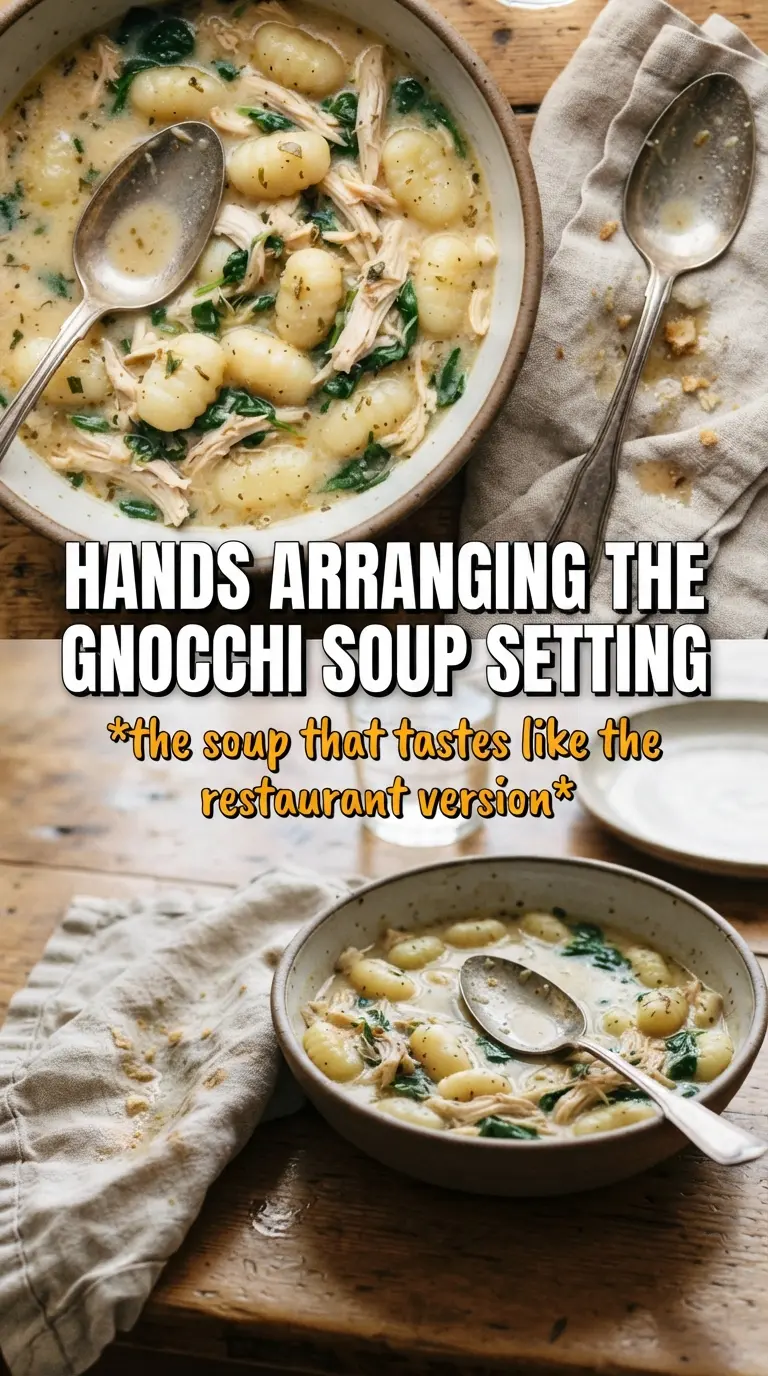
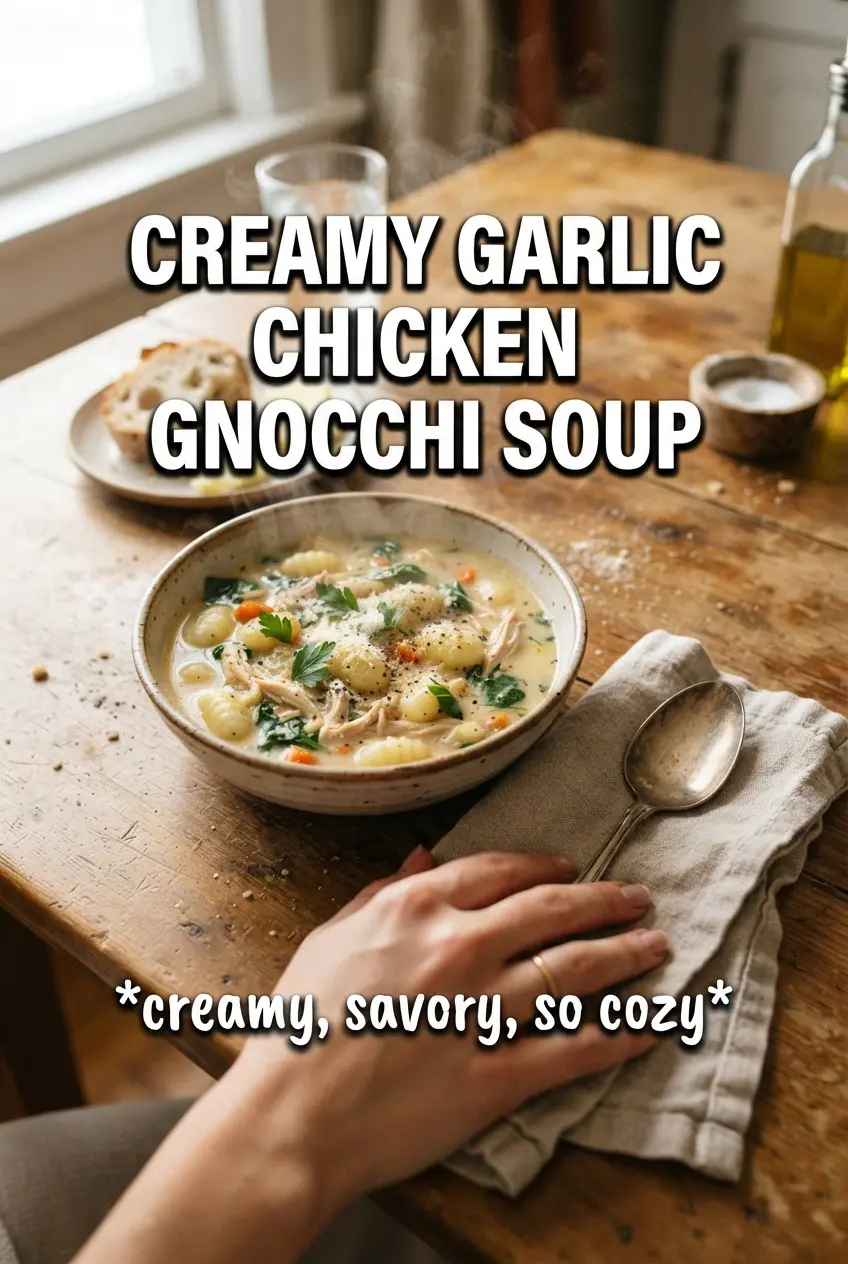
Silky, spoon-coating broth. Tender shredded chicken. Pillowy gnocchi that turn each bite into a full bowl of comfort instead of just soup. This creamy garlic chicken gnocchi soup lands right in that sweet spot where it feels hearty enough for dinner but still light enough that you go back for a second bowl without regret.
The trick is building the flavor in layers before the cream goes in. Onion and garlic get a few minutes in butter first, which gives the broth a deeper, rounder base than you get from dumping everything into the pot at once. The gnocchi cook straight in the soup, so they release just enough starch to help thicken the broth naturally without turning it gluey.
Below, I’ve included the small details that keep the soup creamy instead of grainy, plus the timing that keeps the gnocchi soft but not falling apart. If you’ve ever had chicken gnocchi soup that tasted flat or ended up too heavy, this version fixes both problems.
The broth came out velvety and the gnocchi stayed pillowy instead of turning mushy. I added a little extra parmesan at the end and my family said it tasted like something from a restaurant.
Creamy garlic chicken gnocchi soup is the kind of bowl that disappears fast — save it for the nights when you want a rich, one-pot dinner with soft gnocchi and a real parmesan finish.
The Broth Stays Creamy When You Keep the Heat Gentle
The most common reason creamy soups turn grainy or separate is heat that’s too high once the dairy goes in. Heavy cream doesn’t need a hard boil to thicken; it needs a steady, gentle simmer. If you crank the burner, the broth can look broken around the edges before the gnocchi are even cooked.
This soup works because the base is built first, then finished with the cream and cheese at lower heat. The parmesan goes in at the end, after the soup has already taken on enough body from the gnocchi and the cream. That keeps the texture smooth instead of sandy.
- The butter, onion, and garlic create the flavor base. Don’t rush this part. The onion should turn soft and translucent, not browned, and the garlic only needs a short cook so it stays sweet instead of bitter.
- Chicken broth gives the soup structure. Use a broth you’d actually drink on its own, because once the cream goes in, any weak or overly salty broth becomes much more noticeable.
- Heavy cream is worth using here. Half-and-half will work in a pinch, but the soup will be thinner and a little more likely to curdle if it gets too hot.
- Parmesan should be finely grated so it melts cleanly. Pre-grated cheese can clump because of the anti-caking agents, which is the last thing you want in a creamy soup.
What Each Ingredient Is Actually Doing in This Recipe
- Primary ingredient (the star) — Quality matters most. Choose the best you can find.
- Cooking medium (oil, butter, or broth) — This carries flavors and prevents dryness.
- Seasonings (salt, pepper, spices, herbs) — Layer flavors so nothing overpowers. Build depth gradually.
- Aromatics (garlic, onion, herbs) — Cook with fat to bloom flavors. Become the foundation.
- Supporting ingredients — Complement the main ingredient without overpowering it.
- Sauce or liquid (if applicable) — Brings flavors together. Balance richness with acid.
- Acid (lemon, vinegar, wine, or other) — Brightens and prevents flat-tasting results.
- Final finish (garnish, glaze, or sauce) — Prevents one-dimensional taste and adds visual appeal.
The 15 Minutes of Cooking That Matter Most
Softening the Onion Without Browning It
Melt the butter in a large pot, then cook the diced onion until it looks glossy and soft around the edges. You want fragrance here, not color. If the onion browns, the soup takes on a sweeter, deeper note that can muddy the clean garlic-and-parmesan flavor this dish needs.
Waking Up the Garlic and Seasoning
Add the garlic and Italian seasoning and stir for about 2 minutes, just until the garlic smells round and toasty. Garlic burns fast, especially in butter, so keep the heat moderate. If the garlic starts to darken, pull the pot off the burner for a moment and keep stirring.
Turning the Broth Into Soup
Pour in the broth and bring it to a simmer before adding the cream. That step keeps the base from shocking the dairy and helps everything come together more smoothly. Once the cream is in, lower the heat so the surface stays calm with only a few lazy bubbles.
Cooking the Gnocchi Until They Float
Add the gnocchi and cook for 3 to 4 minutes, watching for them to float and turn tender through the center. Floating is a useful sign, but not the only one; one gnocchi should feel soft when you cut into it, not dense or doughy in the middle. Overcooking here is what turns them gummy and fragile.
Finishing With Chicken, Spinach, and Cheese
Stir in the shredded chicken and spinach and let them warm through for about 2 minutes. The spinach should wilt but still keep its green color. Add the parmesan and nutmeg off the hottest part of the burner if the soup is very hot, then season with salt and pepper at the end so you can judge the saltiness after the cheese melts.
How to Adapt It When You Need a Different Version
Dairy-Free Version With a Lighter Finish
Use unsweetened coconut cream or a plain dairy-free cooking cream in place of heavy cream, then swap the parmesan for a dairy-free hard cheese alternative. The soup won’t taste exactly the same, but the garlic, onion, and broth still carry it well. Keep the heat low, since some non-dairy creams split more easily than heavy cream.
Gluten-Free Without Changing the Texture
Use gluten-free gnocchi if that’s what you need, but keep an eye on the cook time because some brands soften faster than standard potato gnocchi. The soup base itself is naturally gluten-free as written, as long as your broth and parmesan are certified safe.
Make It Heartier With Extra Vegetables
Add sliced carrots or celery with the onion if you want a more classic chicken soup backbone. They’ll soften in the butter and give the broth a little more sweetness and body. Keep the additions modest or they’ll crowd out the gnocchi.
Using Rotisserie Chicken for Faster Prep
Rotisserie chicken works well here and makes the soup even faster. Shred it into bite-size pieces and add it only at the end so it stays juicy. If the chicken is heavily seasoned, taste the broth before adding extra salt.
Storage and Reheating
- Refrigerator: Store in an airtight container for up to 4 days. The gnocchi will keep soaking up broth, so expect the soup to thicken as it sits.
- Freezer: It freezes, but the cream and gnocchi both lose some of their texture. For the best result, freeze just the base without the gnocchi if you know you’ll be making it ahead.
- Reheating: Warm it slowly over low heat on the stove with a splash of broth or cream to loosen it up. Don’t boil it, or the dairy can separate and the gnocchi can go soft and swollen.
Answers to the Questions Worth Asking
Creamy Garlic Chicken Gnocchi Soup
Ingredients
Equipment
Method
- Melt the butter in a large pot, then sauté the diced onion for 4 minutes until softened and lightly translucent, stirring as needed for even cooking.
- Add the minced garlic and Italian seasoning, then cook for 2 minutes until fragrant without browning.
- Pour in the chicken broth and bring it to a simmer, then stir in the heavy cream until smooth and well combined.
- Add the potato gnocchi and cook for 3-4 minutes, stirring occasionally, until the gnocchi float and are cooked through.
- Add the shredded chicken and baby spinach, then cook for 2 minutes until the spinach wilts and the chicken is warmed through.
- Stir in the grated parmesan and nutmeg, then season with salt and black pepper to taste.
- Serve hot with extra parmesan and fresh basil on top.