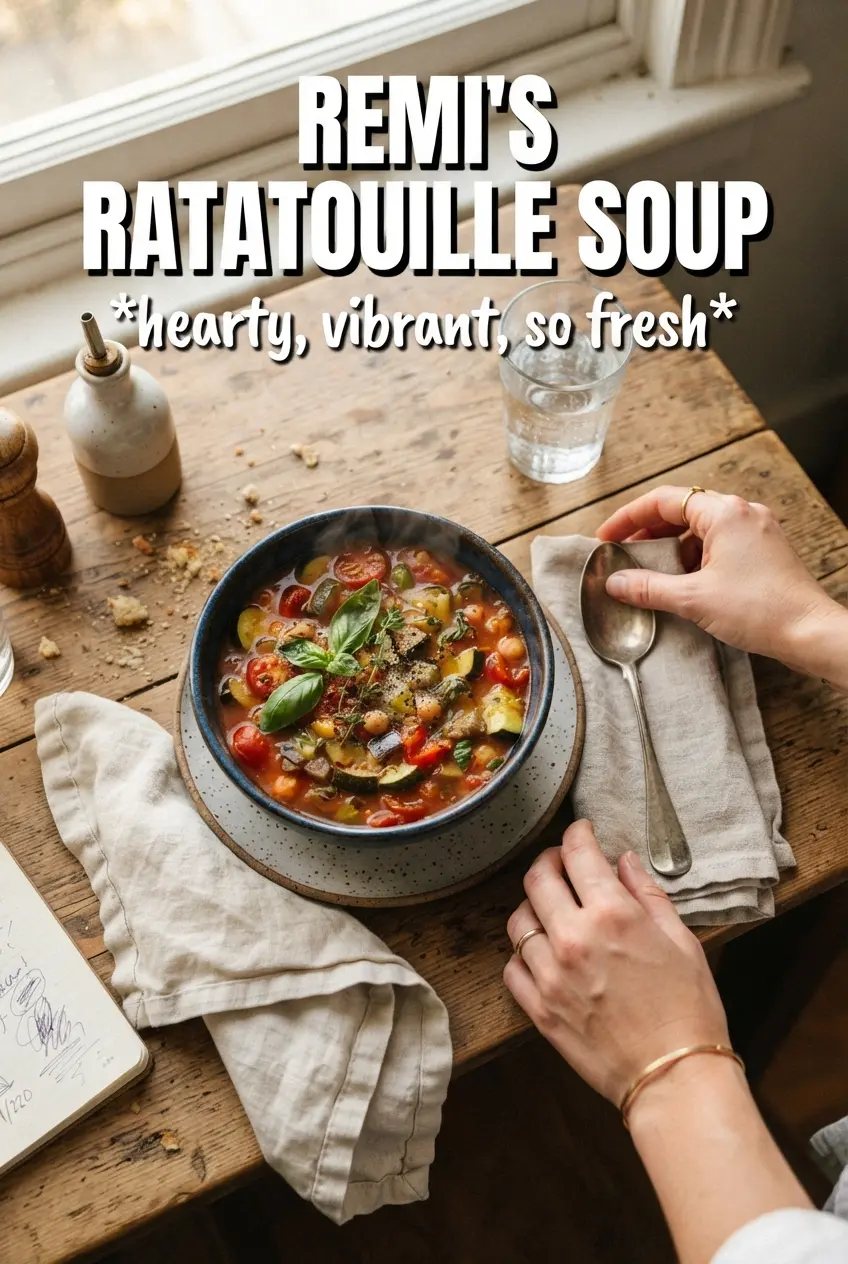
Remi’s Ratatouille Soup turns a classic Provençal vegetable dish into a spoonable, weeknight-friendly bowl that tastes far richer than the effort it asks for. The vegetables soften into the broth just enough to keep their shape, so every bite gives you silky tomatoes, tender eggplant, sweet peppers, and zucchini that still tastes like itself. A drizzle of good olive oil at the end pulls everything together and gives the soup that glossy finish you want from a dish built on simple ingredients.
The trick is treating the vegetables in the right order. Eggplant gets salted first so it cooks up creamy instead of spongy, and it goes in early enough to soak up the olive oil and garlic. The tomatoes and broth come in after the base has had time to deepen, which keeps the soup from tasting flat or watery. Herbs de Provence do a lot of the heavy lifting here, but fresh basil at the end keeps the whole pot from feeling dull or overcooked.
Below, I’ll walk through the part that matters most: how to get the vegetables tender without letting them collapse into mush, plus the small finishing step that makes this soup taste like it simmered much longer than it did.
I was worried the vegetables would turn to mush, but the timing was spot on. The eggplant got silky, the zucchini stayed intact, and the broth tasted even better the next day.
Love the colorful broth and tender vegetable texture in Remi’s Ratatouille Soup? Save it to Pinterest for the nights you want a cozy French-inspired dinner that still feels light.
The One Thing That Keeps Ratatouille Soup From Turning Watery
The biggest mistake with vegetable soup like this is tossing everything into the pot at once and hoping the tomatoes and broth will carry the flavor. They won’t. Eggplant, zucchini, squash, and peppers all release moisture at different rates, and if you don’t give the onions and peppers a head start, the soup tastes thin instead of deeply cooked.
Salting the eggplant before it goes into the pot helps it lose some of its bitterness and keeps it from drinking up too much oil in a bad way. Sautéing the onion and bell peppers first builds a sweet base, then the garlic and eggplant go in long enough to pick up that flavor before the faster-cooking zucchini and squash join the pot. By the time the tomatoes and broth go in, the vegetables already have a little color and the broth has something to cling to.
- Eggplant — Salting it first is worth the extra few minutes. It softens better, cooks more evenly, and won’t leave you with a chewy, bland bite in the middle.
- Herbs de Provence — This is the backbone of the soup’s French character. If you don’t have it, use a mix of thyme, rosemary, oregano, and marjoram, but the blend is a little more rounded than any one herb on its own.
- Fresh basil — Stir it in at the end so it stays bright and sweet. If it cooks too long, it loses the fresh edge that makes the finished soup taste alive.
- Good olive oil — Use something you’d actually want to taste on a spoon. The final drizzle isn’t decorative; it gives the broth a richer mouthfeel and helps the vegetables taste more finished.
What Each Ingredient Is Actually Doing in This Recipe

- Primary ingredient (the star) — Quality matters most. Choose the best you can find.
- Cooking medium (oil, butter, or broth) — This carries flavors and prevents dryness.
- Seasonings (salt, pepper, spices, herbs) — Layer flavors so nothing overpowers. Build depth gradually.
- Aromatics (garlic, onion, herbs) — Cook with fat to bloom flavors. Become the foundation.
- Supporting ingredients — Complement the main ingredient without overpowering it.
- Sauce or liquid (if applicable) — Brings flavors together. Balance richness with acid.
- Acid (lemon, vinegar, wine, or other) — Brightens and prevents flat-tasting results.
- Final finish (garnish, glaze, or sauce) — Prevents one-dimensional taste and adds visual appeal.
Building the Soup in the Right Order
Taking the Bite Out of the Eggplant
Dice the eggplant evenly, toss it with salt, and let it sit for about 15 minutes. You’ll see beads of moisture on the surface, which is exactly what you want before rinsing and drying it well. If you skip this step, the eggplant can stay a little spongy and drink up more oil than it should. Dry it thoroughly so it sautés instead of steaming.
Cooking the Aromatics First
Start with olive oil, diced onion, and bell peppers in a large pot. Let them soften until the onion turns translucent and the peppers lose their raw crunch. That first layer matters because it gives the soup a sweet, cooked base before the more delicate vegetables go in. If the heat is too high, the onion browns before the peppers soften, and the soup takes on a sharp edge instead of a mellow one.
Letting the Vegetables Take Turns
Add the garlic and eggplant next, then the zucchini and yellow squash after the eggplant has had a few minutes to start softening. The goal is to give each vegetable enough time to release flavor without disappearing. If you add the zucchini too early, it can go slack and lose its shape before the soup is done. By the time the tomatoes and broth go in, the pot should already smell savory and slightly sweet.
Finishing With a Slow Simmer
Once the tomatoes, broth, and herbs are in, bring the pot to a gentle simmer and let it go until all the vegetables are very tender. You want the soup thickened a bit, but not so far reduced that it turns jammy. Stir in the fresh basil at the end, then taste for salt and pepper. Finish with a drizzle of olive oil right before serving so the surface looks glossy and the flavor lands cleanly.
How to Adapt This Soup for Different Kitchens and Different Moods
Make It Vegan Without Losing Body
The soup is already naturally vegan if you skip the parmesan at serving. Keep the olive oil finish, because that final drizzle replaces the richness you’d otherwise get from cheese. If you want a little extra depth, let the onions cook an extra minute or two until they start to sweeten.
Add Parmesan for a Heartier Bowl
A small shower of parmesan on top gives the broth a salty, savory finish that works especially well if you want this to feel more like a main dish. Stir it in only off the heat or use it as a topping, because prolonged boiling can make the cheese stringy instead of silky.
Turn Up the Heat
The half teaspoon of red pepper flakes gives a quiet warmth, not a full-on kick. If you want more heat, add another pinch with the garlic so it blooms in the oil and tastes more integrated. Add too much at the end and the heat sits on top of the soup instead of folding into it.
Use What You Have for the Summer Squash
If you only have zucchini or only yellow squash, use all of one kind. The texture stays the same, and the soup still gets that soft, garden-style feel. What you lose is a little color contrast, not flavor.
Storage and Reheating
- Refrigerator: Store in an airtight container for up to 4 days. The vegetables soften a bit more as it sits, and the broth tastes even better the next day.
- Freezer: It freezes well for up to 3 months. Cool it completely first, then portion it into freezer-safe containers, leaving a little space for expansion.
- Reheating: Warm it gently on the stovetop over medium-low heat until hot. Don’t boil it hard or the zucchini and squash can turn too soft and the broth can taste flat.
Answers to the Questions Worth Asking
Remi's Ratatouille Soup
Ingredients
Equipment
Method
- Toss the diced eggplant with salt and let sit 15 minutes, then rinse and dry.
- Dice the zucchini, yellow squash, red bell peppers, and onion, and mince the garlic.
- Heat olive oil in a large pot over medium heat.
- Sauté the onion and bell peppers for 5 minutes, stirring until softened and fragrant.
- Add the garlic and eggplant and cook for 5 minutes, until the eggplant begins to soften and the pot smells aromatic.
- Add the zucchini and yellow squash and cook for 3 minutes, stirring to coat in the oil and start tenderizing.
- Add the crushed tomatoes, diced tomatoes, vegetable broth, herbs de Provence, dried basil, dried thyme, and red pepper flakes.
- Bring to a simmer, then cook for 20-25 minutes until all vegetables are very tender, keeping the liquid gently bubbling.
- Stir in the fresh basil, then season with salt and pepper to taste.
- Finish with a drizzle of good olive oil and serve with parmesan.