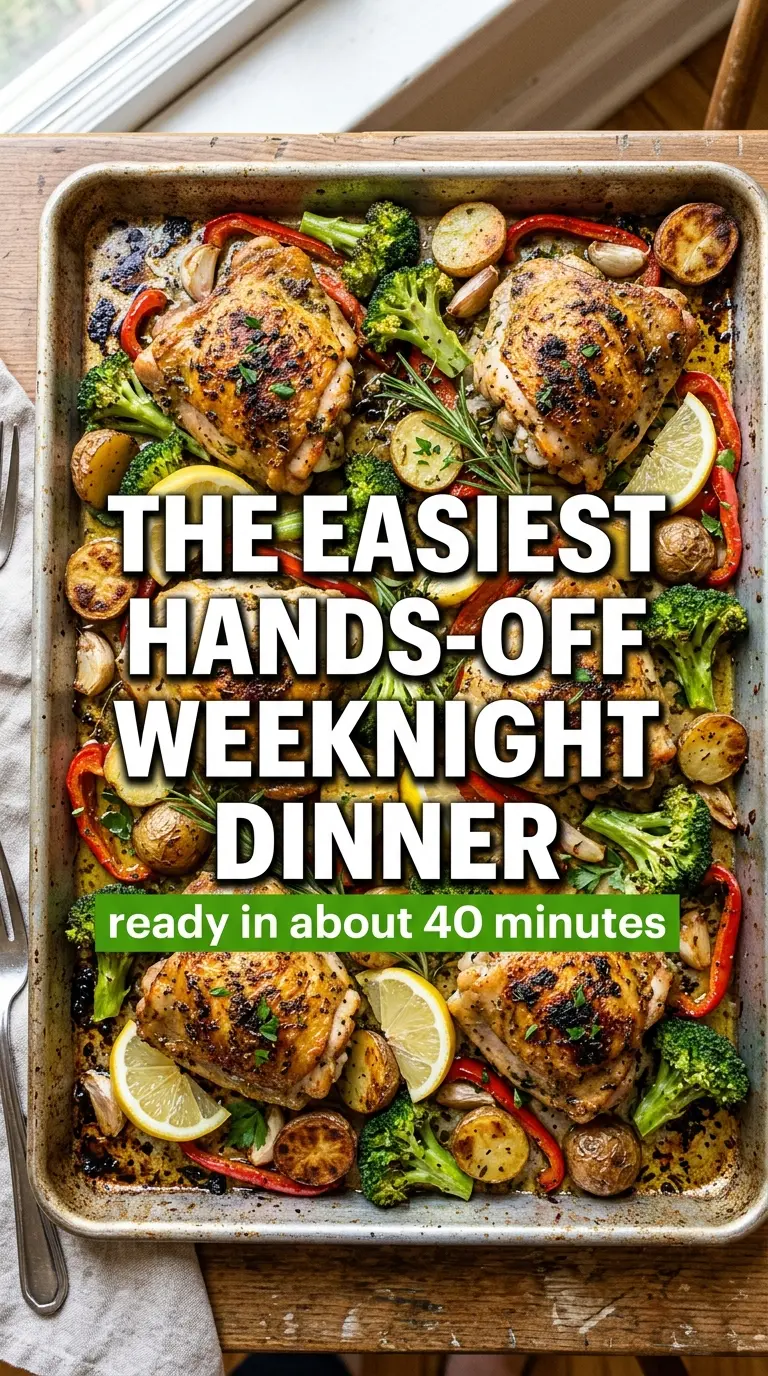
Juicy chicken thighs and caramelized vegetables are what make a sheet pan dinner worth repeating. The chicken comes out with crisp, deeply seasoned skin while the potatoes turn tender underneath and the broccoli picks up those browned edges that only happen in a hot oven. Everything roasts together, but it doesn’t taste like an afterthought.
The trick is giving the potatoes a head start so they’re not still hard when the chicken is done. Bone-in, skin-on thighs handle the high heat beautifully, and the rendered fat helps season the vegetables as they roast. A little smoked paprika brings warmth, while lemon slices cut through the richness at the end and keep the whole pan tasting bright instead of heavy.
Below, I’ve included the timing that matters most, the ingredient swaps that actually work, and the one detail that keeps the vegetables roasting instead of steaming. Once you’ve made it once, the method is easy to repeat with whatever vegetables you have on hand.
The potatoes were tender by the time the chicken skin turned crisp, and the broccoli had those browned edges without going mushy. I loved that everything was done on one pan and there was barely anything to clean up.
Save this sheet pan chicken thighs dinner for an easy one-pan meal with crispy skin, roasted potatoes, and bright lemon flavor.
The Reason the Potatoes Get a Head Start
Chicken thighs and quick-roasting vegetables don’t finish at the same time, and that’s where a lot of sheet pan dinners go wrong. If everything goes on the pan together from the beginning, the potatoes often stay firm while the broccoli and bell pepper overcook. The fix is simple: give the potatoes a solo stretch in the oven so they can start softening and browning before the chicken joins the pan.
That head start also helps the pan stay drier. Potatoes release moisture as they heat, but once they’ve had time to develop some color, they’re less likely to steam the vegetables later. You want hot oven heat and space around each piece so the edges can brown instead of sitting in a crowded pile of soft food.
- Bone-in, skin-on chicken thighs — These stay juicy in a hot oven and the skin turns crisp in a way boneless thighs just can’t match. If you use boneless thighs, reduce the second roasting time and expect less rendered fat on the pan.
- Baby potatoes — Their small size and waxy texture help them roast evenly. Halve them so the cut side can catch the heat and brown.
- Broccoli florets — Broccoli takes on great roasted flavor here, but only if it’s added after the potatoes get going. Larger florets hold up better than tiny scraps, which can dry out before the chicken is done.
- Lemon slices — They soften in the oven and release juice over the chicken and vegetables. If you don’t have lemon, a small splash of vinegar at the end gives you some of the same brightness, but not the same aroma.
- Smoked paprika and garlic powder — This combination gives the chicken a seasoned crust without needing a long marinade. Fresh garlic can burn at this heat, so the powdered version is the better choice here.
Building the Pan So Everything Finishes Together
Season the chicken first
Toss the chicken thighs with the oil and spices until every piece is coated, especially under the skin where the seasoning can do the most work. The surface should look evenly slick and reddish from the paprika. If the seasoning clumps in one spot, the pan won’t taste balanced, and the skin can bake up patchy instead of evenly bronzed.
Give the potatoes room to roast
Spread the potatoes on one side of the pan in a single layer and roast them by themselves for 15 minutes. That early blast helps the cut sides start caramelizing before the chicken goes in. If they’re piled up, they’ll steam and stay pale, which is the opposite of what you want on a sheet pan dinner.
Add the faster vegetables later
Broccoli and bell pepper need less time, so they go in after the potatoes have had their head start. Arrange everything so the chicken skin is exposed and the vegetables aren’t buried underneath it. The pan should look full but not crowded; if pieces overlap, the trapped steam keeps them soft.
Roast until the skin is crisp and the chicken is done
Keep roasting until the chicken reaches 165°F and the skin looks golden with darker spots at the edges. The broccoli should be tender with a little char, and the potatoes should give cleanly when pierced with a fork. Let the chicken rest for 5 minutes before serving so the juices stay in the meat instead of running onto the pan.
Three Ways to Make This Pan Dinner Work for Different Nights
Make it dairy-free and gluten-free as written
This recipe already fits both diets without any special swaps, which is part of why it’s such a useful weeknight dinner. Just check that your smoked paprika and garlic powder are pure seasonings with no added fillers if you’re cooking for someone with a sensitivity.
Swap the vegetables based on what’s in the fridge
Carrots, Brussels sprouts, cauliflower, and green beans all work well here, but dense vegetables need the same head start as the potatoes. Fast-cooking vegetables like zucchini should go in near the end so they don’t collapse into the pan juices.
Use boneless thighs when that’s what you have
Boneless thighs cook faster and are easier to portion, but they won’t give you the same crisp skin or rich pan drippings. Start checking them early and pull them as soon as they’re cooked through so they stay tender.
Add a sauce at the table if you want more contrast
A spoonful of mustard sauce, garlic yogurt, or even a simple drizzle of olive oil and extra lemon can change the finished plate without changing the roasting method. Keep the pan itself dry and focused, then add sauce after roasting so the skin stays crisp.
Storage and Reheating
- Refrigerator: Store leftovers in an airtight container for up to 4 days. The skin softens in the fridge, but the flavor stays strong.
- Freezer: The chicken freezes well for up to 2 months, but the vegetables lose some texture. Freeze in portions and expect the broccoli and peppers to be softer after thawing.
- Reheating: Reheat on a sheet pan in a 375°F oven until hot, which brings back more texture than the microwave. If you microwave it, the skin turns rubbery and the vegetables go limp.
Questions I Get Asked About This Recipe
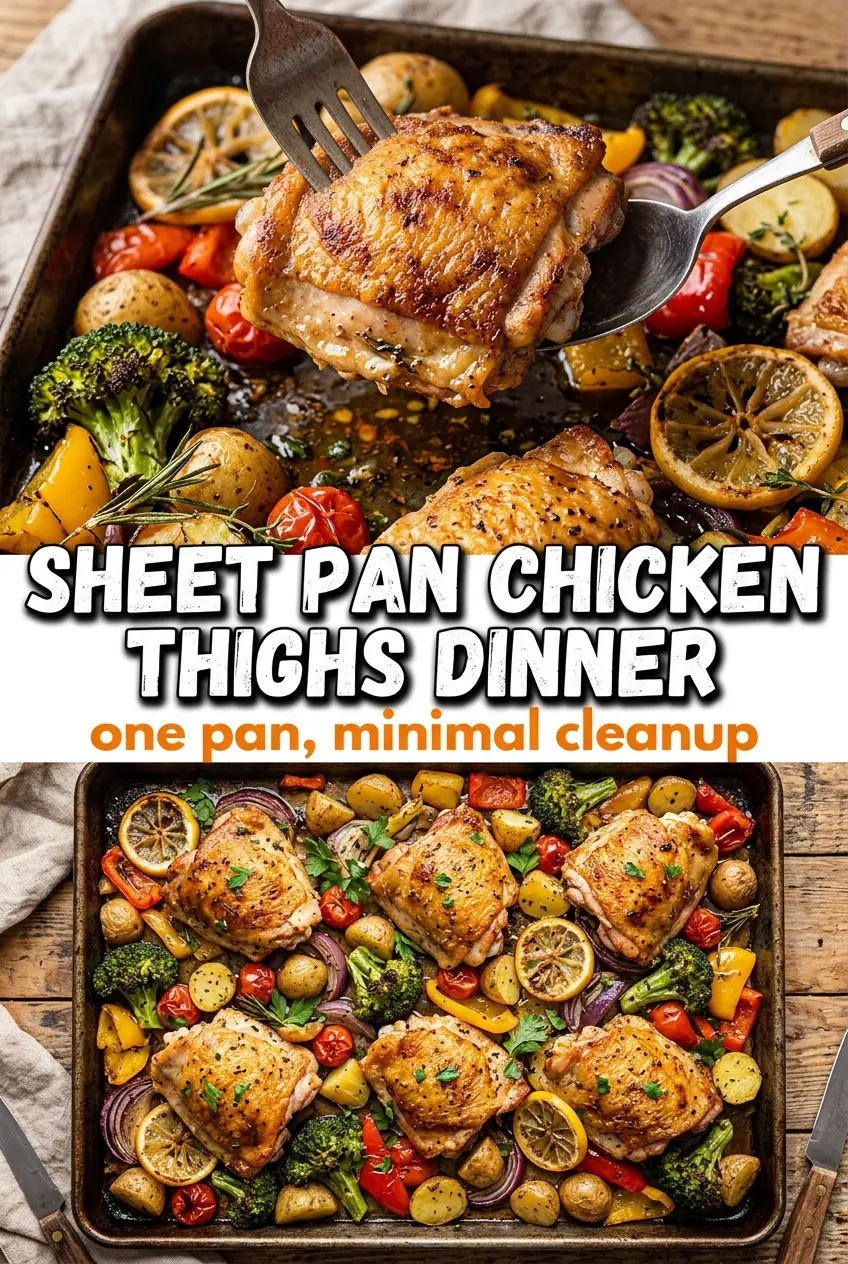
Sheet Pan Chicken Thighs Dinner
Ingredients
Equipment
Method
- Preheat the oven to 425°F and line a large sheet pan with parchment paper.
- Toss the chicken thighs with 2 tablespoons olive oil, smoked paprika, garlic powder, kosher salt, and black pepper.
- Toss the halved baby potatoes with the remaining olive oil and arrange them on one side of the sheet pan.
- Roast the potatoes for 15 minutes to give them a head start at 425°F.
- Add the chicken thighs, broccoli florets, and sliced red bell pepper to the pan in a single layer.
- Tuck lemon slices between the pieces so they flavor the chicken and vegetables as they roast.
- Roast for 25–30 minutes at 425°F until the chicken reaches 165°F and the skin is golden and crispy.
- Let the sheet pan rest for 5 minutes before serving, keeping the skin crisp and juices settled.